
BARCELONA, Spain (AP) — In Barcelona, Spain, renowned for architecture, tourism and prosperity, some of the city's most imposing buildings are serving as shelters for people who cannot afford a roof over
their heads.
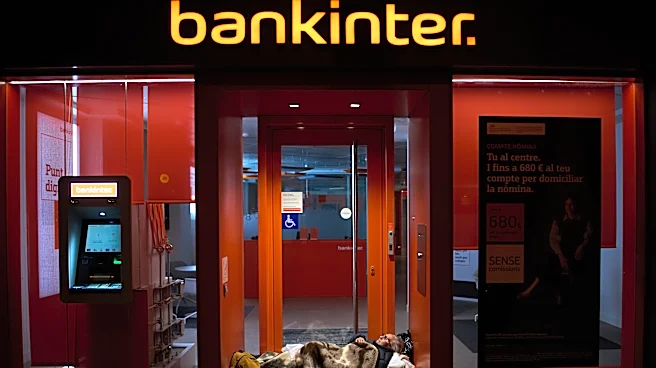
One person sleeps inside a bank vestibule. Another lies beneath the monumental entrance of Foment del Treball Nacional, an institution representing Catalonia’s business community. Others seek refuge outside luxury fashion boutiques. Outside a hotel, people lie on makeshift beds feet away from guests nibbling at their breakfasts behind large-paned windows.
Other city residents tend to walk straight by people living on the street while avoiding eye contact — something many homeless people say makes them feel invisible and is one of the hardest parts of sleeping rough.
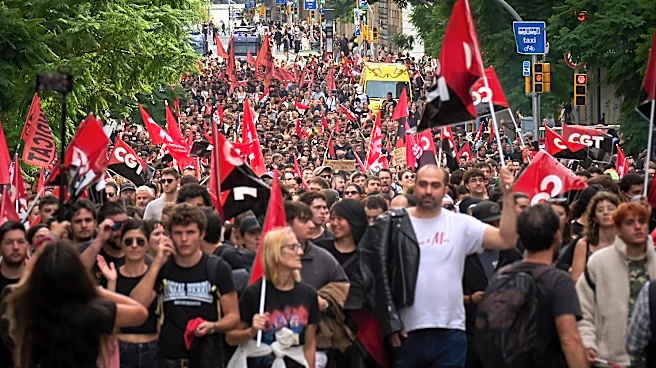
Spain’s housing crisis is a central issue in Spain’s general election Sunday, with growing frustration over soaring rents and inequality. Tens of thousands of people took to the streets in October to demand protections for renters after an 87-year-old woman in fragile health was evicted from her home of seven decades.
Pilar Monterde Rosa, 67, spent her working life at the municipal slaughterhouse, until she was diagnosed with a degenerative disease seven years ago. She sold her house to bank some reserves and moved into a rental unit. When the money ran out, she moved onto the streets. With her health in decline, she says she can rarely do more than walk a few meters (feet) to a cafe near the place where she sleeps.
Today, the monthly 900 euros ($986) the government provides due to her disability isn't enough for a single room in a shared apartment, with rents starting at 550 euros and landlords demanding two months’ rent as deposit.
“I feel exhausted. I can’t take this situation anymore. Dog excrement on the street is worth more than I am,” she told The Associated Press. “I’d rather kill myself than keep living like this on the streets.”
Some of the people sleeping on cardboard mats work regularly for low wages, while others do intermittent work or draw small pensions or state benefits. Still, they can’t afford to make rent. Some people living on the city’s streets are migrants who aren’t allowed to work, relying on money offered by passersby.
The city's homeless shelters have waiting lists, and getting on those requires a referral from a social worker and a lengthy admission process that many people are unwilling to go through.
A deepening housing crisis has pushed some of Barcelona’s most vulnerable residents into homelessness, and pushed some of them onto the streets. Around 2,000 people were sleeping on Barcelona's streets each night in December 2025, up 43% from 2023, according to the Arrels Foundation, a nonprofit that supports homeless people in the city. The organization says Barcelona is among the European cities with the largest number of people living in the street.
Municipal data in 2024 showed that another 2,860 homeless people were staying in public and private shelters.
Average monthly rent for newly signed leases rose more than 42% over the decade through 2026, to 1,139 euros, according to the most recent data from the regional government.
Some people manage to move on to permanent housing after a period on the street. Stefan Precorichu, a 54-year-old Romanian, fled poverty at home and arrived to Barcelona in 2016, but his early years there were very hard. He spent eight years living on the streets, turned to alcohol and drugs, then hit bottom. But eventually, between odd jobs and monthly government assistance he managed to get the money together to move into public housing and now has a bed to call his own.
“I can finally stand on my own two feet, and I feel like I’ve broken free from the social exclusion I was suffering,” he said.
___
This is a documentary photo story curated by AP photo editors.