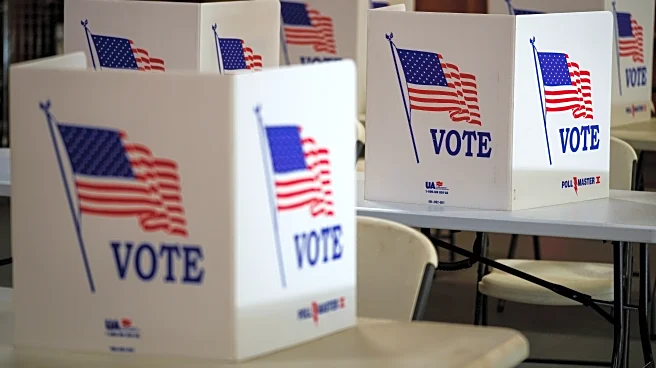

SACRAMENTO, Calif. (AP) — A federal judge on Friday blocked certain federal agencies from requesting citizenship status when distributing voter registration forms, the latest blow to a wide-ranging executive
order on elections President Donald Trump signed last year.
U.S. District Judge Colleen Kollar-Kotelly in Washington ruled that the Constitution's separation of powers, giving states and to an extent Congress authority over setting election rules, are at the heart of the case.
“Put simply, our Constitution does not allow the President to impose unilateral changes to federal election procedures,” wrote the judge, an appointee of former President Bill Clinton.
Specifically, Kollar-Kotelly permanently blocked two provisions of the executive order that sought to impose proof-of-citizenship rules.
Her decision said agencies will not be allowed to "assess citizenship” before providing a federal voter registration form to people enrolling in public assistance programs. It also said the Secretary of Defense cannot require documentary proof of citizenship when military personnel register to vote or request ballots.
“Our democracy works best when all Americans can participate, including members of our military and their families living overseas. Today’s ruling removes a very real threat to the freedom to vote for overseas military families and upholds the separation of powers," said Danielle Lang, a voting rights expert with the Campaign Legal Center, which is representing plaintiffs in the case.
The White House said Trump's executive order was intended to ensure “election security” and said Friday's ruling would not be the last word.
“Ensuring only citizens vote in our elections is a commonsense measure that everyone should be able to support,” said Abigail Jackson, a White House spokeswoman. "This is not the final say on the matter and the administration looks forward to ultimate victory on the issue.”
The specter of noncitizens voting and tainting elections was a central strategy for Trump and Republicans during the 2024 campaign, and congressional Republicans are continuing to push proposals that would require proof of citizenship to register to vote. Research, even among Republican state officials, has shown voting by noncitizens is a rare problem.
Friday's ruling is among several setbacks for the president's executive order, which has faced multiple lawsuits. In October, Kollar-Kotelly blocked the administration from adding a documentary proof of citizenship requirement to the federal voter registration form. Separate lawsuits by Democratic state attorneys general and by Oregon and Washington, which rely heavily on mailed ballots, have blocked various portions of Trump's order.