
WASHINGTON D.C. (AP) — Republican Sen. Ted Cruz threatened Monday to hold up funding to keep the federal government open after the end of January if reforms don't pass by then to tighten up the rules on military
flights and help prevent deadly crashes like the collision between an airliner and an Army helicopter over Washington, D.C., that killed 67.
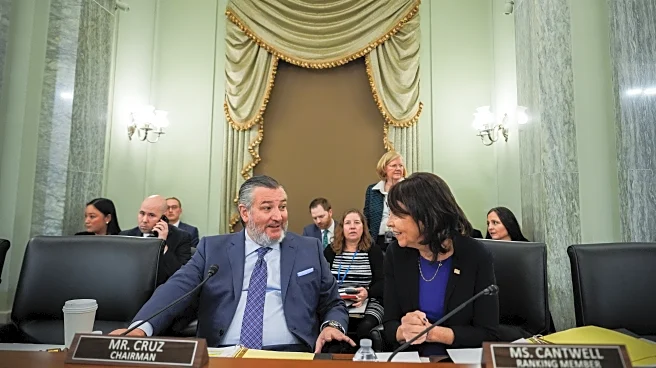
Cruz and Democratic Sen. Maria Cantwell held a news conference Monday with some of the victims' families to urge Congress to strip provisions from a massive defense bill that would allow military aircraft to get a waiver to return to operating without broadcasting their precise location, just as they were before the Jan. 29 crash.
It's not clear if Republican leadership will allow the defense bill to be amended because that would send the bill back to the House and could delay raises for soldiers and other key provisions. But if the defense bill passes as written now, Cruz said, he will hold up government funding until the bill he introduced last summer is passed to fix the problem.
Cruz said the defense bill provision “was airdropped in at at the last moment," noting it would unwind actions taken by President Donald Trump and Transportation Secretary Sean Duffy to make the airspace around D.C. safer.
“The special carve-out was exactly what caused the January 29th crash that claimed 67 lives,” Cruz said.
Before the crash, military helicopters routinely flew through the crowded airspace around the nation’s capital without using a key system called ADS-B to broadcast their locations. The Federal Aviation Administration began requiring all aircraft to do that in March.
National Transportation Safety Board Chairwoman Jennifer Homendy, senators, airlines and key transportation unions all sharply criticized the new helicopter safety provisions in the defense bill last week when they came to light.
Cruz and Cantwell said they only became aware that the sprawling military bill would have that language after it was finalized by congressional leaders last week. They began strenuously objecting as soon as they realized it contained the exemptions.
The families of the crash victims said this bill would weaken safeguards and send aviation safety backwards.
“Our families know the consequences of systemic failures, and we cannot accept a policy change that makes our skies less safe,” the families said in a statement.
The NTSB won't release its final report on the cause of the crash until sometime next year, but investigators have already raised a number of key concerns about the 85 near misses around Ronald Reagan National Airport in the years before the crash and the helicopter route that allowed Black Hawks to fly dangerously close to planes landing at the airport's secondary runway.
The bill Cruz and Cantwell proposed to require all aircraft to broadcast their locations has broad support from the White House, the FAA, NTSB and the victims' families.