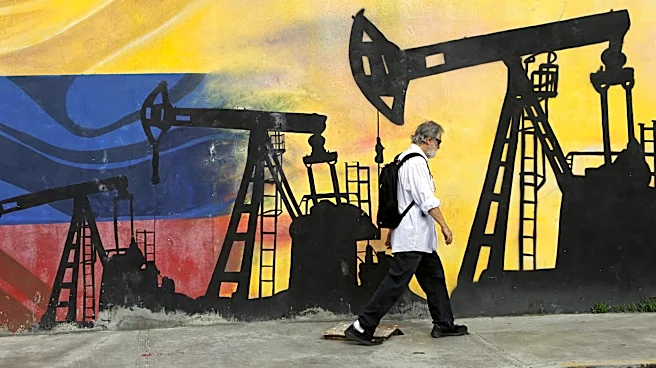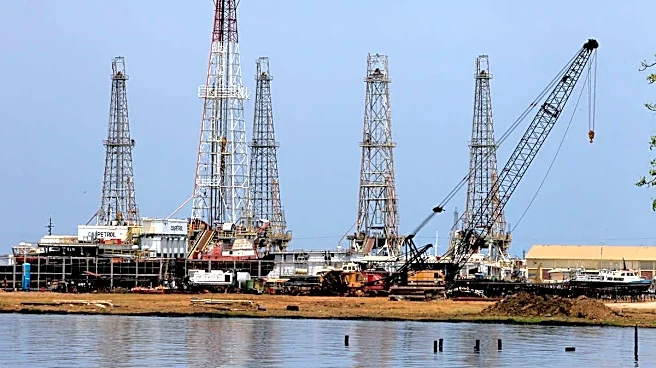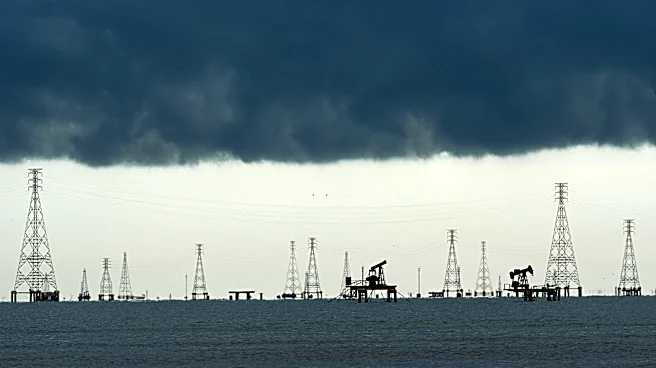

Oil giant Chevron confirmed that it will expand its operations in Venezuela, just days after President Donald Trump announced an ambitious deal to develop the nation’s oil reserves and give the Pentagon
a stake in the profits.
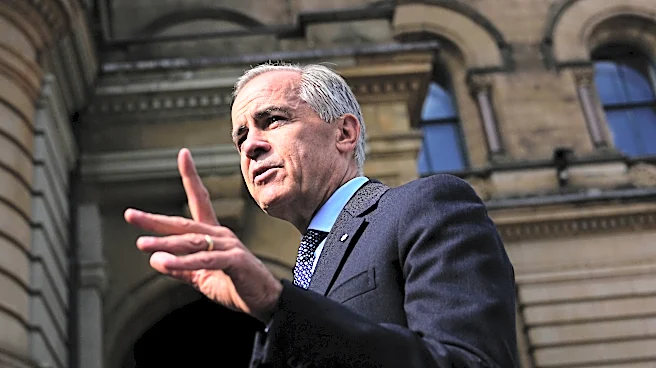
Canadian Prime Minister Mark Carney told the Trump administration Tuesday to “stop doing memes, stop throwing shade and stop trying to be tough,” as he pushed back against a fresh wave of taunts from Washington. Carney said U.S.-Canada trade talks could resume if Washington becomes serious about negotiations.
And a record percentage of Americans — about 9 in 10 — 89% — believe there's widespread corruption in the U.S. government, according to a new Gallup poll released Wednesday. That’s up 10 percentage points from last year.
Here's the Latest:
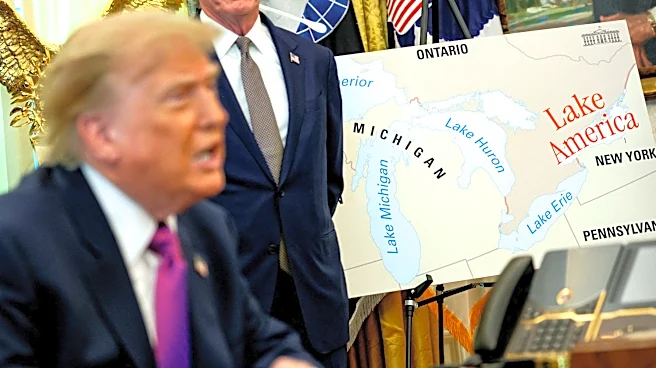
Apple’s move followed competitor Google days after Trump ordered a new name for the body of water. Users outside of the U.S. still see the name the lake has had since before the U.S. and Canada existed.
Apple did not immediately respond to a request for comment on Wednesday. Interior Secretary Doug Burgum told Fox this week that Trump had reached out to the company “directly” about the change.
The president’s executive order on Friday directed the Interior Department to update the lake’s name in the U.S. Geographic Names Information System, as one of the latest provocations during his trade war with Canada.
MapQuest declared that it won’t change Lake Ontario’s label, and was topping the charts for downloads of free apps Wednesday in Apple’s App Store. The app owned by California-based System1 also gave users the option to name the lake “whatever you want.”
The secretary of state said the US will continue pressuring Iran until it drops any nuclear weapons ambitions and ends support for terrorism in the Middle East and beyond.
“The core and central issue is in the end that Iran will never be allowed to have a nuclear weapon,” he said.
“They want money for two things, to sponsor terrorism and to obtain a nuclear weapon,” he told Fox News host Brian Kilmeade in an interview aired on Wednesday. They spoke on Tuesday shortly after Trump announced that the U.S. had resumed military operations against Iran in and around the Strait of Hormuz, but before Iran retaliated by attacking American interests in the region.
Rubio said “they keep shooting at things” in the strait, and so the U.S. “will continue to target those things that pose a threat to our forces and to international shipping.”
The Venezuelan Constitution states that such arrangements must be approved by the National Assembly, which has not happened, wrote Ian Vásquez, vice president for international studies at the Cato Institute.
“The deal lacks legitimacy since it was agreed to with a dictatorship that has clung to power for decades through violence and by committing what was probably the largest electoral fraud in Latin American history in 2024,” Vásquez wrote. “The agreement was also reached under overwhelming pressure, military and otherwise, from the United States. As such, any future Venezuelan democracy will question the deal, thus undermining confidence in the current arrangement.”
The private company the Trump administration is creating to control a huge part of Venezuela’s oil reserves is a joint venture with North American Blue Energy Partners — a detail the White House had withheld for days. NABEP, owned by Venezuelan businessman Alejandro Betancourt, is already the second-largest operator in Venezuela, behind Chevron.
Energy Secretary Chris Wright promoted the deal Wednesday on “Squawk Box” on CNBC.
“What we’re doing is increasing the confidence for private businesses to come do deals in Venezuela, directly with the government of Venezuela, and possibly also with the partnership between NABEP. This is President Trump’s grand plan to replace conflict with commerce,” Wright said.
Analysts are skeptical, saying it will take years to revive Venezuela’s oil industry, and questions remain about whether Venezuela’s acting President Delcy Rodríguez has the legal authority to give the company 100-year rights over 17 oil fields with reserves of 65 billion barrels.
Trump has eyed Venezuela’s oil since the capture of Nicolás Maduro and he’s been pressing to get U.S. businesses back into the country. “We have Exxon going in, we have Chevron going in. We have our big oil companies going in,” he said in January, and suggested again on Monday that U.S. oil majors were readying for a return.
Other than Chevron, which already operates in Venezuela, there is no evidence of that. ExxonMobil CEO Darren Woods said in January that Venezuela was “ uninvestable,” and a company spokesman said this week that “nothing has changed.”
The U.S. Secretary of State is downplaying the significance of CIA chief John Ratcliffe’s visit to Moscow last month, saying it was a “routine” trip aimed at keeping communications channels open.
Reports emerged that Ratcliffe warned Russia during his visit about assistance to Iran and its military position in its war with Ukraine.
“The United States does need to be able to communicate with Russia (and) his visit there was largely routine in that sense,” Rubio said in an interview with Fox News host Brian Kilmeade that aired on Wednesday. “This is not unusual.”
“It wasn’t part of any sort of broader initiative,” Rubio said in the interview that was recorded on Tuesday.
The Chinese government is pressing for answers after a Chinese man died hours after being taken into custody by U.S. Immigration and Customs Enforcement at a U.S. territorial lockup.
Lianyong Wei, 51, died early Aug. 23 at a hospital in the Commonwealth of the Northern Mariana Islands, ICE announced in a press release Tuesday. ICE said his cause of death was under investigation.
“We have expressed serious concerns to the relevant U.S. authorities over this incident and required a timely and thorough investigation into the cause of Mr. Wei’s death, notification of the findings, measures to prevent any recurrence of similar incidents, and assistance to the family of the deceased in handling the aftermath,” the Chinese Consulate General in Los Angeles said in a statement.
The national average price for a gallon of regular gasoline jumped overnight to $4.12, according to the motor club AAA. That’s 93 cents more than it cost at this point last year.
The cost for diesel gasoline rose to $5.69, AAA said.
U.S. and Iranian air attacks involving missiles and drones Sunday and Tuesday have threatened to fully reignite the conflict that has spiked global oil prices.
The U.S. Central Command said it hit Iran’s air defense sites, radar systems and maritime assets as Iran fired at its neighbors in the Gulf region. Iranian officials said one U.S. strike hit a home hosting a wedding, killing five people and wounding dozens.
Minted in Philadelphia as part of America’s 250th birthday, the coin goes on sale at noon Eastern time Wednesday, according to the U.S. Mint.
A roll of 25 coins will cost $61, and a bag of 100 will cost $154.50.
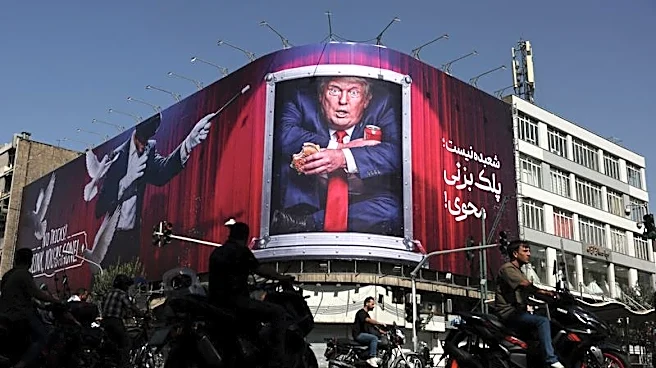
The coin’s design, Trump’s stern stare on one side and the Great Seal of the United States on the other, was previously given the stamp of approval by the U.S. Commission of Fine Arts, whose members were appointed by Trump. The president has said his depiction on a coin was “very unusual” and he’s “honored by it.”
The coin follows other moves to rename things in Trump’s honor, including the U.S. Institute of Peace and the John F. Kennedy Center for the Performing Arts.
The U.S. oil giant announced its expansion on Wednesday just days after Trump announced an ambitious deal to develop the nation’s oil reserves and give the Pentagon a stake in the profits.
Chevron said it has been assigned additional acreage in the Orinoco Belt, where the company has an established position. Joint venture plans include investing more than $7 billion over five years to more than double production to about 600,000 barrels a day.
“Chevron’s history in Venezuela spans more than a century, and our expanded position reflects our confidence in the country’s deep resource potential and its ability to compete for investment within our portfolio for decades,” CEO Mike Wirth said in a prepared statement. “With improved terms and additional acreage, we are strengthening a portfolio that we believe can deliver attractive low-cost oil growth, support energy supply and create differentiated long-term value.”
▶ Read more
Interest rates on government bonds are rising again around the world, making borrowing more expensive for consumers and businesses and heightening concerns about whether governments are issuing more debt than financial markets can handle.
Rising bond yields are one of the few forces in the world strong enough to get politicians to snap to attention. They can also have a big impact on Americans’ personal finances and on the broader economy. The bond market can dictate how much ordinary people have to pay on their mortgages and car loans, as well as how much they earn from their savings accounts and 401(k) plans.
Fighting has flared up again in the Middle East, causing oil prices to jump and renewing inflation worries. Investors typically demand higher interest rates, or yields, on government bonds when inflation is high or they think it may get worse.
▶ Read more
Carney said during a fresh barrage of taunts from Trump administration officials that the U.S. approach in the talks would have left Canadian industries effectively as subsidiaries of American companies or imposed terms under which they would be “gradually wound down in Canada and wiped out.”
Carney said Washington also sought limits on Canada’s future trade deals.
“We’re not going to — of course, we’re not going to accept those terms,” Carney said. “Canada is a sovereign state. We will strike free trade deals with the countries we wish to strike free trade deals.”
Bea Bruske, president of the Canadian Labour Congress, said Carney told labor leaders they could not expect relations with the United States to “go back to normal any time soon,” calling the current situation “a new normal that we have to get adjusted to.”
Driscoll posted his departure date on X late Tuesday, a day after the White House announced his resignation. A U.S. Army official said Monday that Driscoll submitted his resignation after speaking with President Donald Trump on the current state of the Army.
Despite widespread reporting of tensions between Driscoll and Defense Secretary Pete Hegseth, Driscoll said it was an honor to serve under Hegseth and Trump.
“Our Soldiers, Civilians, and their Families are our Nation’s very best, and they have inspired me every day,” Driscoll wrote, crediting the Army’s progress during his 18 months on the job with “the support of Secretary Hegseth.”
Driscoll’s departure, however, follows Hegseth’s ouster of one of his allies from the Army and the rollback of a drone program he championed.
Americans’ belief that there is widespread corruption in the U.S. government has reached a record high, according to a new Gallup poll released Wednesday.
About 9 in 10 Americans – 89% – say corruption is widespread throughout the U.S. government. That’s up 10 percentage points from last year, and marks the highest measure recorded in Gallup’s 20-year trend.
There is bipartisan agreement that there’s substantial government corruption. About 9 in 10 Democrats and independents say this, as well as roughly 8 in 10 Republicans. Democrats, however, have driven the recent jumps.
When President Biden was in the White House, about 6 in 10 Democrats thought government corruption was widespread. That jumped to 76% during President Trump’s first year back in office and now sits at 91%.
Gallup found that in recent years, the U.S. has outpaced other countries with advanced economies when it comes to their perceptions of government corruption.
Asked by Christian podcaster Bryce Crawford about his interest in the “end times,” the vice president laughingly said it had been more of an obsession during his youth.
“There are, like, things about the world that make me feel, like, not shocked if the Antichrist was walking among us, but, again, I try not to focus too much on it,” Vance said in the interview made public Tuesday.
Crawford also asked Vance about Trump’s post of an AI-generated image of himself as Jesus, which Crawford said offended him. Trump initially said he thought the image showed him as a doctor, then took down the post amid widespread criticism from even some of his own backers.
“He did not mean to, like, mock or mimic God — that’s just not who he is,” Vance said, adding that the president often tries to keep things light.
▶ Read more
“The Canadian deal has virtually no impact on American prices. No impact,” he insisted Wednesday on “Fox & Friends.”
Bessent blamed the impasse and rounds of retaliatory tariffs from both sides on Canada’s prime minister. He said “Carney has made a political decision” to stop a deal that “was on the 1-yard line.”
The secretary predicted that Carney “will have to come back” for negotiations, and he suggested that the next deal the U.S. offers won’t be as good.
He defended Trump’s economic leadership on “Fox & Friends” despite the president’s plunging approval ratings on the economy over the course of this election year.
“Prices are too high,” Bessent acknowledged.
He blamed former President Joe Biden before he tacitly conceded that Trump’s war in Iran has pushed energy prices and consumer prices higher. And he credited Trump for higher wages.
“The conflict in Iran will end, and prices will come down,” Bessent said. “Overall, prices are coming down. Core inflation is very under control. ... We are helping Americans slowly get back on their feet. The Iran conflict will end, but the wage gains will stay.”
The U.S. treasury secretary said on “Fox & Friends” that “no American firm knows how to operate in Venezuela better than Chevron.”
The international energy giant is poised to announce its planned investments in Venezuela after the Trump administration announced a deal giving the U.S. government and private firms control of a sizable portion of the South American nation’s oil.
Bessent said Trump is “creating assets for the American people. It is going to push down oil prices, push up production” to benefit U.S. consumers and the Venezuelan economy.
Experts have repeatedly warned that Venezuela’s dilapidated oil infrastructure will require years of restoration work and tens of billions of dollars to resuscitate.
Scott Bessent says multiple Trump administration officials are talking with other nations that are still dealing economically with Iran and pressuring them to stop. But he avoided specifically mentioning Russia, even when asked.
“My message to everyone is stay away,” Bessent said Wednesday on “Fox & Friends.”
“We all want this conflict to end, and the fastest way for the conflict to end is for no one to provide any support to this regime. We are going to sever every tie that they have.”
Existing sanctions on Tehran already are working to “asphyxiate the regime,” Bessent said, and the statements from some Iranian leaders prove “all is not well in the economy” there.
The White House on Monday said it’s partnering with North American Blue Energy Partners as part of Trump’s push to tap into Venezuela’s oil industry, setting up a deal that will give the Pentagon a stake in roughly a fifth of the country’s vast oil reserves.
The Trump administration released more details on Monday night, days after Trump announced what he described as the biggest oil deal in history. The sweeping agreement has been met with skepticism from analysts who say it will take years to revive Venezuela’s production, but Trump and his aides are pitching it as a chance to develop a new oil giant in the Western Hemisphere.
As part of the deal, the U.S. is creating a private company as a joint venture with NABEP — a detail the White House had withheld for days. NABEP, owned by Venezuelan businessman Alejandro Betancourt, is already the second-largest operator in Venezuela, behind Chevron.
▶ Read more