







KABUL, Afghanistan (AP) — Lying in her hospital cot, the 3-year-old girl roamed the room with her gray-green eyes, but her body was listless.
Her mother sat by her bedside, quietly weeping. Just a few months ago, she lost her 5-year-old daughter, Khadija, to the same condition: malnutrition.
Both girls had the same symptoms: thin limbs but swollen hands, feet and belly, signs of a severe type of malnutrition caused by protein deficiency. And now 25-year-old
Malika is terrified that Kalsoum, her youngest daughter, will meet the same fate as Khadija.
“I am worried about her, that she might die,” Malika said, wiping her tears with her green headscarf. “My husband is a day laborer. Sometimes there is work, sometimes there isn’t.” The $3-$4.60 he earns on days when he can find work just isn’t enough to feed the family, which also includes three young boys.
Kalsoum is far from alone. In the malnutrition ward in the Indira Gandhi Institute of Child Health, Afghanistan’s main children’s hospital, all 20 beds — the maximum the hospital can afford — are full.
Across Afghanistan, hunger and malnutrition are rising dramatically.
“More people are suffering from hunger than ever before,” John Aylieff, Afghanistan country director for the World Food Program, told The Associated Press. He said 19 million people — nearly 40% of the population — would be facing acute hunger, “the life-threatening type of hunger,” in the next few months.
Even more worrying is that acute malnutrition, which kills if left untreated, is spiraling.
“Acute malnutrition is at unprecedented levels already,” Aylieff said. “In the next year 5.3 million women and children in this country will need treatment for acute malnutrition, the type of malnutrition which if not treated leads rather precipitously to to death.”
That is 1.3 million more than in 2022, Aylieff said, when Afghanistan’s economy teetered on the brink of collapse after the U.S.-led coalition’s withdrawal and the Taliban’s seizure of power.
The vast majority are children, according to data in the latest Integrated Food Security Phase Classification issued Thursday. Children, whose bodies are still developing and therefore have higher nutritional needs, are most at risk when food runs scarce.
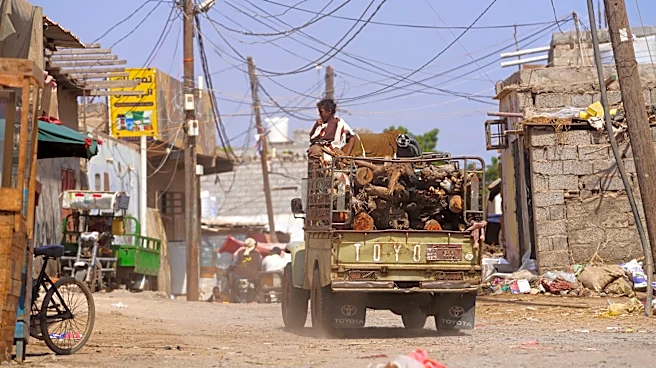
Afghanistan, one of the world’s poorest countries, has been buffeted by a myriad of overlapping crises in recent years.
The legacy of four decades of war is compounded by a yearlong closure of border crossings with Pakistan due to a simmering conflict, depriving Afghanistan of its main trade route. Added to that is the forcible return since 2023 of more than 5 million Afghan refugees from neighboring Iran and Pakistan who are putting pressure on limited resources; natural disasters such as drought, floods and earthquakes; and the crisis in the Middle East.
Poverty is the main driving force behind the hunger crisis, with millions simply unable to afford nutritious food. With the crisis in the Middle East impacting economies across the world, Afghanistan has not been immune.
“The price of food has gone up by between 10 and 30% for the basic staple commodities, the commodities that the poor eat. So the poor are being priced out of the market,” Aylieff said.
But one of the most significant factors has been the sharp decline in international aid on which Afghanistan has long relied. The Taliban takeover in 2021 saw direct foreign aid halted almost overnight, driving millions into poverty and hunger.
Funding cuts to humanitarian organizations, including the halting of U.S. aid to programs such as the WFP’s food distribution, have severed a lifeline for millions. The U.N.'s food agency is the largest provider of food assistance in Afghanistan but has just 12% of the funding it had in 2022, Aylieff said.
“We are forced to turn away six out of seven acutely malnourished women and children from those health clinics because we simply do not have the food to give them to save their child’s life,” Aylieff said.
“That is, in my view, an international scandal. … And the very bleak challenge is that too many members of the international community are woefully indifferent to the suffering of Afghan children.”
The Indira Gandhi hospital’s malnutrition ward is almost always at capacity now. Sometimes, it has more patients than beds, and two children will share a cot, said Dr. Mohammad Arif Hassanzai, head of the hospital’s internal medicine department.
“The number of patients with lower-grade malnutrition is extremely high, yet our current capacity limits us to admitting only the severe cases to these 20 beds,” Hassanzai said. “The assistance we receive from donors covers only this specific capacity, but if more resources were available, we could potentially accommodate 60, 70 or even up to 100 patients.”
The funding cuts both pain and anger Hassanzai.
“I am deeply concerned about why this health assistance has been reduced,” he said. “Must the politics unfolding in Afghanistan inevitably impact patients, causing them to suffer from malnutrition and even die? Healthcare should always remain separate from politics. … I must ask, as a doctor: why has this aid been cut off?”
A few floors up from his office in the malnutrition ward, 25-year-old Zarmina cradles her daughter, Fatma, whose forehead is covered with white surgical tape holding a nasal feeding tube in place. At 2 years old, Fatma weighs just 4.8 kilograms (10.5 pounds), about half of what is considered healthy.
Zarmina, whose husband is a day laborer from Logar province, says Fatma was initially admitted to a hospital in Logar, along with three of her other four children. All were malnourished.
But Fatma’s condition was so serious she was referred to the hospital in Kabul. Her family had to borrow money to fund the trip.
Twelve days after she was admitted, Fatma is still struggling to gain weight. Zarmina isn’t sure how long she will have to say in Kabul.
“I am here, and I am also worried about my other children,” she says. Her other daughters have been discharged from the hospital in Logar and are being cared for by relatives. But the family is still desperately poor, and she doesn't know how they will be able to eat.
In other times, aid organizations might have been able to step in. But the funding cuts mean more and more families like Zarmina's are left helpless.
“The humanitarian crisis in Afghanistan is not so much being defined by what humanitarians can do, but actually by what we cannot do,” Aylieff said. “Because funding cuts are preventing us from mounting the response that we need.”