

LONDON (AP) — President Donald Trump sang the praises of King Charles III after the monarch’s state visit this week. He even lifted some tariffs on Scotch whisky as a favor to the British monarch.
The king delivered a diplomatic master-class on the trip, mixing praise for his host with subtle criticism. It’s unclear, though, whether it will make a major difference to a trans-Atlantic relationship troubled by divisions over issues including the Iran
war.
“In the short term probably yes, in the long term probably no,” said Kristofer Allerfeldt, a University of Exeter professor specializing in American history. But he said Charles had “definitely clawed back some of the prestige of the monarchy” in his homeland with his assured performance.
“He’s done us proud,” Allerfeldt said.
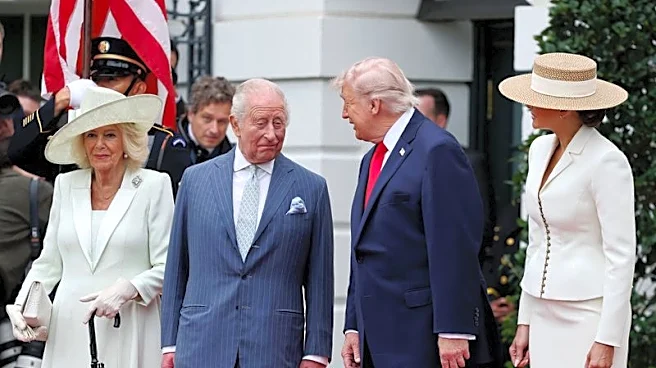
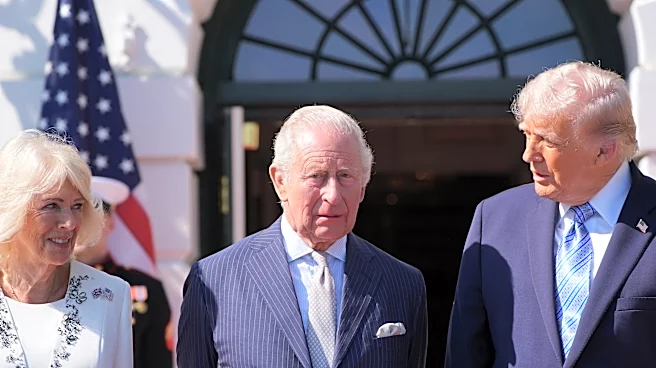
Like all royal visits, the four-day trip to Washington, New York and Virginia by the king and Queen Camilla was a carefully choreographed diplomatic event carried out at the request of the U.K. government. Timed to help mark the United States’ 250th birthday, it was a chance to heal rifts between the U.K. government and the Trump administration.
The president has lambasted Prime Minister Keir Starmer –- whom he once praised –- over his unwillingness to join U.S. military attacks on Iran, dismissing Britain’s leader as “not Winston Churchill,” the World War II prime minister who coined the phrase “special relationship” for the U.K.-U.S. bond.
It’s part of a wider split between Trump and the United States’ NATO allies, whom he has called “cowards” and “useless” for not joining action against Iran.
None of that has soured Trump’s fondness for the British monarchy, which seems to have been deepened by the president’s unprecedented second state visit to the U.K. in September.
Some U.K. opposition politicians had called for the king's reciprocal trip to be canceled, lest the president do or say something to embarrass the monarch.
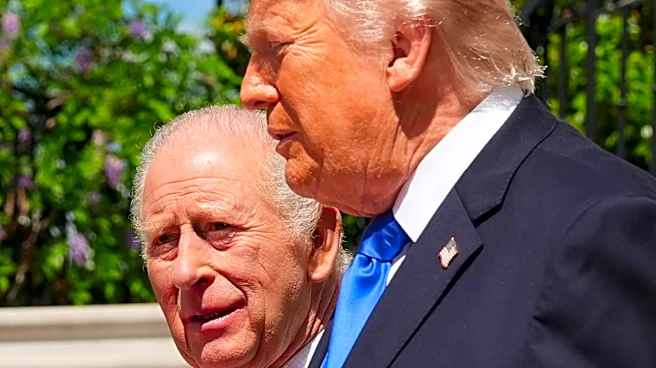
In the end, there was much warmth and few awkward moments –- though Trump did not always adhere to the convention that conversations with the monarch should remain private.
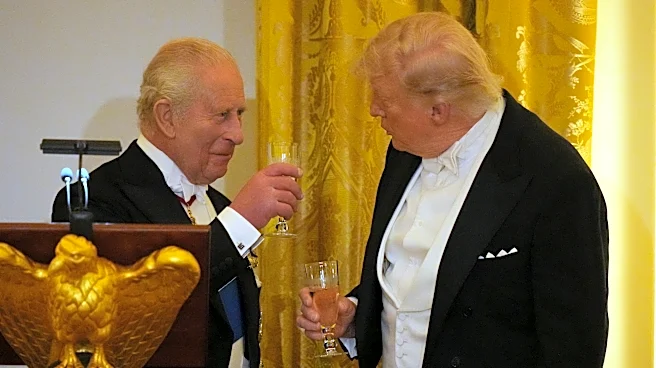
At a white-tie state dinner on Tuesday, Trump said “Charles agrees with me, even more than I do” that Iran must never have nuclear weapons.
Trump also said that “if that were up to him,” the king “would have followed the suggestions we made with respect to Ukraine.”
Buckingham Palace appeared relaxed about Trump’s Iran comment, noting that “the king is naturally mindful of his government’s longstanding and well-known position on the prevention of nuclear proliferation.”
On Ukraine, however, differences were clear. The U.K. has been one of Kyiv's strongest supporters in its fight against Russia’s invasion, and in a speech to Congress the king underscored the importance of the need for “unyielding resolve” to support Ukraine.
It was one of several implicit rebukes to the “America first” U.S. administration in the speech, the centerpiece moment of the trip.
With regal understatement and in a cut-glass accent, Charles stressed the essential role of NATO, the importance of checks on executive power, the threat posed by climate change and the strength drawn from “vibrant, diverse and free societies.” He spoke of his pride at having served in the Royal Navy, a force Trump has disparaged.
“It’s difficult to imagine he could have gone much further in what he said and what he didn’t say,” historian Anthony Seldon told The Guardian. “He judged it incredibly well: very brave, very smart, very clever.”
Allerfeldt noted the “extraordinary” reception from both sides of the political aisle to the speech, which drew multiple standing ovations.
“Apart from the section on the natural world and the environment, both Republicans and Democrats stood up and applauded,” he said.
In a less formal speech at the state banquet, the king even drew laughs when he joked about British troops burning down the White House in 1814.
The trip was judged a success despite the shadow of the king’s younger brother Andrew Mountbatten-Windsor, who has been stripped of his royal title of Prince Andrew, exiled from public life and put under police investigation over his friendship with Jeffrey Epstein. He has denied committing any crimes.
Epstein victims had urged the king to meet with them and other sexual abuse survivors. He didn’t, but he did refer obliquely to the issue in his speech to Congress, mentioning the need to “support victims of some of the ills that, so tragically, exist in both our societies today.”
Andrew Lownie, author of a biography of the former Prince Andrew called “Entitled,” praised the speech as “the best defense of the monarchy in years.”
After the royal couple left the U.S., Trump announced he was lifting certain tariffs on Scotch “in honor of the King and Queen of the United Kingdom.”
Buckingham Palace toasted the announcement, saying the king “sends his sincere gratitude for a decision that will make an important difference to the British whisky industry and the livelihoods it supports.”
Trump called the king “a phenomenal representative” for his country, before turning back to a familiar theme: criticizing Starmer.
The president told Sky News that Charles is “a much different person than your prime minister.
“Your prime minister has to learn to deal the way he deals, and he’ll do a lot better,” he said.