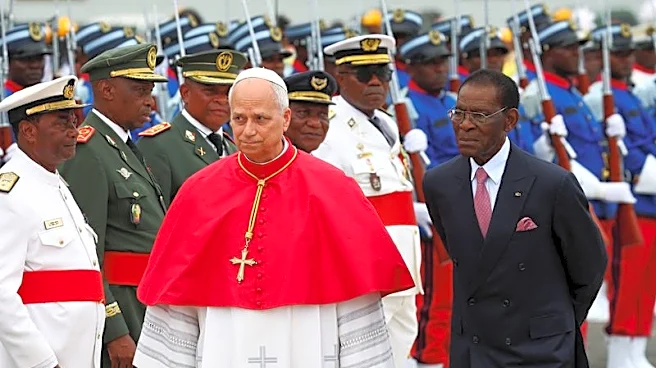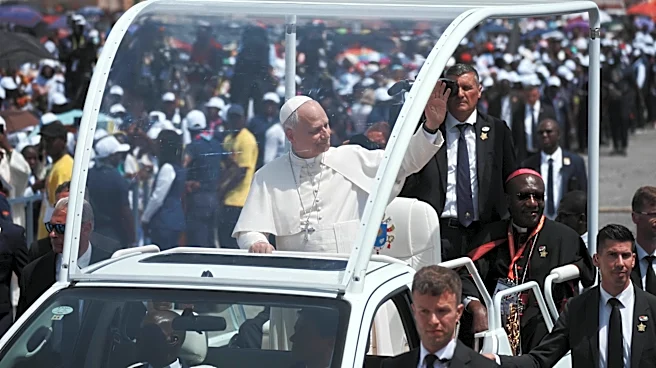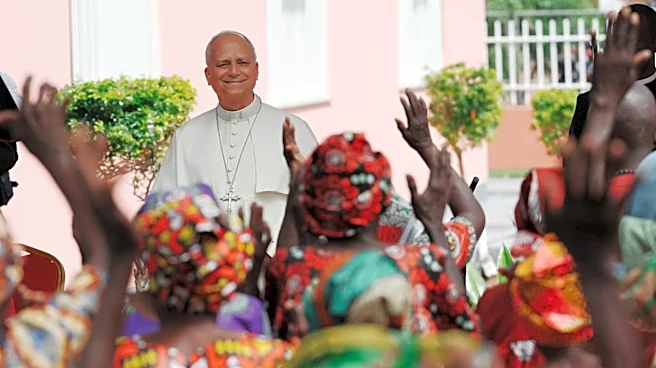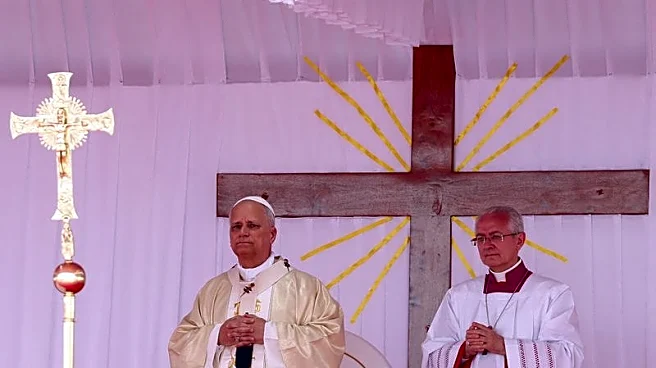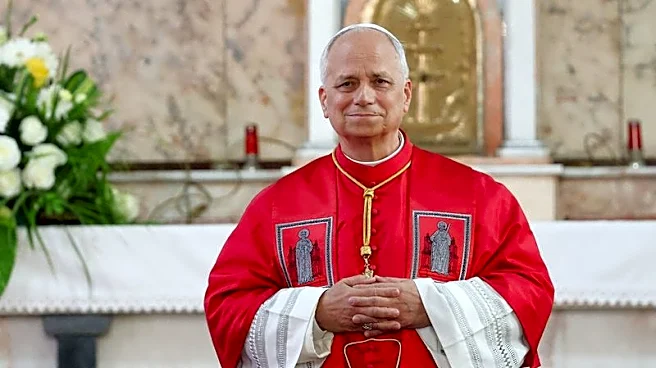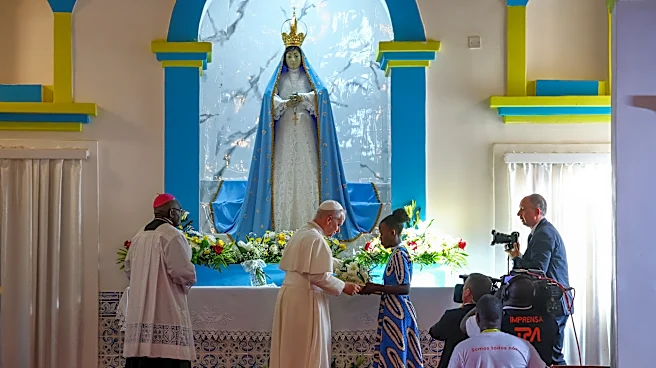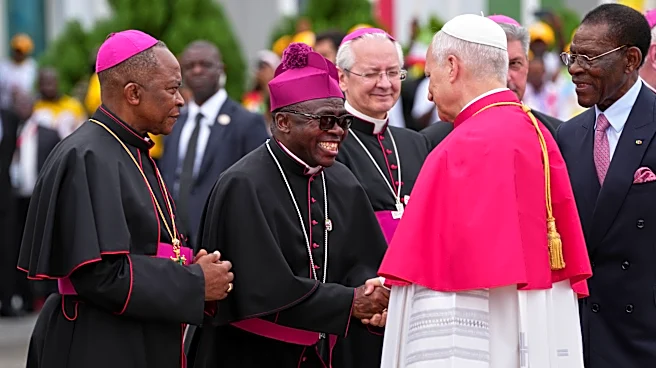

MALABO, Equatorial Guinea (AP) — Pope Leo XIV is visiting one of Equatorial Guinea’s notorious prisons Wednesday, drawing attention to human rights abuses that campaigners have denounced for years and
especially after the U.S. began deporting third-country migrants here.
Leo’s visit to the prison in Bata, the central African country’s port city, continues the tradition of Pope Francis, who made prison visits a priority of his pontificate. Francis’ aim was to give prisoners hope and to remind them the church was with them, while also shining a spotlight on judicial abuses, overcrowding and other injustices.
The visit caps Leo’s last full day in Africa, rounding out a marathon 11-day, four-nation tour that took him from Algeria in the north to Angola in the south, with Cameroon in between.
He was due to open the day with a Mass in Mongomo, in the far east, before arriving in Bata, the country's most populous city on the coast. Also on the agenda was a moment of prayer at a memorial to victims of a 2021 explosion in a military barracks in Bata that has been blamed on negligence.
The U.N. human rights office in 2022 welcomed the abolition of the death penalty in Equatorial Guinea, but its prisons and justice system overall have been repeatedly faulted by the U.N. and condemned by human rights groups and the U.S. State Department.
In its 2023 report on the country, the U.S. listed a host of abuses: arbitrary or unlawful killings and arrests, political detentions, torture, life-threatening prison conditions and “serious problems” with the independence of the judiciary.
“Amnesty International has serious concerns about the human rights situation in Equatorial Guinea,” said Marta Colomer Aguilera, senior campaigner at Amnesty's West and Central Africa office.
She said torture had been used to extract confessions or to punish, human rights defenders are harassed, and the lack of judicial independence compromised the right to a fair trial.
Equatorial Guinea is led by President Teodoro Obiang Nguema Mbasogo, who has been in power since 1979 and is accused of widespread corruption and authoritarianism.
Equatorial Guinea is also one of several African nations that have been paid millions of dollars in controversial deals with the Trump administration to receive migrants deported from the U.S. to countries other than their own.
AP reporting shows that at least 29 such migrants with no ties to the country have been deported here. They were not sent to the prison in Bata. Some remain in detention in Malabo with restrictions on legal and medical support, while others have been forcibly returned to their countries where they face persecution.
The Equatorial Guinea government has denied rights abuses and hasn’t commented when asked to respond to questions about abuses involving the U.S. migration deportation deal.
Leo, the U.S.-born pope, has criticized the Trump administration’s overall migration deportation policy as “extremely disrespectful.”
On the eve of his prison visit, 70 human rights organizations published an open letter to Leo, urging him to speak out especially about U.S. deportation of migrants here and encourage African nations to not be complicit in the practice.
“These practices circumvent humanitarian protections, expose refugees to detention and coercion, and subject individuals to refoulement, in direct contravention of international law,” they wrote, referring to the legal concept that prohibits countries from sending people to places where their lives or freedoms are at risk.
“The conditions under which these deportations have been carried out have also reflected a very troubling disregard for human life and safety. We call for the intercession of Pope Leo XIV to discourage African countries from being complicit in these violations and instead to protect these individuals,” the groups said.
One of the signatories was EG Justice, which has repeatedly denounced the detention of political prisoners in Equatorial Guinea. The group urged Leo to use his moral authority to speak out about it.
“There are individuals — prisoners of conscience, and human rights activists — in detention whose cases raise serious humanitarian and due process concerns,” said Tutu Alicante, a U.S.-based activist who runs the EG Justice group. “At moments like this, sentence review and a real commitment to reform the judiciary can send a powerful signal of a willingness to turn a page toward justice and reconciliation.”
Alicante said the government had taken “cosmetic steps” in recent months to improve certain detention facilities but he said they were temporary.
"The real test will be whether humane conditions, access to medical care, and basic rights are sustained long after the papal visit concludes,” he said.
___
Associated Press religion coverage receives support through the AP’s collaboration with The Conversation US, with funding from Lilly Endowment Inc. The AP is solely responsible for this content.