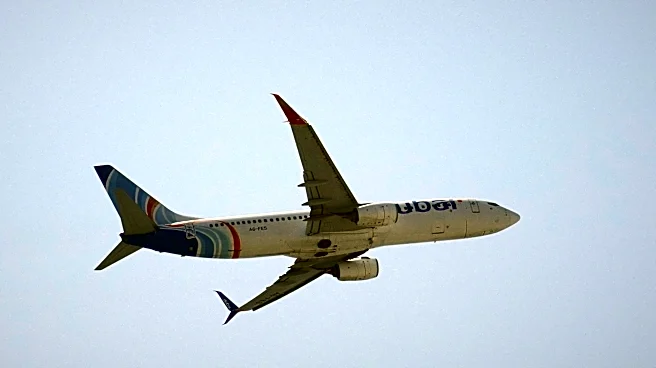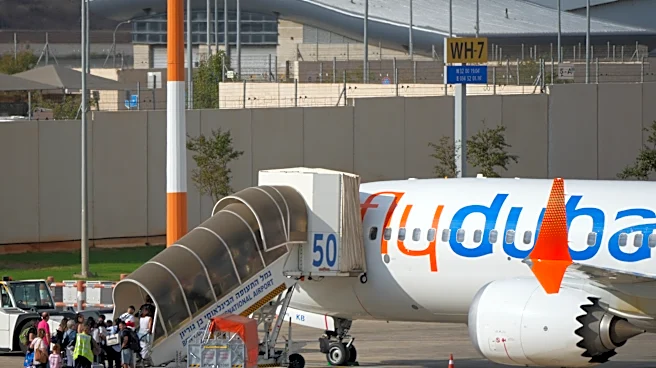



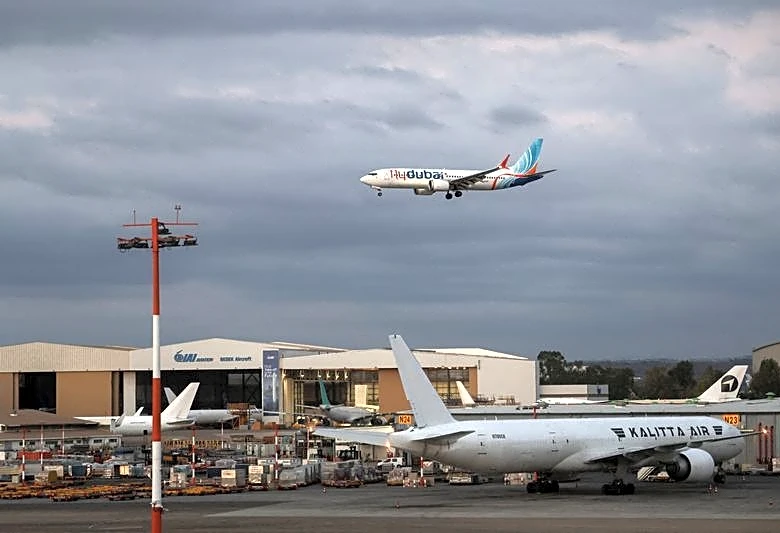




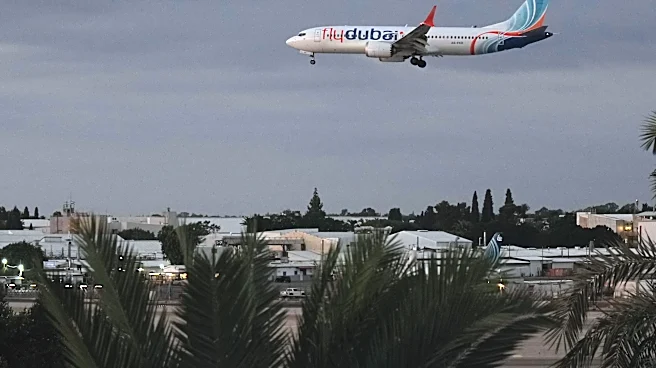
A copilot stabbed his captain and attempted to crash a flight bound for Israel from the United Arab Emirates that was carrying 174 people. Passengers, most of them Israelis, feared for their lives as the FlyDubai aircraft lost half its altitude in about a minute.
The wounded pilot managed to open the cockpit door, and a passenger and a crew member rushed in to subdue the attacker, an Omani national. Other crew members gained control of the aircraft,
which landed safely in Saudi Arabia on Wednesday.
It's still unclear what motivated the attack, which came just days before the anniversary of Hamas' Oct. 7, 2023, attack on Israel that triggered conflict across the Middle East. It has rekindled anxieties about airline security and focused attention on risks associated with flight crews.
Here’s what we know — and don’t know — about what happened on FlyDubai flight FZ1073:
The distress call came at 8:44 a.m. local time, about two and a half hours after the flight left Dubai, a futuristic hub of international business and tourism, heading to the Israeli city of Tel Aviv.
Officials later said that the copilot stabbed the pilot and tried to crash the aircraft.
The plane swiftly lost altitude — dropping from 33,000 feet to 17,000 feet (around 10,000 meters to 5,100 meters) in the span of about a minute. It then circled close to the Jordanian border before landing in Tabuk, Saudi Arabia, about an hour later.
A person who heard the flight’s communications with air traffic control said the plane was initially turned away by Saudi Arabia and Jordan before eventually landing in Tabuk, while passengers screamed in the background. The person who heard the communications spoke on condition of anonymity because they were not authorized to speak to the media.
Aviation experts said they were surprised that the plane did not crash after a descent so extreme that most of the rudder was ripped off the tail.
After landing at Tabuk's Prince Sultan bin Abdulaziz International Airport, Saudi authorities arrested the copilot. His motivations remain unknown.
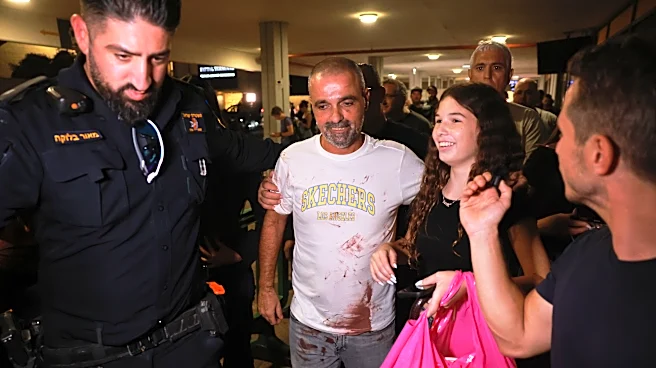
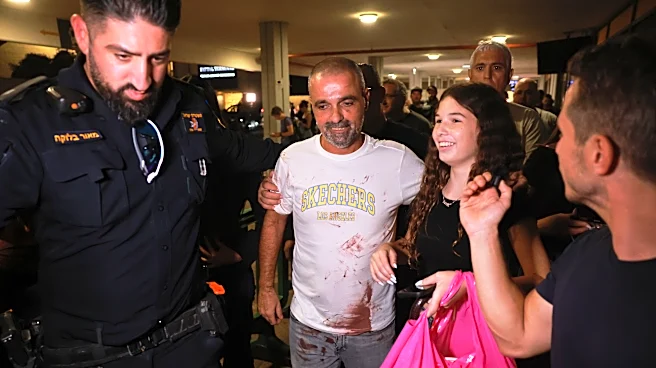
A plane carrying passengers from the flight landed Wednesday evening in Israel.
The wounded pilot, Capt. Smit Machchhar, from the Indian city of Mumbai, has been praised for opening the cockpit door so that others could subdue the attacker and take control of the Boeing 737, pulling it out of a risky dive. Other crew members were able to fly the plane to a safe landing.
The cockpit door on all aircraft is locked during flight for security reasons — a measure that became the industry standard after the Sept. 11, 2001, attacks, in which hijackers broke into the cockpits of four domestic flights in the United States.
Israeli Prime Minister Benjamin Netanyahu said on X that the pilot's opening of the cockpit door had “enabled passengers and crew to overpower the attacker — preventing a catastrophic midair disaster.”
Indian Prime Minister Narendra Modi on Thursday called Machchhar a hero.
“In the face of the gravest danger and despite being seriously injured, he showed immense courage and an unwavering resolve to protect the lives of others,” Modi wrote on X.
Machchhar was taken to a hospital and was in stable condition, according to the Indian Embassy in Saudi Arabia.
One question is how anyone on the aircraft — especially a pilot — was able to get a knife onboard.
In an interview with the Fox News Channel’s Sean Hannity that aired Wednesday night, Netanyahu said the attacker might have hit the captain with an ax. Airlines are generally required to carry crash axes in the cockpit for use in an emergency to break open a window to escape or break open a panel to access a fire.
Pilots, like passengers, must pass through metal detectors at airports. It's also standard for airlines to check their pilots' background for criminal and employment history, and their physical and mental health, as well as having them undergo intelligence and security screening.
Israel has some of the most stringent airline security measures worldwide. Passengers on Israel-bound flights regularly are taken aside for questioning and baggage searches after passing through normal airport security. It's unclear whether the pilots of the FlyDubai flight had been screened as vigorously.
The UAE government said an investigation team had begun its work, adding that it has jurisdiction because the plane is registered there. It said UAE law applies to crimes committed on board, even outside its territory.
A regional official briefed on the investigation said the suspect, an Omani citizen, was under arrest. Netanyahu said the attacker had undergone radical Islamist indoctrination but did not provide further details. The suspect has not been publicly identified.
Israeli intelligence and security officials were in Saudi Arabia to help investigate the suspect, according to a regional official who spoke on condition of anonymity because they were not authorized to speak to the media. Israel has requested that the suspect be sent to Israel for the investigation, though it is unclear if that request will be granted, the official said.
Another regional official said the United States and Oman also were involved. The official did not describe the extent of Israeli involvement.
“All possible scenarios, from terrorism to mental disorders, are being looked into. Nothing is ruled out for now,” said the official, speaking on condition of anonymity to discuss the probe.
___
Associated Press writers David Rising in Bangkok, Thailand, Sheikh Saaliq in New Delhi, Melanie Lidman in Tel Aviv, Israel, and Samy Magdy in Cairo contributed to this report.