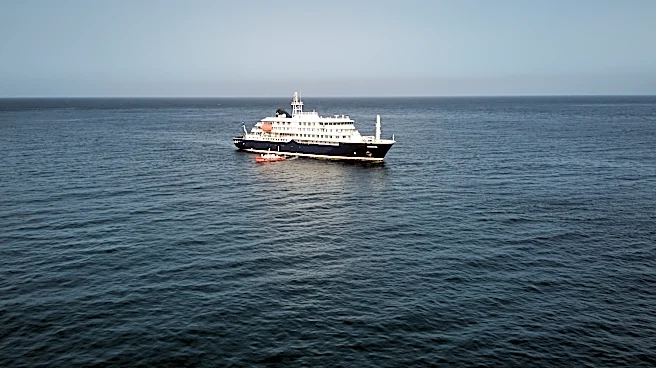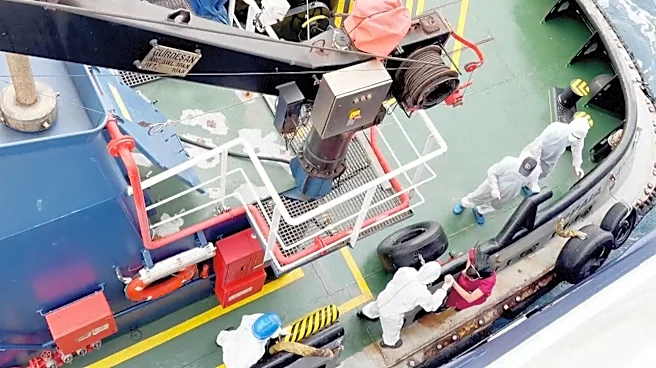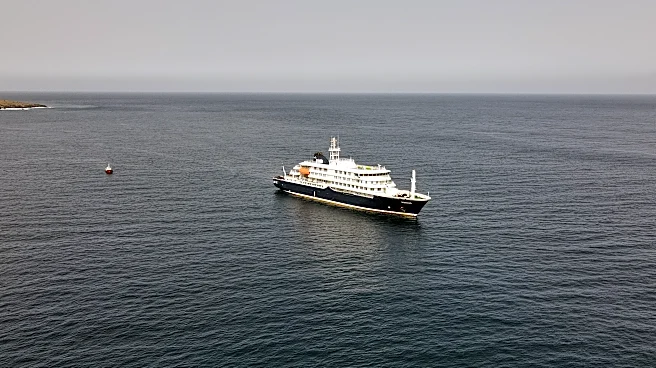






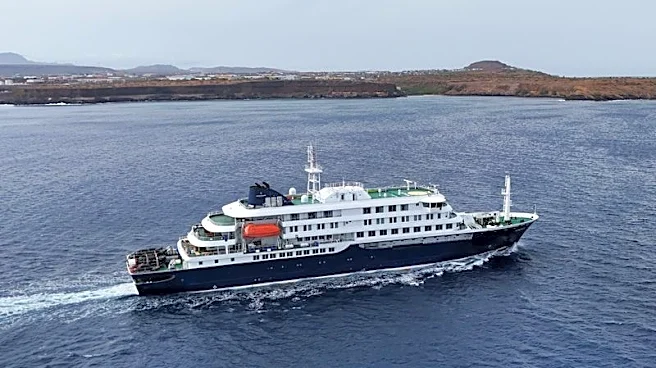
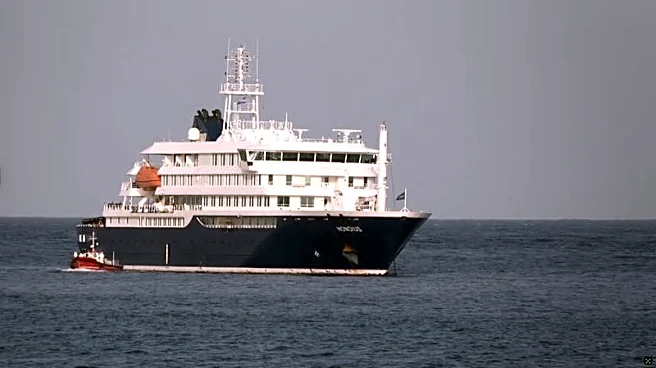
CAPE TOWN, South Africa (AP) — An outbreak of the rare hantavirus unfolded over weeks on a cruise ship as it sailed across the Atlantic Ocean.
At least three passengers have died and several others are sick and were evacuated from the ship. Health authorities are trying to trace passengers who left the ship previously and people who might have had contact with them.
More than 140 passengers and crew members are still aboard the Dutch-flagged MV Hondius
as it heads for Spain's Canary Islands.
Hantavirus is a rodent-borne infection that in rare cases can be transmitted from person to person, though the World Health Organization says the risk to the wider public is low because the virus can’t easily be passed between people.
Here's a timeline of the outbreak:
The ship sets off from Ushuaia in the far south of Argentina. Scheduled stops include Antarctica and several isolated South Atlantic Ocean islands.
A 70-year-old Dutch man becomes sick on board with fever, headache and mild diarrhea. Before boarding, the man and his wife, who is also Dutch, had gone sightseeing in Ushuaia, and traveled elsewhere in Argentina and Chile, according to WHO.
The Dutch man develops respiratory distress and dies on board. The cause of death could not be determined at the time, according to the cruise company.
Six people join the cruise when the ship stops at the remote archipelago of Tristan da Cunha, a British territory in the South Atlantic. The Dutch man's body remains on board.
The man's body is taken off the vessel at the island of St. Helena, part of the same British territory. His wife disembarks, as do more than two dozen other passengers.
The Dutch woman, who has symptoms of illness, takes a commercial flight from St. Helena to South Africa. The plane carries 88 passengers and crew members, according to the airline. It's not clear how many other people who got off the MV Hondius take that flight.
The Dutch woman dies in South Africa after collapsing at an airport while trying to board another plane home.
Back on the ship, which has now left St. Helena, a third passenger is sick. The British man is evacuated to Ascension Island. He is later moved to South Africa, where he is put in intensive care in a hospital. He has a high fever, shortness of breath and signs of pneumonia, which can be caused by hantavirus.
Another passenger, a German woman, falls sick on board as the ship sails for Cape Verde off Africa's west coast.
The German woman dies onboard nearly a month after the first passenger fell ill. She is the third fatality.
The same day, South African health authorities receive a positive for hantavirus from tests performed on the British man in intensive care there. It's the first time that the virus is identified in the outbreak.
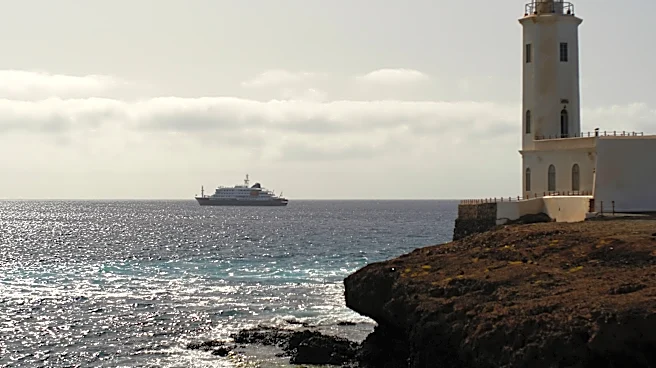
The World Health Organization says it's responding to a suspected hantavirus outbreak on the cruise ship, which has now arrived in Cape Verde waters.
South African health officials receive a posthumous positive result for hantavirus for the Dutch woman who died after collapsing at an airport. They had decided to test her body after the positive test on the British man.
WHO now considers it an outbreak.
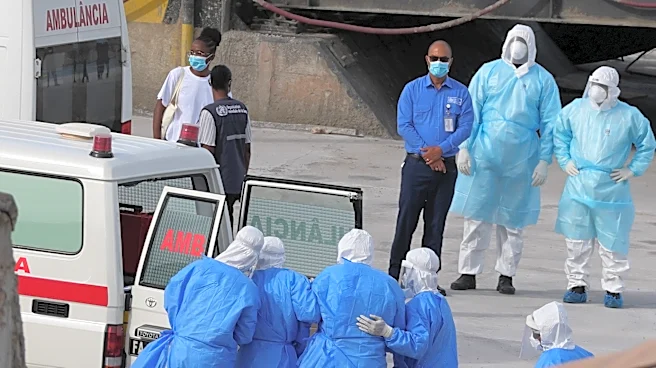
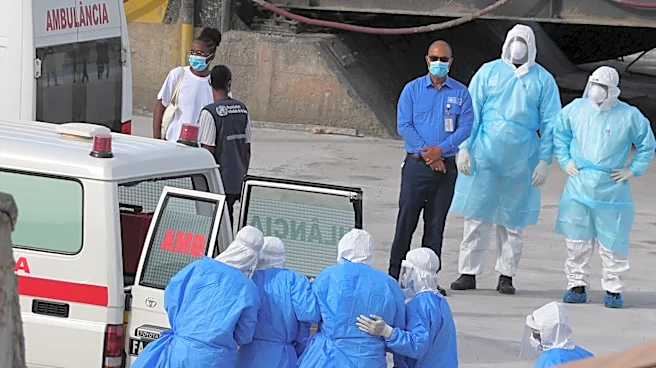
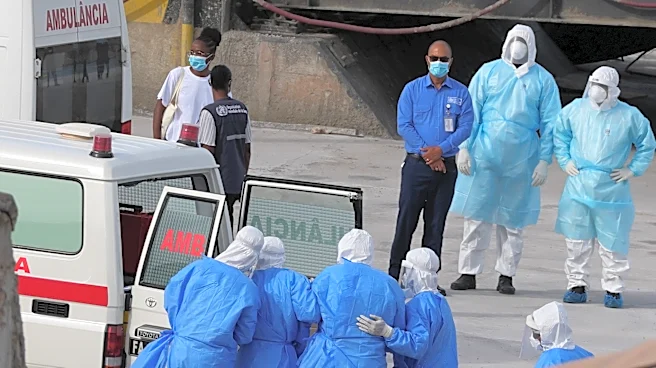
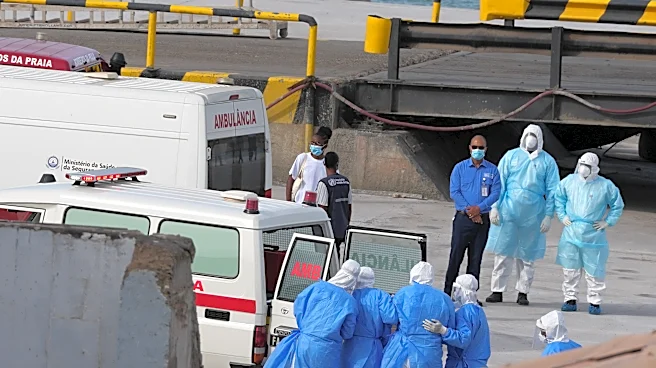
The cruise ship is in a standoff with Cape Verde authorities over whether it can evacuate more sick people and let other passengers and crew members disembark. Cape Verde is sending health workers to the ship to assist but says no one can disembark. Two crew members onboard are seriously ill, including the ship's doctor, and another person is being monitored.
Those three people, two of whom test positive for hantavirus, are evacuated from the ship and flown to specialized hospitals in Europe. The ship then sets sail for Spain's Canary Islands after the country says it will accept it.
Authorities in Switzerland announce another positive hantavirus test on a man who left the cruise earlier in St. Helena, bringing confirmed cases to five.
Health authorities in South Africa and Switzerland say it's the Andes virus, the only hantavirus thought to spread human-to-human. It is found in South America, primarily Argentina and Chile.
Health authorities in Switzerland, Britain, Netherlands, France, Singapore, South Africa and elsewhere are isolating people who previously left the cruise ship and traveled home. They are also tracing people who might have come into contact with cruise ship passengers.