





United Nations-backed human rights experts said on Thursday there are “reasonable grounds” to believe the United States committed war crimes in two strikes in Iran on the first day of the war.
Meanwhile, the Palestinian Authority has condemned the U.S. decision to deny its officials visas needed to attend the upcoming U.N. General Assembly. And countries that recently signed a defense pact with Saudi Arabia are calling for the escalation in fighting
in neighboring Yemen to end.
Here’s a look at the latest news in the Middle East on Thursday. Full coverage can be found here.
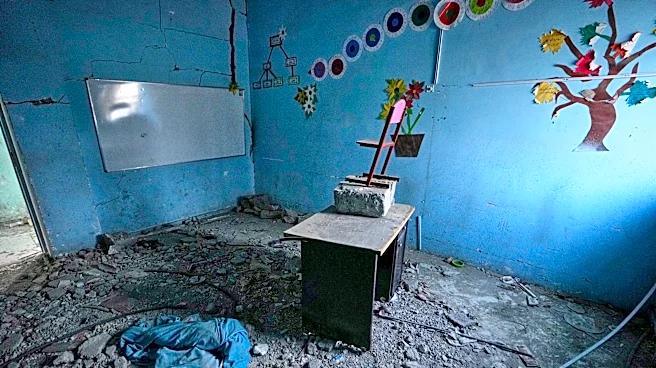
Human rights experts commissioned by the U.N.’s top human rights body said their findings focus on a pair of U.S. strikes that killed at least 178 civilians, including women and children, on the first day of the war in Iran.
At least one U.S. missile hit the Shajareh Tayyebeh school in Minab, according to an Associated Press investigation. The Trump administration has yet to directly accept the blame or release findings of a Pentagon investigation into the school bombing.
The U.N.-backed team made the allegations of war crimes over the strike on the “clearly identifiable” school and another airstrike where missiles dispersed tungsten pellets over a “clearly identifiable sports complex and residential area” in the southern city of Lamerd.
The Palestinian Authority condemned the U.S. denial of visas for Palestinian President Mahmoud Abbas and other PA officials ahead of the U.N. General Assembly and called Israel’s actions “the real threat to the two-state solution and prospects for peace.”
The Authority administers parts of the Israeli-occupied West Bank. It also pushed back against U.S. accusations that it has glorified extremism and strayed from the path toward peace with Israel.
Its foreign ministry said it remained committed to long-stalled negotiations but defended its efforts to gain Palestinian recognition through international bodies and courts. The U.S. opposes the strategy, saying it “internationalizes” the Israeli-Palestinian conflict and seeks to circumvent negotiations.
Israel and Morocco said they will open embassies and expand relations established under the U.S.-brokered Abraham Accords, which saw four Arab countries normalize ties with Israel in 2020.
Israel and Morocco announced the move in a joint statement with the United States, saying that integrating Israel into the broader Arab world “will lead to peace, stability and shared prosperity.” The Abraham Accords were a marquee foreign policy achievement of President Donald Trump’s first term.
Israel and Morocco face elections in the coming weeks.
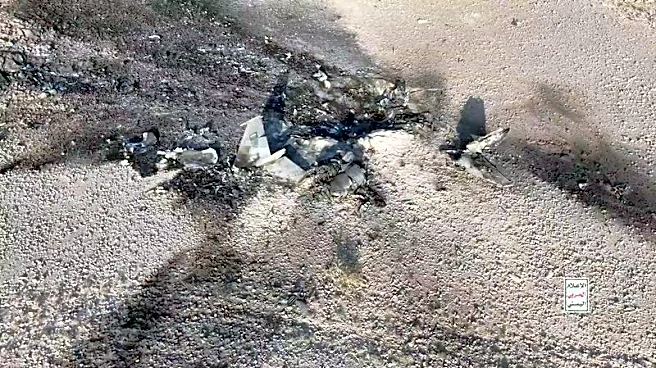
Pakistan and Turkey, which recently signed a defense pact with Saudi Arabia, have condemned the recent attacks by Iran-backed Houthi rebels in Yemen against the kingdom.
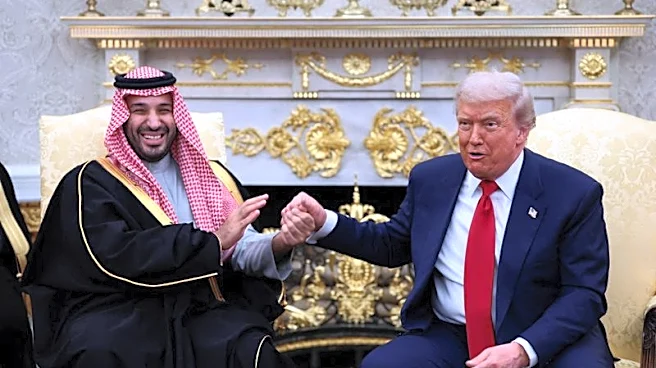
Turkey's defense ministry described the pact as defensive in nature, focusing on collective deterrence, military cooperation and strengthening the countries’ defense capabilities. It said the signatories were working toward “institutionalizing” the alliance. And a Pakistani foreign ministry spokesperson said arrangements were underway to establish a secretariat.
___
This piece will be updated throughout the day as new developments emerge.