




SALVADOR, Brazil (AP) — On the day they were going to kill him, Evilásio Santos da Silveira Júnior, 33, told his sister he was going grocery shopping in the city of Salvador in northern Brazil where the line between the crossfire of rival drug gangs and police lethality has been increasingly blurred. But he never came back home.
His death and the questions surrounding it encapsulate a major hurdle for President Luiz Inácio Lula da Silva to beat Sen.
Flávio Bolsonaro in October’s national elections.
The rising violence and critiques of government response could impact Lula in his stronghold state, where he won 72% of votes in the 2022 runoff against then incumbent Jair Bolsonaro.
The 80-year-old president needs to maintain a strong lead with the 11 million baianos, as the state's residents are called, to beat his predecessor’s son, Sen. Flávio Bolsonaro. The former trade unionist is polling below his results four years ago in Bahia, and public security is pointed to as the key reason.
Yet the president’s campaign trusts the appeal of his flagship social programs with baianos so he can once again win big.
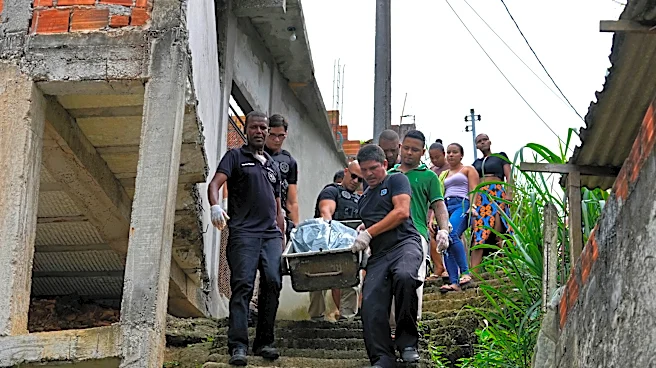
Born and raised in the colorful capital of Bahia, Júnior died after bleeding for hours in an abandoned favela house with a shot through his brachial artery, close to the armpit.
Bahia state police officers at the scene said he was caught in a shootout between rival factions and suspect him of involvement. His family said he had no ties to gangs and was instead randomly killed by state forces during an unprovoked surprise raid.
“My confidence today is only in God, in my prayers ... I can’t say I feel protected (by police). I am sorry to say that many times, at the end of the day, they are the criminals,” said Magnólia Nascimento, Júnior’s sister, who said she hopes the next president improves public safety and stops gangs from spreading, as Lula and Sen. Bolsonaro have promised to do.
Both police officers interviewed by The Associated Press and Júnior’s family agree that their state of Bahia has never been as violent, with five out of the country’s 10 most deadly cities there, according to non-profit group Brazilian Public Security Forum. Salvador is the nation’s deadliest state capital, with nearly 53 violent deaths for every 100,000 residents, according to the most recent data from 2024.
Some voters blame national crime gangs migrating to Bahia. Others point to Lula’s Workers’ Party, which has governed the state — and thus local police — since 2006. They say they have failed to make police less lethal or stop the flow of drugs and weapons and have not invested enough in education.
Lula has tried to beef up his security credentials with the promise to create a public security ministry and dedicate more federal resources to fighting violence should he be reelected.
Sen. Bolsonaro has campaigned on a tough-on-crime stance, including the construction of massive prisons nationwide inspired by the model of Salvadoran President Nayib Bukele, although he hasn't directly addressed violence in Bahia.
When asked about his stronghold’s violence crisis in a news interview on Aug. 31, one day after Júnior was killed, Lula replied: “Don’t be unfair to Bahia.”
“No governor has solved the public security situation,” Lula added.
Baianos witness tragedies like Júnior’s daily through popular news programs that are friendly to local police and show bloody crime scenes, arrests and shooting footage. Hosts and reporters often mock human rights activists, who are portrayed as lenient on crime. One is famous for playing a harmonica to celebrate police killings.
The Rio de Janeiro-based Red Command dominates Bahia’s poorest areas with “CV” graffiti for its initials in Portuguese, facing off against its main rival, Bando de Malucos, a local gang tied to Brazil’s largest syndicate, the First Command of the Capital (PCC).
The Trump administration designated these groups as terrorist organizations earlier this year — a move Lula criticized as election interference meant to boost Sen. Bolsonaro. Analysts note these gangs spent the last decade expanding into Bahia to tap into lucrative drug-exporting markets in Europe and Asia as Brazil developed more ports and airports.
“Every state that becomes a strategic trading post for traffic is torn by organized crime. So you see these states with rising violence numbers," said Maria Isabel Couto, a data and transparency director at Fogo Cruzado, a non-profit that monitors violence in Brazil.
“It doesn’t mean those are violent states; they are hit by those groups and also by the police’s reaction in many cases.”
Lula or his allies have won every election in the state since 2002.
In 2022, Lula drew over 6 million votes in Bahia compared to Jair Bolsonaro’s 2.3 million, a victory fueled by the memory of his social programs. That result proved vital to his narrow 2.1-million-vote national victory.
Since then, Lula has expanded welfare in Bahia, including his flagship Bolsa Família program, growing benefits from 58 billion reais ($11.3 billion) under Bolsonaro in 2022 to 87.2 billion reais ($17 billion) last year, government figures show. This week he increased benefits under the initiative by 15%, in a move some critics said aims to boost his popularity before elections.
Yet, rising crime has created political tension.
Physical education teacher Tiali Doria, a staunch Lula supporter, notes that poorer voters now expect clear strategies on public safety, particularly to address police violence.
“In poorer regions, police put you against the wall, don’t say good evening, don’t ask who you are and treat you like a suspect,” Doria said after a Lula rally downtown, not far from drug trafficking hotspots.
Sen. Bolsonaro, however, has barely campaigned in the city. Rather than him winning over Lula's voters, turnout may be key. Some baianos need good reasons to leave home for the first round on Oct. 4 — and possibly a runoff on Oct. 25 — to vote for the president again.
“I voted for Lula the last time, but I am not convinced now," said Jane Souza, the owner of a food stall in Salvador’s historic city center, citing both violence and the economy.
“But I think Flávio Bolsonaro just wants to take his father out of jail.”
Still, many Lula supporters refuse to associate the increase in violence with the veteran leader. One of them is Júnior’s sister.
Nascimento, who receives Bolsa Familia payments of about $116 per month, took a government-sponsored course to become a nurse. She is finally getting her driver’s license through another government initiative.
"I am using the resources of my government so I can pick myself up,” Nascimento said. “I vote for Lula because I vote for Lula.”