



Betty Ann Hurdle spent 54 years on the Hawaiian homelands waitlist before finally receiving an award in March for property in Kapolei. Hours after signing an agreement, the 80-year-old went for a ride with her son to survey their new home.
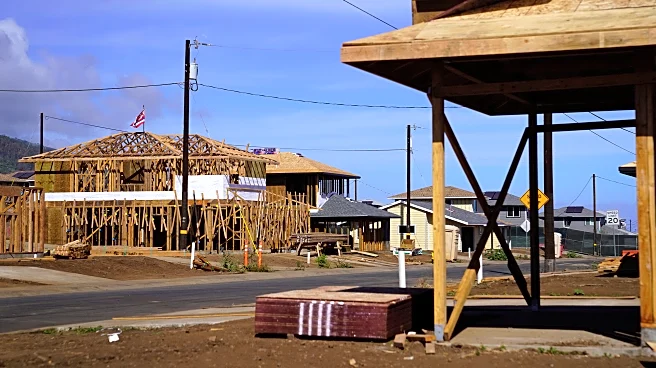
There are no houses yet on the 200-acre plot next to Skyline stops in East Kapolei. Underground electric lines and pipes for water and sewer aren’t expected for another three years. Roads are still being dug and streetlights
are only on some portions of the new development. Right now, there’s mostly dirt.
Hurdle still felt excited. She has a lease in hand that entitles her to a piece of property — and gives her something to pass down to her son and his family, who don’t qualify for the program without her and can inherit her home but not her spot on the waitlist.
“We felt like, ‘Finally! Finally we’re here,’” she said. “It’s nice to know that we will finally be able to own a home, and it’s not so far distant anymore. It’s closer now.”
The state agency in charge of administering the Hawaiian homelands program typically waits until housing developments are near completion before assigning lots and working with recipients to obtain mortgages. But with more than 29,000 people waiting — and people dying on the list every year — the department is now taking a more aggressive approach.
By the end of 2026, the state Department of Hawaiian Home Lands plans to issue 7,000 awards like the one given to Hurdle for projects in the earliest stages of development.
The goal is to get people off the waitlist before they die, and allow beneficiaries to pass their leases down to children or immediate family members who are at least 25% Hawaiian — a lower threshold than the 50% blood quantum required to initially qualify for a home under the century-old federal program.
If the initiative succeeds, it will mark the largest reduction of the waitlist in state history and a major step toward one of Gov. Josh Green’s first-term promises to direct DHHL to immediately deliver land to its beneficiaries.
But the strategy carries significant risks.
A similar effort in the early 2000s was scrapped after the department failed to deliver homes for a majority of people it had signed early agreements or paper leases with.
Of the more than 1,400 people who were issued paper leases between 2005 and 2006, only 580 have received homes, according to department data from this year. More than 700 are still waiting, while the rest had their awards rescinded or canceled.
An analysis of the program commissioned by DHHL laid much of the blame for delays on funding shortfalls, something officials say is less of an issue today because of a $600 million appropriation lawmakers made in 2022.
But the analysis also took the department to task for poor communication with lessees and for overpromising but underdelivering.
Consultants issued a stern recommendation: “Do not make promises that will not be kept.”
The idea of issuing leases for homesteads that aren’t yet built dates back to the mid-1980s.
By then the Hawaiian homelands program, which was created by Congress to provide homestead lots for Native Hawaiians who met a 50% blood quantum threshold, had been around for more than 60 years and had issued just 2,800 leases. More than 7,000 people were on the waitlist.
Beneficiaries can apply for leases on pasture land or agricultural lots, but residential applications are the most common. Typically, the department awards lots and leases to applicants who can qualify for a construction loan at the tail end of development for planned subdivisions. That development can take many years, and the program was hamstrung from the start by a portfolio of hard-to-develop land and a lack of funding.
Working off recommendations of a federal task force, Gov. George Ariyoshi’s administration issued about 2,500 leases for undeveloped land. At the time, DHHL anticipated developing enough land to fulfill those leases in 10 years. Because of a lack of consistent funding from the state, it took three decades to clear most of the list, according to an analysis by the department.
The strategy was revived in the early 2000s after Republican Gov. Linda Lingle made a campaign promise to distribute land to each of the more than 20,000 people then on the Hawaiian homes waitlist in the first five years of her administration. It was a lofty goal that the state never came anywhere close to meeting.
By the end of Lingle’s first term in 2006, DHHL issued 1,434 paper leases — more than half of the roughly 2,500 leases eventually issued during her administration. Officially called Undivided Interest awards, they were issued to waitlist applicants for specific projects that were being planned with a promise that they would be able to occupy the homes once they were built.
Many on the waitlist were under the impression that they would have homes in under three years. In 2012, Civil Beat found that 1,100 of those paper lessees still didn’t have homes.
The department struggled with consistent funding from the state, and many lessees couldn’t qualify for home loans. For the first few years of the program, lessees were also passed by, as new developments sprang up and went to people who were still on the waitlist but had not taken a paper lease.
The state stopped issuing new paper leases in 2006.
Being dragged along for years without ever getting a home created a lot of distrust among lessees, a 2019 analysis of the program ordered by DHHL found.
“They feel that the Department was only interested in reducing the waiting list of Applicants and increasing the ‘reported’ number of Lessees,” the report said. “The actual awards provided hope to many, but with unfulfilled promises.”
In 2005, Jade Riley was one of about 340 lessees to take a paper lease for DHHL’s Waiohuli subdivision on Maui, a community planned to feature lots of up to 1 acre along the slopes of Haleakala. The project’s brochure boasted of warm days, cool evenings, and wide, open spaces — “an ideal location to raise your family in a ‘country’ environment.”
But Waiohuli would become emblematic of issues with the paper lease program. The terrain made building difficult. Drainage issues had to be addressed to comply with federal programs. There were issues with archaeological sites, the soil, and the water system. As delays persisted, costs went up. It took 12 years for the department to complete the first homes set aside for paper leases.
During that time, Riley and her husband would periodically prequalify for a home loan in anticipation of moving there. They didn’t think the process would take so long.
By 2017, only 45 lots for paper leaseholders were completed in Waiohuli and there were still 301 people slated to get lots ahead of Riley.
After years of waiting and growing uncertainty in the local housing market, the Rileys decided to buy a home in Arizona, splitting their time between the mainland and Hawaii while Riley cared for her aging mother on Maui.
“We owned it and we were comfortable with that,” said Riley, who is retired and lives on a fixed income. “We could live and not be a burden to our kids and have our own place and be able to afford more than just getting by.”
Her situation mirrored many who were left waiting for homes. A 2020 survey of paper lessees like Riley found that more than half ended up buying a home while waiting for a lot through DHHL.
Riley was preparing to move to Arizona full time in early 2024, when she received a letter from the department stating that homes were becoming available near Waikapu in a DHHL subdivision on the opposite end of the island from Waiohuli.
She didn’t want to take on a new mortgage, especially after just purchasing a home. But after waiting 20 years, she talked things over with her family and decided to take a chance on the DHHL property.
To finance a down payment, Riley applied for federal housing assistance and used money she received from the Kalima settlement, a decades-long legal battle over delays in clearing the waitlist that was finally settled in 2022 with an average payout from the state of about $117,000 per plaintiff.
In July — 20 years after getting her paper lease — Riley and her family became the first lessees to move into DHHL’s Puuhona project.
Walking across the lanai for the first time and getting the keys to their five-bedroom home, she said, “was overwhelming.”
Many have waited even longer for a homestead lot.
Hurdle, originally from Waianae, is one of six siblings and the daughter of a Pearl Harbor laborer and U.S. Army veteran. She first applied for a Hawaiian homelands lot in September 1971. At the time, she was 26 and not yet married. Now she has a son with a family of his own.
She has been a renter her entire life, and currently lives with her son in an apartment in Honolulu. So much time has passed that she sometimes struggles to recall in what year she originally applied for the waitlist. But she was excited when she got a notice in the mail earlier this year that 600 leases were coming available for lots in West Oahu.
In March, she and her son sat in traffic to attend a meeting at the Salvation Army Kroc Center in Kapolei to attend a lease awarding ceremony. Driving into the parking area, Hurdle saw throngs of people and worried she’d have to wait in another long line without getting a lease.
But when she arrived at the check-in table, she found her spot was already reserved for her — No. 21 of 600. To get her lease, she was ushered into an auditorium where the governor and the head of the department were waiting for her, along with a slew of news crews.
In a recent interview with Civil Beat, Hurdle said she is waiting for a meeting with DHHL to discuss next steps for her lease.
She has good credit and is looking forward to getting help navigating the complicated world of loans. Hurdle also has a meeting set with one of the department’s consultants to help her and her family prepare for homeownership.
“There’s so much information, I need to have my son go with me. I cannot retain all that,” Hurdle said. “But the hope is that they would help us.”
In various interviews and public forums over the last two years, DHHL Director Kali Watson has acknowledged that, in the past, the paper lease program and the department writ large has not delivered on promises to put Hawaiians back on their land.
During a meeting with candidates for paper leases on Lanai in August, Watson said that not qualifying for a loan because DHHL homes were too expensive “has been the worst injustice for the Native Hawaiian people under this program.”
“To be bypassed and in some cases pass away after waiting so many years was not only a loss, but an injustice to their heirs,” he said.
Things have changed, officials said.
Developers are instructed to build homes at price points that waitlisters can afford based on income data, Kalani Fronda, head of the department’s land management division, told lawmakers Dec. 1.
Watson said during the same meeting that the agency has already allocated the $600 million provided by the Legislature to jumpstart 28 projects that, once completed, could yield more than 6,300 lots with a mix of turnkey homes and vacant but ready-to-build land.
DHHL is also working to give waitlisters more options than in the past. Those include the turnkey homes, where the department contracts a developer to build ready-made houses, as well as vacant lots where a lessee can lower the cost of a home by financing construction themselves or putting in “sweat equity” — actually building the home themselves — with the help of contractors and organizations like Habitat for Humanity.
There are also more home and construction loan options available through lenders that deal specifically with people on the DHHL waitlist.
In one recent example of a more flexible approach, Hawaiian Community Lending, a mortgage broker created in 2002 to service DHHL beneficiaries, deferred interest payments on a construction loan for a homestead beneficiary on Kauai so that he and his family could still afford rent while they wait for their home to be built, according to Jeff Gilbreath, the organization’s chief executive.
The nonprofit lender also coaches lessees through the often complicated loan process.
“We do that because we know … we may be serving the folks that can’t go to the bank and the credit union. And I think there’s a lot of families like that on the waitlist,” Gilbreath said. “It’s damn hard to live in Hawaii.”
However, to complete all of the projects that would fulfill the promise of homes to paper leaseholders, officials told lawmakers that the agency would need more than $800 million in additional funds.
Construction costs are rising due to inflation and tariffs imposed by President Donald Trump. The most expensive example is the next phase of the Leialii subdivision in West Maui, where Watson said infrastructure costs for each lot total about $376,000. And that’s before home construction even starts.
Officials have also explored the possibility of modular homes to bring down the price of housing, and Watson told lawmakers the department is exploring funding sources through other state programs and OHA. The department has also proposed an increase to the tourist tax as a source of revenue for its projects.
Rep. Luke Evslin, who leads a group of lawmakers overseeing the department’s finances, said lawmakers will need to explore dedicated funding sources for the department.
“You have a huge task in front of you,” he told officials during the Dec. 1 hearing.
Despite the delays with the paper lease awards of the early 2000s, homestead leaders like Enomoto still want programs like it to continue because the possible rewards outweigh the risks.
She said everyone on the waitlist should be given a project lease that would at least allow them to pass their awards on to their successors. Beneficiaries are eligible for extended lease terms of up to 199 years.
“We’re talking about seven generations of a family,” Enomoto said.
Succession was on the mind for Riley when she decided to pursue her chance at a DHHL home — 20 years after first being awarded a lease — rather than move to Arizona. The Maui homesteader plans to give the home, with its large lot and extended driveway, to her son after she dies. It has clear views of Haleakala and the sea and plenty of space for family visiting the island.
“It’s definitely a gift from God, I tell you that,” she said.
___
This story was originally published by Honolulu Civil Beat and distributed through a partnership with The Associated Press.