
WASHINGTON (AP) — President Donald Trump last year dramatically ratched up the fee for H-1B work visas to $100,000, saying it would protect American workers from losing their jobs to lower-paid foreigners.
But on Monday a federal judge struck down the fees, siding with 20 states and ruling that the Trump administration exceeded its authority by raising the fee without congressional approval.
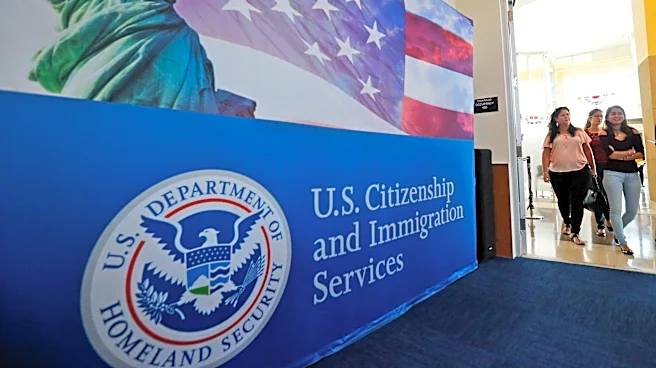
Many tech companies and universities rely on the H-1B program to fill openings for skilled jobs, and universities use it to lure top researchers. But critics charge the visa program has been used to replace American tech workers. Here’s a look at the visa program, Trump’s fee and the court’s decision.
Created by the 1990 Immigration Act, they are a type of nonimmigrant visa, meant to allow American companies to bring in people with technical skills that are hard to find in the United States. The visas are not intended for people who want to stay permanently. Some eventually do, but only after transitioning to different immigration statuses.
An H-1B allows employers to hire foreign workers who have specialized skills and a bachelor’s degree or the equivalent. They are good for three years and can be extended another three years. Stephen Brown of Capital Economics estimated last year that there were around 700,000 H-1B visa holders in the United States along with another 500,000 dependents.
At least 60% of the H-1B visas approved since 2012 have been for computer-related jobs, according to the Pew Research Center. But hospitals, banks, universities and a wide range of other employers can and do apply for H-1B visas.
The number of new visas issued annually is capped at 65,000, plus an additional 20,000 for people with a master’s degree or higher. Those visas are handed out by a lottery. Some employers, such as universities and nonprofits, are exempt from the limits.
The White House announced the $100,000 feel last September. The application fee previously was $215, plus other processing charges. The higher fee took effect barely 24 hours after the announcement, and few companies have been willing to pay it.
Critics say they undercut American workers, luring people from overseas who are often willing to work for less than American tech workers do. Staffing companies such as Tata Consultancy Services often supply Indian workers to corporate clients. According to Pew, nearly three-quarters of those whose applications were approved in 2023 came from India.
"To take advantage of artificially low labor costs incentivized by the program, companies close their IT divisions, fire their American staff, and outsource IT jobs to lower-paid foreign workers,'' the White House said in its proclamation last year. In a 2020 report, the left-leaning Economic Policy Institute found that 60% of the H-1B positions certified by U.S. Labor Department are assigned wages below the median for the job.
Supporters of the program say H-1B visa holders increase companies' productivity and complement the work of native-born Americans.
U.S. District Court Judge Leo Sorokin in Boston ruled that the fee violated the Administrative Procedure Act, which governs how federal agencies develop and issue regulations. “The Court finds that the Policy imposes a tax on H-1B petitions without the requisite delegation by Congress,” Sorokin wrote, contradicting an earlier federal court ruling that upheld the fee hike and kept it in effect until September when it is scheduled to expire.
In the Boston case, the states argued that the policy impedes their ability to hire primary and secondary school educators and to staff public colleges and universities, will stymie academic research and will lead to a decline in medical workers.