
LONDON (AP) — Britain and its allies risk losing a conflict in cyberspace against adversaries such as Russia unless citizens, corporations and governments treat cybersecurity with much greater urgency,
a U.K. spy chief is warning.
Anne Keast-Butler, director of the communications intelligence agency GCHQ, will warn Wednesday that Moscow is “relentlessly targeting critical infrastructure, democratic processes, supply chains and public trust” in Britain and Europe. In a speech at a World War II code breaking center near London, she will accuse Russia of stealing technology and plotting sabotage and assassination attempts.
Keast-Butler plans to say that rapid advances in artificial intelligence mean that “the ground beneath our feet is shifting” and there is a “narrowing window for the U.K. and allies to stay ahead” of countries such as China, a science and technology “superpower.”
She plans to argue there must be an effort “from boardrooms to living rooms” to make cybersecurity “10 times more urgent,” according to extracts released in advance by GCHQ, short for Government Communications Headquarters.
It is the latest in a string of warnings from Western spies and intelligence experts that Russia is stepping up hostile activity in a “gray zone” that falls just below the threshold of war.
In recent months, authorities in countries including Sweden, Poland, Denmark and Norway have alleged that hackers linked to Russia targeted their critical infrastructure, including power plants and dams.
The head of the U.K.’s National Cyber Security Centre, Richard Horne, warned last month that hostile states including Russia, China and Iran are behind the most serious cyberattacks the country faces. He said such attacks could increase dramatically if Britain becomes involved in an international conflict.
Keast-Butler plans to stress the importance of international partnerships as U.S. President Donald Trump’s “America First” foreign policy and disregard for longtime allies strains the relationship between London and Washington.
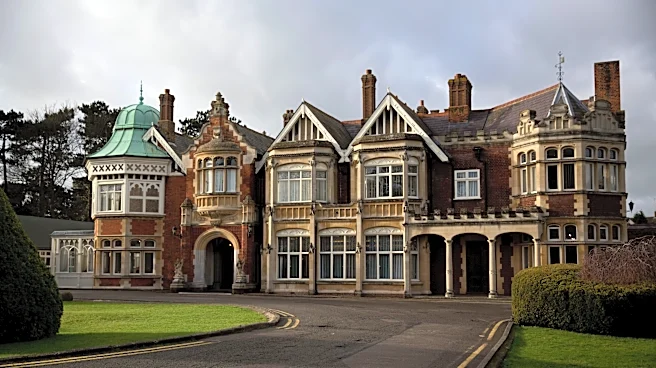
Pointedly, she is delivering the annual GCHQ director’s lecture speech at Bletchley Park, a manor house 45 miles (72 kilometers) northwest of London where hundreds of mathematicians, cryptographers, crossword puzzlers, chess masters and other experts worked to crack Nazi Germany’s supposedly unbreakable secret codes.
Their work both shortened the war and hastened the birth of modern computing.