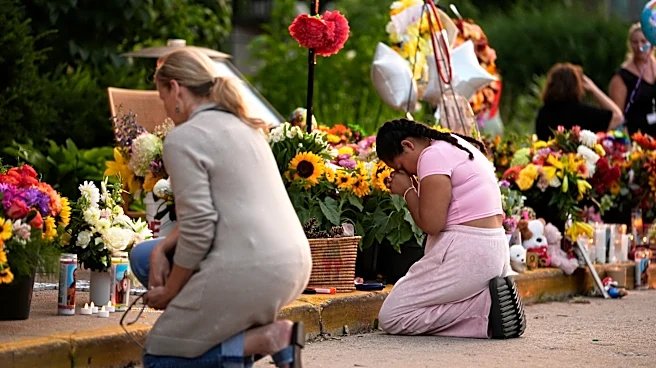




MINNEAPOLIS (AP) — Documents released a year after the deadly shooting at a Minneapolis Catholic church and school provide a detailed account of the swift and widespread response by law enforcement officers — who arrived within minutes and began triaging injured students.
But the nearly 1,500 photos and hundreds of pages cataloging witness interviews, evidence and officer accounts of the shooting at Annunciation Church and School don't shed much light
on why 23-year-old Robin Westman launched the Aug. 27, 2025, attack that killed 8-year-old Fletcher Merkel and 10-year-old Harper Moyski. At least 21 other children and adults were wounded before Westman died by suicide.
The documents released this week by city officials as part of a records request show dozens of officers from Minneapolis and a half dozen other state, federal and neighboring local law enforcement agencies arrived quickly — with the first on scene about three and a half minutes after the first report of a possible shooting, the dispatch records showed.
By that time, Westman, who was armed with a rifle, shotgun and pistol as well as knives, smoke bombs and multiple rounds of ammunition, was already on the ground suffering from a self-inflicted gunshot wound.
The documents detail a sprawling crime scene filled with bullet holes and littered with shell casings recovered from around the church, the neighboring playground and as far away as the walls and gutters of houses in the surrounding neighborhood.
The first officers entering the sanctuary described encountering a horrific scene of victims lying across pews, “vast” amounts of blood, broken glass and the smell of gunpowder in the air. One officer’s report began with the disclaimer that he had not reviewed his body camera video from the call — and did not plan to.
Officers triaged as many patients as they could, holding pressure against wounds and applying a tourniquet for an adult who was wounded in the parking lot — shot in the leg and losing blood quickly. The officer rode with her to the hospital, where staff said he likely saved her life.
Many survivors described sitting in Mass when they began hearing shots coming from outside, and the windows began to shatter. At least one described holding the inner doors to the church shut as they heard the outside doors rattling.
Many of the children told officers they had ducked under pews or followed adults to hide in other areas of the church. Preschool teachers described barricading classrooms and trying to keep children calm and as sheltered as they could.
Officers also described the throng of parents searching for children and spouses who worked at the school, including a woman who said her husband had grabbed their child and hidden near an ice machine in the basement of the church.
Overall, the records — lists of evidence, weapons, journals and other seized belongings — are a compilation of information that has been previously reported, though a handful of new details were released, including some of Westman's actions before the shooting.
Investigators had previously said Westman was “full of hatred” and seeming admiration for previous mass shooters — writing their names on the weapons, gear and ammunition used in the attack along with a slew of statements attacking religions, race and ethnicity in an unclear mishmash that provided little insight into Westman's target and decisions.
A search warrant in the documents showed the car Westman drove to the church that morning and in the days before the shooting had a dashcam. Officers described the videos recorded by that camera, writing that Westman seemed agitated after a visit with family and at times sobbed before driving by the church and school the night before the attack.
The records also include transcripts of police interviews with Westman's father, ex-girlfriend, close friend and former co-workers, describing Westman as somewhat of a loner prone to depression. Many of those people had not previously spoken publicly about the shooting or about Westman.
While several said Westman had expressed suicidal ideations years earlier, they also said they had not seen signs that Westman was capable of hurting others. Westman's father said he hadn't seen a reason to be worried about his child before the shooting, noting only that Westman had been struggling to eat and had lost significant weight. Several relatives declined to speak with law enforcement altogether, according to the record release.
City officials said more documents or videos could be released in coming weeks. Many of the documents already released had been redacted to protect the privacy of the victims. There were no photos or visuals released from inside the church.
___
Lauer reported from Philadelphia. Bauer reported from Madison, Wisconsin