
President Donald Trump is testing his midterm message on the economy in a toss-up congressional district in New York, even as voters largely disapprove of his stewardship. The event's promoted focus is the tax
law Trump signed last year, which quadrupled the federal deduction for state and local taxes, a critical change for high-tax states like New York.
Meanwhile, Europeans are confused by Trump's Thursday announced deployment of 5,000 more troops to Poland, following weeks of changing statements from Trump and his administration about reducing — not increasing — the American military footprint. And Republicans are struggling to find the votes to keep supporting Trump's war with Iran.
Here's the Latest:
The Trump administration has approved a modest $108 million arms sale to Ukraine that will help the country maintain and sustain its midrange air defense missile system.
The State Department announced the sale of ground-to-air Hawk missile components, spare parts and logistic support late Thursday. The administration has notably reduced military support for Ukraine over the past 18 months as it seeks to mediate an agreement with Russia to end the conflict.
The sale “will improve Ukraine’s capability to meet current and future threats by further equipping it to conduct self-defense and regional security missions with a more robust integrated air defense capability,” the department said in a statement.
Republicans struggled Thursday to find the votes to dismiss legislation that would compel President Donald Trump to withdraw from the war with Iran, delaying planned votes on the matter into June.
The House had scheduled a vote on a war powers resolution, brought by Democrats, that would rein in Trump’s military campaign. But as it became clear that Republicans would not have the numbers to defeat the bill, GOP leaders declined to hold a vote on it. It was the latest sign of the slipping support in Congress for a war that Trump launched more than two months ago without congressional approval.
Republicans in the Senate are also working to ensure they have the votes to dismiss another war powers resolution that advanced to a final vote earlier this week, when four GOP senators supported the resolution and three others were absent from the vote.
The actions by congressional leaders showed Republicans are struggling to maintain political backing for Trump’s handling of the war.
▶ Read more
NATO allies and defense officials expressed bewilderment at Trump’s decision to send 5,000 U.S. troops to Poland.
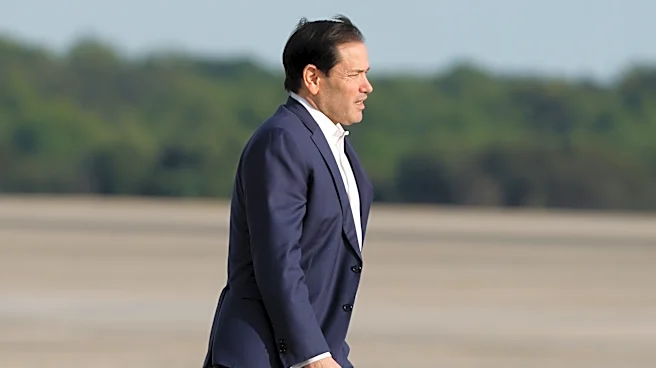
“It is confusing indeed, and not always easy to navigate,” Swedish Foreign Minister Maria Malmer Stenergard told reporters at a meeting she was hosting of her NATO counterparts, including U.S. Secretary of State Marco Rubio.
U.S. defense officials were also confused. “We just spent the better part of two weeks reacting to the first announcement. We don’t know what this means either,” said one of two officials who spoke on condition of anonymity to discuss sensitive military matters.
NATO allies have been blindsided, despite a U.S. pledge to coordinate troop deployments. “We’re going to stay well-synchronized with our allies moving forward,” NATO’s top military officer, U.S. Lt. Gen. Alex Grynkewich, promised on Wednesday.
▶ Read more
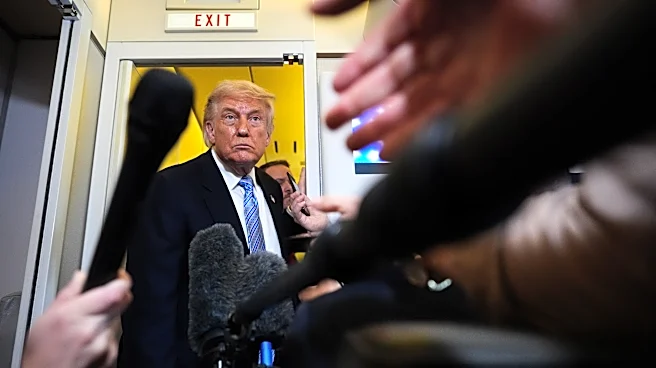
Trump on Thursday said the U.S. will send an additional 5,000 troops to Poland, stirring confusion following weeks of changing statements from Trump and his administration about reducing — not increasing — the American military footprint in Europe.
The Trump administration has said it was reducing levels in Europe by about 5,000 troops, and U.S. officials confirmed about 4,000 service members were no longer deploying to Poland. Trump’s social media announcement raises more uncertainty for European allies that have been blindsided by the changes, as the administration has complained about NATO members not shouldering enough of the burden of their own defense and failing to do more to support the Iran war.
Trump and the Pentagon have said in recent weeks that they were drawing down at least 5,000 troops in Germany after Chancellor Friedrich Merz said the U.S. was being “humiliated” by the Iranian leadership and criticized what he called a lack of strategy in the war.
▶ Read more
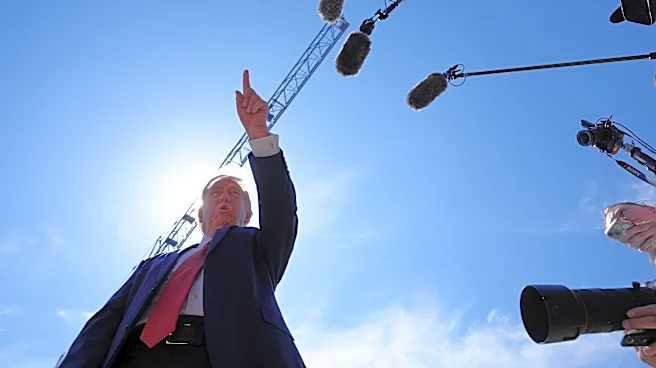
Trump is heading to a toss-up congressional district in New York on Friday to test his midterm message on the economy, even as voters largely disapprove of his stewardship of it.
Trump will travel to the Hudson Valley area to appear with Republican Rep. Mike Lawler, who is up for reelection in what will be one of the most closely watched House races this November. The focus of the event is to promote the tax law Trump signed last year, particularly the quadrupling of the deduction for state and local taxes, which is critical in a high-tax state like New York.
The White House has been looking for more opportunities to highlight Trump’s economic accomplishments as his approval rating on the economy has slumped. About one-third of U.S. adults approve of how Trump is handling the economy, according to a new AP-NORC poll, down slightly from 40% at the start of Trump’s second term.
▶ Read more