


TALLINN, Estonia (AP) — Belarusian authorities detained more than 50 employees of an architectural firm in the country’s largest single raid this year, human rights activists said Friday, as part of what they described as a new escalation of repression under President Alexander Lukashenko.
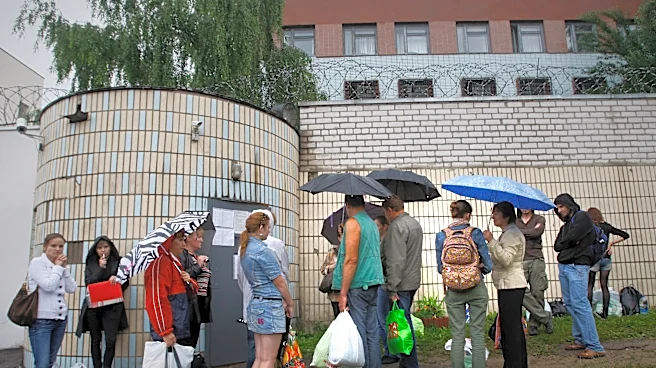
Security forces searched the Minsk offices of ZROBIM Architects on Thursday and detained 52 people on suspicion of disloyalty, including the firm’s founder, Andrei
Makouski, according to the Viasna human rights center.
Authorities had demanded the private firm hire a full-time “ideologist” to monitor its staff, the group said. On the eve of his detention, Makouski posted on social media that the studio had received a letter from authorities making the demand.
“The situation in Belarus is deteriorating, and we see that even suspicions of disloyalty are enough to trigger the largest single roundup of creative people this year,” Pavel Sapelka, a lawyer with Viasna, told The Associated Press. “This is a new practice for the authorities: first arresting people, hacking their phones and computers, and only then bringing charges.”
Authorities have increasingly used “extremism” designations to criminalize dissent, with penalties of up to 10 years for associating with groups or individuals labeled extremist. Sapelka said authorities recently designated 22 online chat groups used by prisoners’ relatives as extremist, a move he called “a blow to solidarity within the country” that could expose thousands of families to prosecution.
A close ally of Russia, Minsk has faced isolation for years. Lukashenko has ruled the nation of 9.5 million with an iron fist for more than three decades, and the country has been sanctioned repeatedly by Western countries — both for its crackdown on human rights and for allowing Moscow to use its territory in the full-scale invasion of Ukraine in 2022.
Lukashenko’s rule was challenged after a 2020 presidential election, when tens of thousands poured into the streets to protest a vote they viewed as rigged. They were the largest demonstrations since Belarus became independent following the 1991 collapse of the Soviet Union.
In an ensuing crackdown, more than 65,000 people were arrested, thousands were beaten, and hundreds of independent media outlets and civil society organizations were shut down. Prominent opposition figures either fled the country or were imprisoned. Viasna says 913 political prisoners remain behind bars.
Five years after the mass demonstrations, Lukashenko won a seventh term last year in an election that the opposition called a farce.
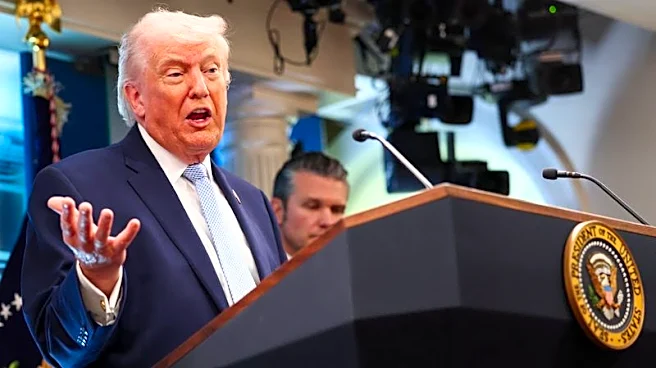
Belarus has recently freed some political prisoners to try to win favor with the West. Since U.S. President Donald Trump returned to the White House last year, Lukashenko has released hundreds of prisoners, including Nobel Peace Prize laureate Ales Bialiatski and key dissident figures Siarhei Tsikhanouski, Viktar Babaryka and Maria Kolesnikova.
Most recently, Lukashenko last month ordered the release of 250 political prisoners as part of a deal with Washington that lifted some U.S. sanctions, the largest one-time release of political prisoners in the country.
The United States has responded to the releases by lifting sanctions on the Belarusian potash fertilizer industry and the national airline Belavia.
But rights groups say the repression continues. Viasna reported that authorities have begun revoking passports of released political prisoners who have traveled abroad, including Bialiatski, who left Belarus after five years in prison and said his passport was revoked.
“This is yet another form of transnational repression aimed at complicating the lives of deported political prisoners outside the country,” Bialiatski told the AP. “The authorities continue their repression and are trying to ritually sever our ties with Belarus.”