






JERUSALEM (AP) — The Middle East is bracing for a possible return to all-out war amid concerns that the United States and Israel could strike Iran shortly after Tuesday’s U.S. midterm elections.
A regional official briefed on the talks said an Iranian delegation left Qatar on Sunday after negotiations aimed at reaching a deal to end the war. A draft proposal has been circulated for feedback, and a follow-up meeting is under discussion. The official spoke
on condition of anonymity because of the sensitivity of the talks.
Iran has expanded its threats but says it is awaiting the latest U.S. response. The latest proposal Iran has publicly discussed would fully reopen the Strait of Hormuz to shipping within two days if Washington meets several conditions, including lifting its blockade of Iranian ports.
Here’s where things currently stand.
U.S. President Donald Trump on Sunday evening told reporters he and Israeli Prime Minister Benjamin Netanyahu had a “very good” call on Saturday. He said they discussed Iran but gave no details.
Even before Netanyahu and his bloc of allies lost their majority in parliament in last week’s election, there were growing fears that Netanyahu was pushing for new strikes against Iran in an effort to stay in power in an emergency government during renewed war. Since last Tuesday’s election, the prime minister has publicly commented only on the vote.
There was no word from Netanyahu and his office on the latest call with Trump, who has continued to alternate between public comments about pursuing talks with Iran and threats to strike it hard.
“The standoff in the Gulf between the U.S. and Iran is really between Qatar and Israel,” Andreas Krieg, a professor at King’s College London, said on X. “Qatar is tirelessly working on a diplomatic offramp with the region’s backing while Israel is looking for military ways to throw the region under the bus.”
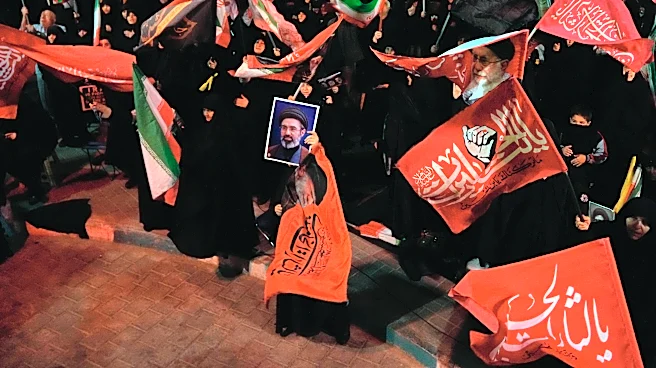
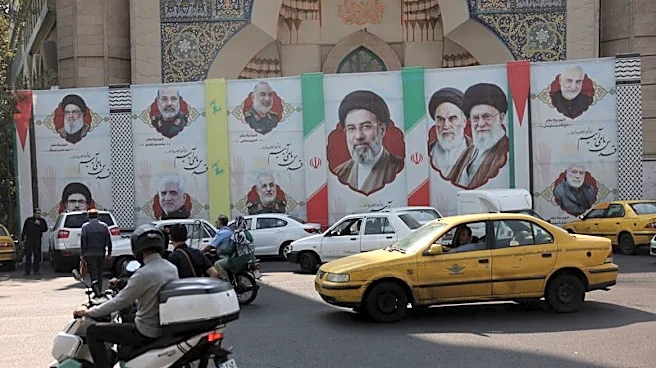
The Islamic Republic has stepped up its public messaging during the uncertainty, saying it is ready for both diplomacy and renewed fighting.
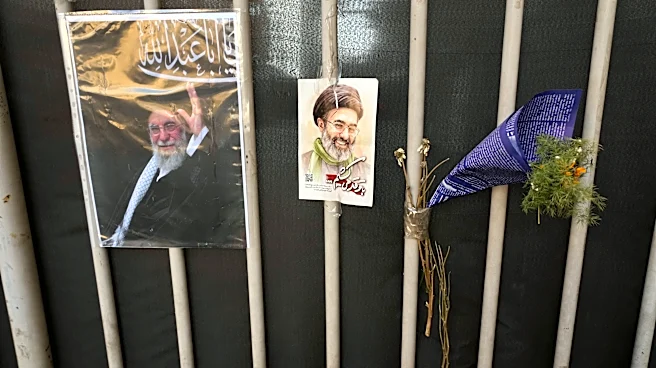
The new supreme leader, Ayatollah Mojtaba Khamenei, met with Iran’s military chiefs and said the response to “any kind and level of threat” from the U.S. or Israel should be immediate and without “geographic limits,” and urged an expansion of the list of potential targets.
Khamenei still has not been seen publicly since the opening strikes by Israel and the U.S. on Feb. 28 killed his father, the previous supreme leader.
Iran’s security chief, Mohsen Rezaei, warned on X that any attack would bring “devastating blows on the aggressor using new weapons.”
In an interview with state television, Rezaei said “the tone has completely changed” from the U.S. and called it a “very good sign.” He gave no details about the letter he received from U.S. Vice President JD Vance, which Iran acknowledged last week, and said he had not responded.
Rezaei also said no decision had been made to change Iran’s nuclear doctrine, though some Iranians had questioned whether it should change if the country were attacked again. Tehran has insisted its nuclear program is peaceful.
Washington seeks to prevent Iran from obtaining a nuclear weapon and wants to address the issue in any new talks. Iran wants to discuss it later.
Iranian Foreign Minister Abbas Araghchi, who was on a one-day visit to neighboring Turkmenistan on Monday, has said the final outcome depends on U.S. answers to the “Iranian questions.”
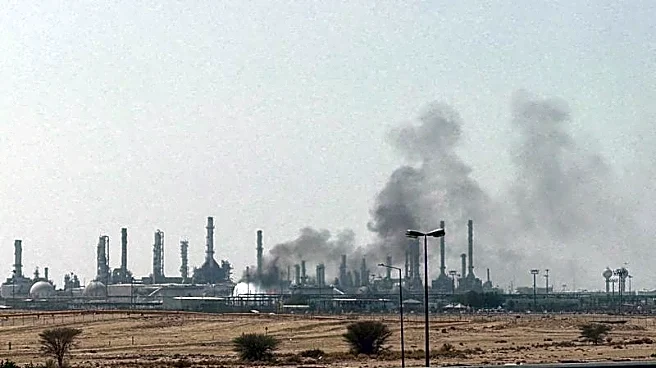
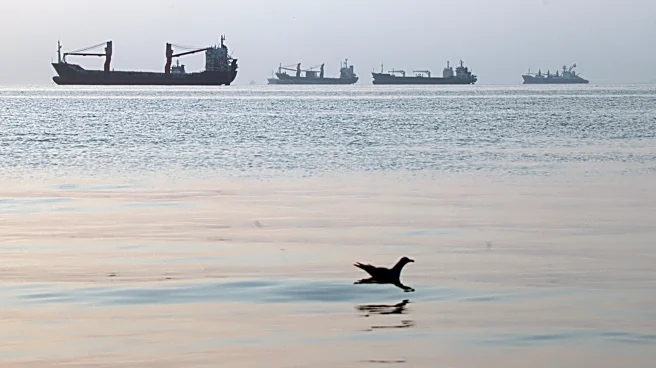
More attacks on commercial ships were reported on the Strait of Hormuz during October, in the busiest month for reported assaults since March, during the war's opening weeks.
The mood was grim at the Manama Dialogue, an annual security summit in Bahrain organized by the International Institute for Strategic Studies.
United Arab Emirates presidential adviser Anwar Gargash told attendees that “the rules of logic” show the U.S. and Iranian stances are far apart, and “if these positions are not bridged, then we have to worry about the worst.”
Gulf nations have spent billions of dollars to boost their defense capabilities since the war began. Egypt’s Foreign Minister Badr Abdelatty told the gathering in Bahrain that the next escalation “will be more dangerous, more destructive, and it will lead to nowhere.”
Russian Foreign Ministry spokesperson Maria Zakharova described reports of possible new strikes against Iran as “alarming.”
Meanwhile, China will send a special envoy to Iran, Oman and Saudi Arabia in early to mid-November, Foreign Ministry spokesperson Mao Ning told reporters Monday. Chinese Foreign Minister Wang Yi also met with Ali Bagheri Kani, deputy secretary of Iran’s Supreme National Security Council.
“The Middle East Gulf region should not become an arena for great-power rivalry and geopolitical conflict,” Chinese President Xi Jinping told Oman’s sultan, according to a readout from China’s Foreign Ministry. China and Oman called for a return to dialogue.
___
Victoria Eastwood in Cairo, Kanis Leung in Hong Kong and Katie Marie Davies in London contributed to this report.