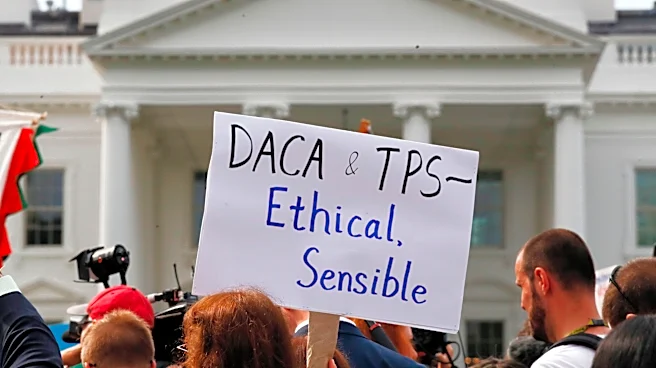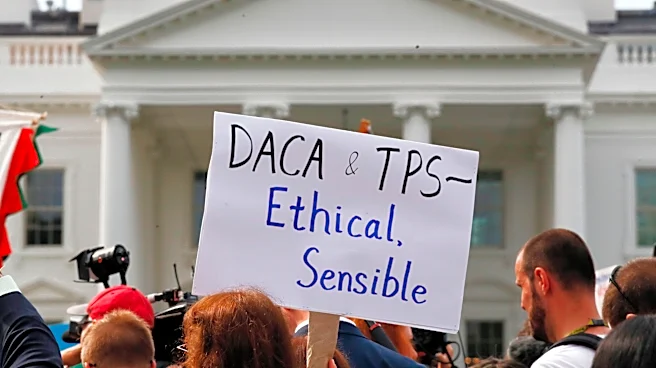





WASHINGTON (AP) — The Supreme Court on Wednesday mulled the Trump administration’s push to end legal protections for migrants fleeing war and natural disaster, in one in a series of immigration cases the justices are considering against the backdrop of the president's far-reaching crackdown.
Several conservative justices appeared to be leaning in favor of the Republican administration's argument that the law limits what courts can do on program known
as temporary protected status, or TPS. The outcome could come down to how Chief Justice John Roberts and Justice Amy Coney Barrett vote.
The government is appealing lower court orders that blocked the Department of Homeland Security from quickly ending temporary protected status for people from Haiti and Syria. If the justices agree with President Donald Trump, authorities potentially could strip protections from up to 1.3 million people from 17 countries, exposing them to possible deportation.
The court has sided with the administration before and allowed the end of the program for people from Venezuela as lawsuits continue to play out, though the justices did not detail their reasoning.
The Department of Justice argues that the homeland security secretary has the power to end the program, and that the law bars judges from questioning those decisions. “’No judicial review’ means no judicial review,” federal lawyers wrote in court documents.
But lawyers for about 350,000 migrants from Haiti and 6,000 from Syria say judges can consider whether authorities followed all the steps laid out in the law. They contend that in both cases, the government short-circuited the process.
Since Trump returned to the White House in January 2025, DHS has ended the protections people from 13 countries. Some who have lived and worked in the U.S. legally for more than a decade have lost jobs and housing in a matter of weeks, lawyers said. Returning to Haiti and Syria is out of the question for many people because those countries remain wracked with violence and instability, said Sejal Zota, co-founder and legal director of Just Futures Law.
“This really is life or death,” she said. Four Haitian women who were deported from the United States in February were found beheaded and dumped in a river several months later, lawyers said in court documents.
The administration appealed to the high court after judges in New York and the District of Columbia agreed to delay the end of protections. One judge found that “hostility to nonwhite immigrants” likely played a role in the decision to end protections for Haitians.
During his 2024 presidential campaign, Trump amplified false rumors that Haitian immigrants were abducting and eating dogs and cats. Federal authorities have denied racial animus played any role in the protection decisions.
Syrians were first granted protected status in 2012, during a civil war that lasted for more than a decade before the fall of President Bashar Assad’s government in late 2024.
Haitians joined the program in 2010 after a catastrophic earthquake and have been extended multiple times amid ongoing gang violence that has displaced more than a million people, according to court documents.
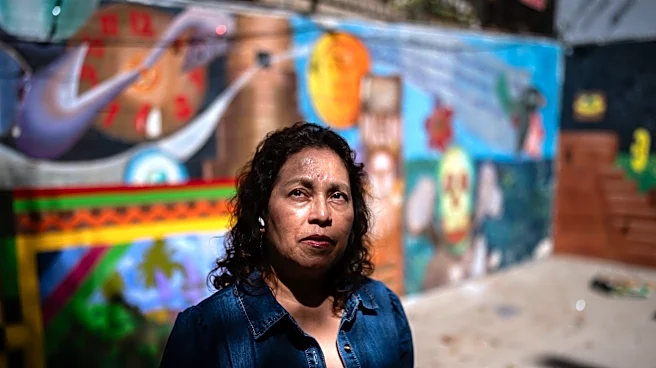
Maryse Balthazar was on vacation in the U.S. when the earthquake hit Haiti. She has now been in the U.S. for 16 years with temporary legal status. She has two children and works as a nursing assistant to the elderly. That profession relies on Haitian immigrants like her and would be hobbled by a Supreme Court decision that allowed their status to end, an industry group said in court papers.
For Balthazar, losing those protections would be devastating. She lost her home in Haiti to the earthquake, and another house she could have lived in was destroyed in a fire, possibly due to gang involvement. “I’d be homeless,” she said. “I’m scared … it’s a fear we are all living with.”
Other immigration cases the high court is considering this year include Trump's push to restrict birthright citizenship and the administration's power to revive a restrictive asylum policy.