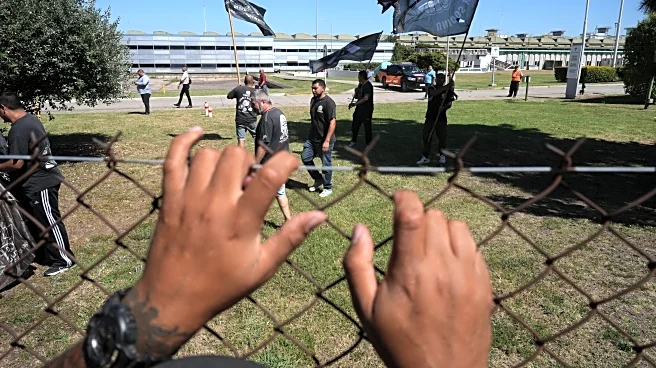



BUENOS AIRES, Argentina (AP) — Argentina’s largest labor unions called a one-day nationwide strike on Thursday to protest President Javier Milei's flagship overhaul of the country's labor law, intensifying a standoff between the libertarian leader and long-powerful unions as the bill faces an uncertain passage through Congress.
Banks and public schools closed, buses and subways stopped, airlines canceled hundreds of flights and public hospitals postponed
all but emergency surgeries. One week after Argentina’s Senate gave initial approval to the labor reform bill, the lower house will debate it Thursday.
The show of force from Argentine unions — including workers in transportation, construction and food services, among other crucial industries — comes as frustration simmers over an uneven economic recovery under Milei, whose government has brought fiscal stability to a nation once plagued by runaway inflation but struggled to address stubborn unemployment, stagnant wages and lagging growth.
Milei considers the reform of Argentina's half-century-old labor laws crucial to his efforts to lure foreign investment, increase productivity and boost job creation in a country where about two in five workers are employed off the books.
Unions argue the law will weaken long-standing protections for workers, including by reducing traditionally high severance pay, curbing the right to strike, making it easier for companies to dismiss employees and allowing 12-hour work days.
“The labor reform project is entirely regressive,” said Cristian Jerónimo, one of the leaders of the General Confederation of Labor, Argentina’s largest trade-union group, at a press conference announcing the strike. “The only thing it prioritizes is the restriction of workers’ rights.”
Fierce union backlash has derailed previous government attempts at shaking up Argentina’s archaic labor code, widely seen as among the most costly to companies in Latin America.
The fate of the labor reform marks the first big test of Milei’s political strength since his upstart libertarian party, La Libertad Avanza, won Argentina’s midterm elections last year — with backing from key ally U.S. President Donald Trump.
The strike occurred at an inopportune time for the Argentine president, who was in Washington for the inaugural meeting of Trump’s Board of Peace initiative.
Even if the labor overhaul clears the lower house after Thursday's debate, it must be sent back to the Senate next week for a final vote before becoming law.
That's because a clause added at the last minute, which halves salaries for workers on leave due to injury or illness unrelated to work, generated outrage among opposition lawmakers and forced the government to make an amendment to the version of the bill that passed the Senate last week.
Roughly 40% Argentina’s 13 million registered workers belong to labor unions, according to union estimates, and many are closely allied with the labor-driven populist movement known as Peronism that led the country’s previous government and dominated the political scene for decades.