






Iran appears to be targeting vessels conducting ship-to-ship oil transfers around the Strait of Hormuz, according to a military institute. Meanwhile, the Saudi-led coalition launched new airstrikes on Tuesday on Yemen’s Houthi-held capital, Sanaa, according to Houthi-run broadcaster Al Masirah and residents.
The strikes followed a coalition spokesman’s warning urging residents to evacuate the area. A spokesman for the Iran-backed rebels warned that
any attack on Sanaa would draw a “harsh and painful” response against the Saudi capital.
Here is the latest news from the Middle East on Tuesday. Read our full coverage here.
Iran appears to be targeting commercial vessels conducting ship-to-ship oil transfers in and near the Strait of Hormuz in order to try to undermine vessels’ ability to move energy through the strait, the Institute for the Study of War said Tuesday.
Iran may be developing its anti-ship missile capabilities, the U.S.-based think tank said in a post on X.
The U.K.’s Maritime Trade Operations Centre posted on X Monday that at least three vessels had been attacked by unknown projectiles in the strait a day earlier. There were no immediate claims of responsibility.
But Mohsen Rezaei, secretary of Iran’s top security body, told state TV on Saturday that Iranian forces were striking an average of five “smuggling ships” every night.
Rezaei appeared to be referring to U.S. efforts to guide oil shipments through the strait before the oil is transferred to larger tankers waiting in the Gulf of Oman.
The Saudi-led coalition carried out new airstrikes Tuesday on Yemen’s Houthi-held capital, Sanaa, according to Houthi-run broadcaster Al Masirah and local residents.
The strikes came shortly after a coalition spokesman urged residents to evacuate the area for their safety. Witnesses in Sanaa reported hearing explosions, but it was not immediately clear what was hit.
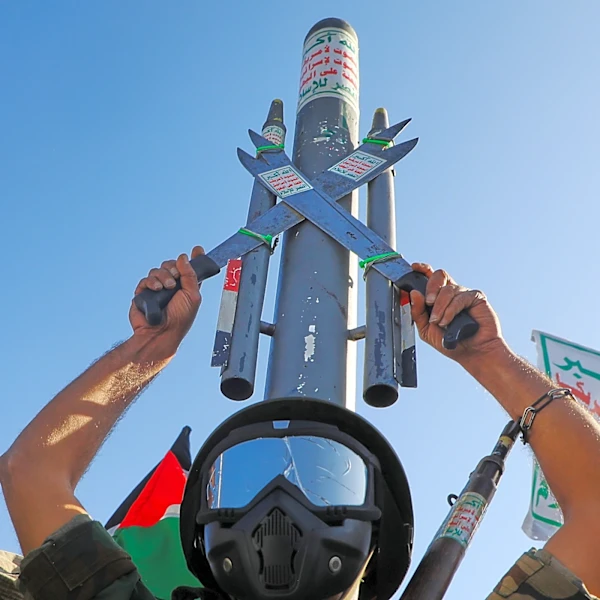
Earlier, Gen. Yahya Saree, a spokesman for the Iran-backed rebels, warned that any attack on Sanaa would draw a “harsh and painful” response against the Saudi capital.
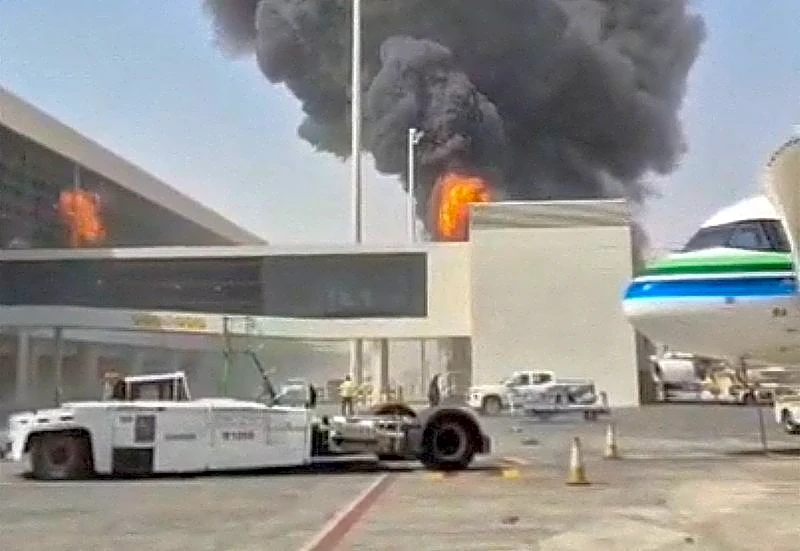
The exchange of threats comes as Saudi Arabiainvestigates why its air defenses failed to intercept a barrage of missiles and drones fired by the Houthis. An attack on Riyadh’s international airport on Saturday killed at least 13 people and wounded more than 300.
International airlines were warned by the Houthi-controlled Foreign Ministry on Tuesday that flights to Saudi airports were “unsafe” except those serving the holy sites of Mecca and Medina.
The ministry said the kingdom “must realize that security, stability, and sovereignty must belong to everyone — otherwise, no one will enjoy them,” a statement published by the Houthi-controlled SABA news agency said.
The rebels also warned on Tuesday that oil facilities of the Saudi oil giant Aramco are legitimate targets and asked people, including workers, to avoid the sites.
Airstrikes hit several rebel-held areas, including the Red Sea island of Kamaran, the Houthi-run Al Masirah television said Tuesday. The broadcaster blamed Saudi Arabia but provided no further details.
Meanwhile, Yemen’s Interior Ministry said on X that Houthi strikes on Taiz had killed six people and wounded 18 amid ongoing fighting in the region. The rebels have been advancing on the major southwestern city, a long-sought prize.
The reported airstrikes came hours after air raid sirens sounded on Monday evening in the Saudi capital, Riyadh, where residents heard explosions.
The Houthis said they fired a ballistic missile toward King Khalid International Airport, which has been hit by a series of deadly attacks in recent days.
An Israeli strike killed one person in the Gaza Strip on Tuesday. The Israeli military said it targeted a military operative in Gaza City’s Tuffah neighborhood.
Nearly 1,500 Palestinians have been killed since a ceasefire took effect just over a year ago, according to Gaza’s Health Ministry. The ministry does not distinguish between militants and civilians in its count but says more than half of those killed were women and children.
Turkey’s Defense Ministry said Tuesday that the country’s army chief of staff spoke by phone with his Pakistani counterpart as both countries consider providing military support to Saudi Arabia under a trilateral defense agreement.
The ministry provided few details of the talks between Turkish Gen. Selcuk Bayraktaroglu and Pakistan’s army chief, Asim Munir.
Turkish Foreign Minister Hakan Fidan said last week that Turkey and Pakistan were considering military support for their ally under the agreement but ruled out sending combat troops.
___
This report will be updated throughout the day as new developments emerge.