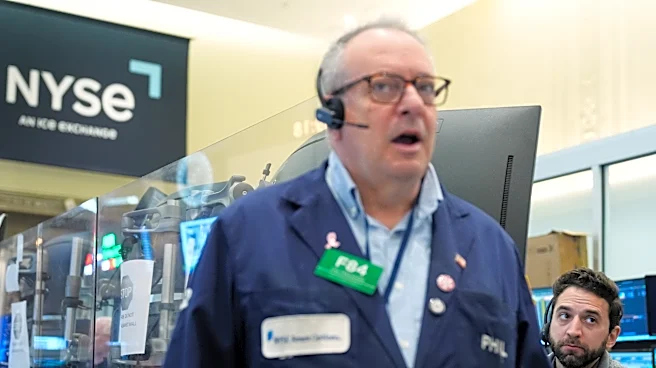




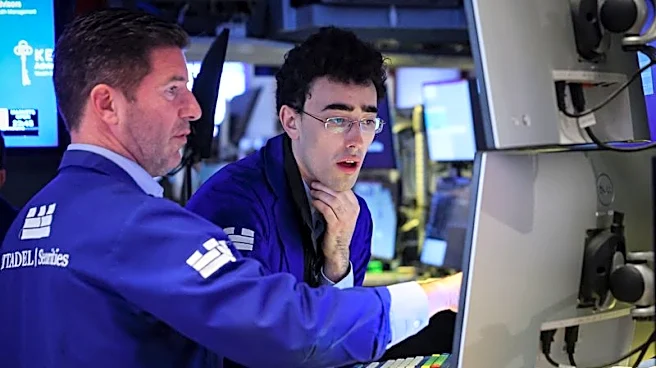
TOKYO (AP) — Asian shares mostly rose in Wednesday trading, echoing the rally on Wall Street that came as oil prices eased on hopes the United States and Iran may try again on talks to end their war. Benchmarks in Europe were little changed in early trading.
France's CAC 40 dipped 0.7% in early trading to 8,268.60, while the German DAX was up less than 0.1% at 24,046.01. Britain's FTSE 100 inched up less than 0.1% to 10,611.74. U.S. shares were set
to trade in a narrow range, with Dow futures slipping nearly 0.1% to 48,727.00. S&P 500 futures inched up less than 0.1% to 7,007.25.
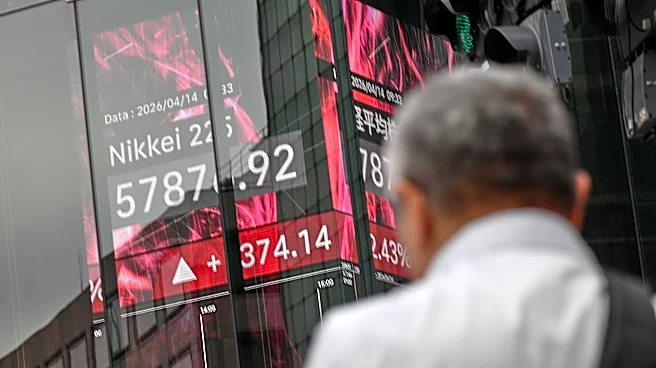
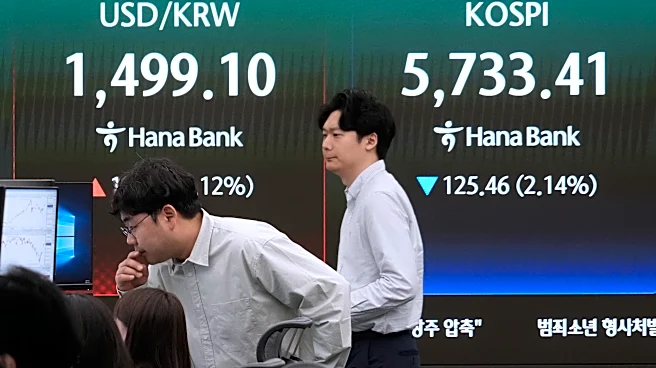
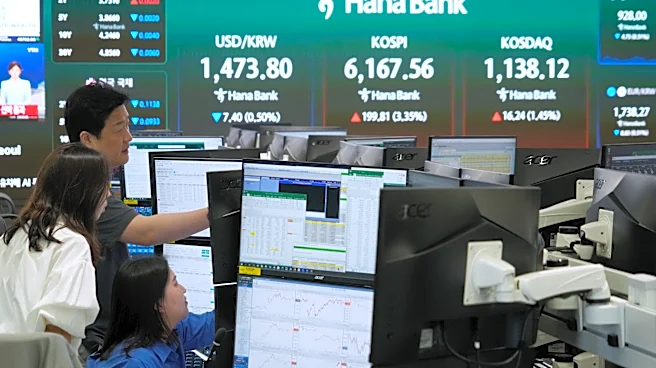
In Asia, Japan's Nikkei 225 gained 0.4% to finish at 58,134.24. Australia's S&P/ASX 200 was little changed, inching up less than 0.1% to 8,978.70. South Korea's Kospi jumped 2.1% to 6,091.39. Hong Kong's Hang Seng edged up 0.3% to 25,947.32, while the Shanghai Composite added less than 0.1% to 4,027.21.
Benchmark U.S. crude fell 33 cents to $90.95 a barrel. Brent crude added 24 cents to $94.99. While that’s still above its roughly $70 price from before the war began in late February, it’s well below the peak level of $119.
Lower oil prices help bring down costs for all kinds of businesses. But some analysts noted the war was still ongoing, warning that the optimism may be unfounded.
“The counterintuitive decline in crude appears driven by growing hopes that a second round of peace talks between Washington and Tehran could soon materialize, after the first attempt fizzled out. Traders are clearly choosing to price in the possibility of de-escalation rather than the immediate reality of restricted flows,” said Tim Waterer, chief market analyst at KCM Trade.
Hopes are rising for renewed talks between the U.S. and Iran after President Donald Trump said Tuesday that a second round of talks could happen “over the next two days.” U.N. Secretary-General António Guterres said it’s “highly probable” that talks will restart.
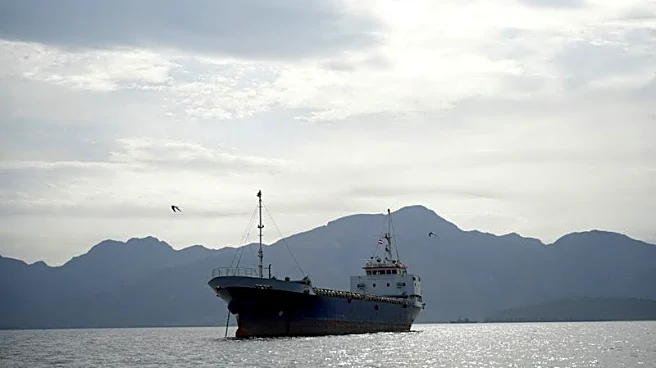
Asian nations depend on access to the Strait of Hormuz, a narrow waterway that’s the main avenue for crude oil produced in the Persian Gulf area to reach customers worldwide. Blockages there have kept oil off the global market, which has in turn driven up its price.
Global inflation this year looks set to accelerate to 4.4% from 4.1% in 2025, according to the International Monetary Fund, which had earlier thought inflation would slow to 3.8%. The IMF on Tuesday also downgraded its forecast for global economic growth to 3.1% this year from the 3.3% it had forecast in January.
In currency trading, the U.S. dollar edged down to 158.76 Japanese yen from 158.79 yen. The euro cost $1.1791, down from $1.1797.
___
AP Business Writer Stan Choe in New York contributed to this report.
Yuri Kageyama is on Threads: https://www.threads.com/@yurikageyama