
U.S. President Donald Trump has ordered the U.S. military to “shoot and kill” Iranian small boats choking the Strait of Hormuz.
In a social media post Thursday morning, he said the military is intensifying
its mine clearing efforts in the critical waterway. The move intensified the U.S.-Iran standoff in the Persian Gulf and raised questions about efforts to end the war.
Meanwhile, the U.S. military said it seized another tanker Thursday associated with smuggling Iranian oil, the Majestic X, in the Indian Ocean, deepening confusion over efforts to end the war. The seizure comes after a day after Iran attacked three cargo ships in the Strait of Hormuz, capturing two of them. Ship-tracking data showed the Majestic X in the Indian Ocean between Sri Lanka and Indonesia.
The standoff between the U.S. and Iran has effectively choked off nearly all exports through the Strait of Hormuz, where 20% of the world’s traded oil passes in peacetime, with no end in sight.
Here is the latest:
The group said in a statement that it targeted Israeli soldiers in the southern village of Taybeh and downed a drone in Majdal Zone on Thursday. Earlier, the Israeli army said it intercepted an “aerial target” in southern Lebanon.
The group reiterated that its attacks, which resumed Tuesday, were in retaliation for Israeli violations of the 10-day ceasefire that took effect Friday. The Israeli army has been launching near-daily strikes on southern Lebanon since the ceasefire.
Israel has also been accusing Hezbollah of breaching the ceasefire.
“Iran is having a very hard time figuring out who their leader is! They just don’t know!,” Trump said in a social media post. “The infighting is between the ‘Hardliners,’ who have been losing BADLY on the battlefield, and the ‘Moderates,’ who are not very moderate at all (but gaining respect!), is CRAZY!”
Trump has repeatedly said over the course of the ceasefire that began April 8 that his team is dealing with Iranian officials who want to make a deal, while acknowledging his decision to kill several top leaders has come with some complications.
He announced earlier this week that he was extending the truce to give the battered Iranian leadership more time to come with a “unified proposal” on ending the war.
The head of the U.N.’s peacekeeping operations says he expects the possible replacement for its force in southern Lebanon will “probably be smaller” than the current one that’s been in place for nearly a half-century.
Jean-Pierre Lacroix said the UNIFIL operation, which has inhabited a tense zone where militants from Hezbollah and Israeli forces have battled repeatedly, has recently faced pressure from funding cuts.
The force’s mandate ends at the end of the year. U.N. officials are facing a June 1 deadline to present a proposal for the force that could replace it.
Will President Trump send troops into Iran? Will he rename the Strait of Hormuz after himself? Will he post again praising Allah?
No one knows the answers, but online betting companies that allow people to wager on Trump policies and statements are profiting — including some backed by his oldest son.
Prediction markets love the president’s unpredictability, his need to keep people guessing about his next move or social media post, leading to more wagers in these betting venues and more fees for them. That includes Polymarket, a company Donald Trump Jr. has a stake in, and Kalshi, a company he advises.
These sites have to come up with new betting lines on current events everyday, and Trump Jr.’s famously fickle father has proven to be a rich source of will-he-or-won’t-he questions.
When a wagering event on Polymarket asked whether Trump was likely to send troops into Iran, nearly 100,000 bets were placed April 8, leading to the biggest trading day of the year up to then.
▶ Read more
The U.S. president in a morning social media posting also said the military is intensifying its mine clearing efforts in the critical waterway.
“I have ordered the United States Navy to shoot and kill any boat, small boats though they may be ... that is putting mines in the waters of the Strait of Hormuz,” Trump posted. “There is to be no hesitation. Additionally, our mine ‘sweepers’ are clearing the Strait right now. I am hereby ordering that activity to continue, but at a tripled up level!”
President Trump has turned to naval blockades to pressure the governments of Venezuela, Cuba and now Iran to meet his demands, but his preferred tactic is confronting a very different reality in the Middle East than in the Caribbean.
Unlike Cuba or Venezuela, Iran choked off a crucial trade route for energy shipments, meaning the longer the standoff persists the more the global economy will suffer. Tehran also poses a greater military threat — beyond those posed by the adversaries in America’s own hemisphere — and requires a sustained military presence far from U.S. shores.
Iran’s leverage over the Strait of Hormuz gives it power during a shaky ceasefire because the widening economic risks — especially higher U.S. gas prices in an election year — could force Trump’s Republican administration to end its blockade on Iran’s ports and coastline, experts say.
“It’s really a question now of which country, the U.S. or Iran, has a greater pain tolerance,” said Max Boot, a military historian and senior fellow for national security studies at the Council on Foreign Relations.
▶ Read more
An Israeli drone strike killed three men inside a car Thursday in central Gaza Strip, health officials said.
Those killed were taken to al-Aqsa Martyrs Hospital in Deir al-Balah. Two of them were inside the vehicle targeted on Salah al-Din Street near Maghazi camp, while a third was nearby, hospital director Raed Hussein told The Associated Press. Three others were injured.
The Israeli military didn’t immediately respond to a request for comment.
A fragile Israel-Hamas ceasefire has held since October, but renewed strikes have killed 791 people and wounded 2,235, according to the latest figures released by Gaza’s health ministry, which doesn’t distinguish between civilians and combatants in its toll.
The U.S. military seized another tanker Thursday associated with smuggling Iranian oil.
The U.S. Defense Department said it seized the oil tanker Majestic X in the Indian Ocean.
“We will continue global maritime enforcement to disrupt illicit networks and interdict vessels providing material support to Iran, wherever they operate,” the Defense Department said.
The seizure comes after Iran attacked three cargo ships Wednesday in the Strait of Hormuz, capturing two of them.
The Defense Department released footage of the seizure of the vessel, showing U.S. troops on the deck of the vessel.
Ship-tracking data showed the Majestic X in the Indian Ocean between Sri Lanka and Indonesia, roughly the same location as the oil tanker Tifani, earlier seized by American forces. It had been bound for Zhoushan, China.
The Majestic X is a Guyana-flagged oil tanker. It previously had been named Phonix and had been sanctioned by the U.S. Treasury in 2024 for smuggling Iranian crude oil in contravention of American sanctions on the Islamic Republic.
“Iran relies upon a sprawling network of tankers and ship management firms in multiple jurisdictions to transport its petroleum to overseas customers — using tactics such as false documentation, manipulation of vessel tracking systems, and constant changes to the names and flags of vessels,” the Treasury said at the time.
There was no immediate response from Iran on the news of the seizure.
Since the start of the war between Iran, Israel and the United States, over 30 ships have come under attack in the waters of the Persian Gulf, the Strait of Hormuz and the Gulf of Oman. The threat of attack, rising insurance premiums and other fears have stopped traffic from moving through the strait, through which 20% of all crude oil and natural gas traded passes.
Iran’s ability to restrict traffic through the strait, which leads from the Persian Gulf to the open ocean, has proved a major strategic advantage.
After the attacks Wednesday, White House press secretary Karoline Leavitt told Fox News Channel that American officials that Iran’s seizure of the ships didn’t violate truce terms because “these were not U.S. or Israeli ships, these were two international vessels.”
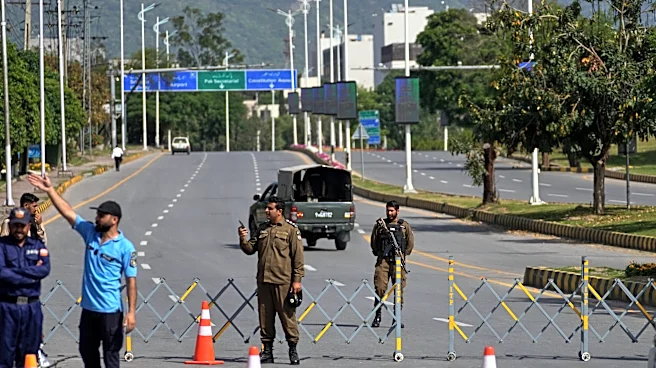
However, the ceasefire has been strained by dueling American attacks on Iranian ships and those by Iran on commercial vessels. It also remains unclear when, or if, the two sides will meet again in Islamabad, where Pakistani officials say they are still trying to bring the countries together to reach a diplomatic deal.
Iran’s exiled Crown Prince Reza Pahlavi was splattered with red liquid Thursday as he left a building after a news conference in Berlin.
He waved to supporters in the aftermath and got into a car that drove away.
The alleged perpetrator was immediately detained by police.
Pahlavi has been in exile for nearly 50 years.
His father, Iran’s shah, was so widely hated that millions took to the streets in 1979, forcing him from power. Nevertheless, Pahlavi is trying to position himself as a player in his country’s future.
Reza Pahlavi, Iran’s exiled crown prince, criticized the ceasefire between the Unites States and Iran.
He argued Thursday that the agreement assumes the Iranian government’s behavior will change and “you’re going to deal with people who all of a sudden have become pragmatists.”
“I don’t see that happening,” he said during a news conference in Berlin. “I’m not saying that diplomacy should not be given a chance, but I think diplomacy has been given enough chance.”
Pahlavi has tried to position himself for a return to power should the Shiite theocracy fall and has supported the U.S.-Israeli military intervention in the Middle East.
Pahlavi called on Europeans to do more to support Iranian people fighting for democracy.
He claimed 19 political prisoners were executed by Iranian authorities in the past two weeks and another 20 people have been sentenced to death.
“Will the free world do something or watch the slaughter in silence,” Pahlavi wondered.
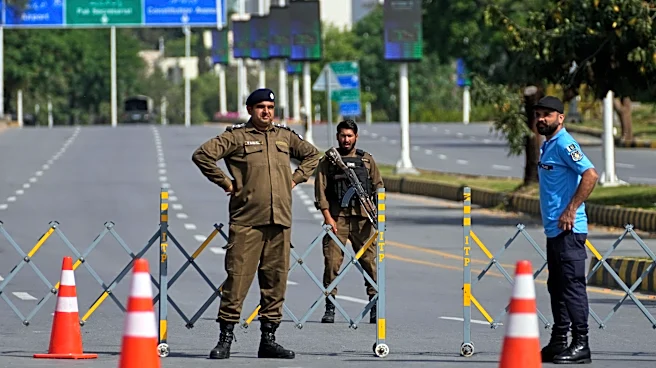
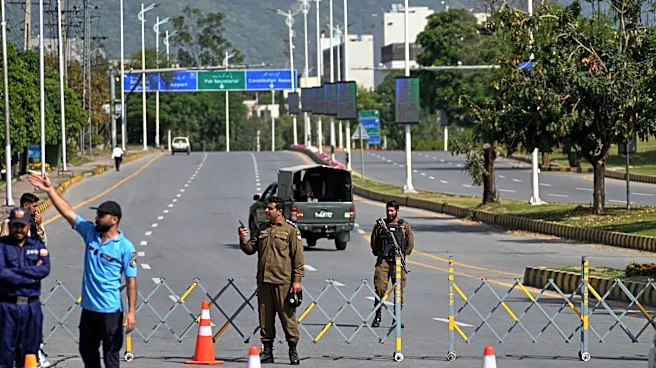
Pakistan Interior Minister Mohsin Naqvi said in a statement Thursday he hoped for “positive progress” from Iran after a meeting with U.S. Chargé d’Affaires Natalie Baker.
The meeting in Pakistan’s capital Islamabad included discussion of diplomatic efforts related to a second round of U.S.-Iran ceasefire talks, which was delayed after Tehran did not confirm when it would send its delegation.
Naqvi said Pakistan Prime Minister Shehbaz Sharif and Field Marshal Asim Munir were making efforts “at every level” to support a peaceful settlement and hoped all sides would give diplomacy a chance.
Naqvi praised U.S. President Donald Trump for extending the ceasefire, calling it a welcome step toward de-escalation.
Baker appreciated Pakistan’s “constructive role” in promoting peace, the statement said.
Iran said Thursday it hanged another member of the Iranian exiled opposition group Mujahedeen-e-Khalq.
The Mizan news agency of Iran’s judiciary identified the man as Soltanali Shirzadi Fakhr.
It accused him of cooperating with the Israeli intelligence service Mossad, without offering specifics. It also did not say when or where it arrested him.
Iran has accused many it has hanged during the war as having links to Israel. Activists say Iran routinely tries capital cases behind closed doors, uses coerced confessions and doesn’t allow the accused to properly challenge the evidence against them.
This brings to nine the total number of MEK members executed since the start of the war.