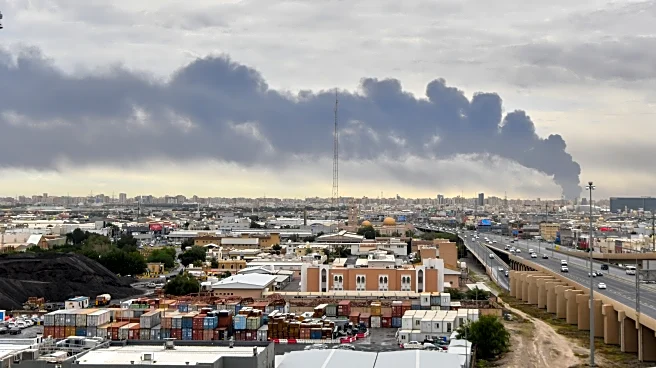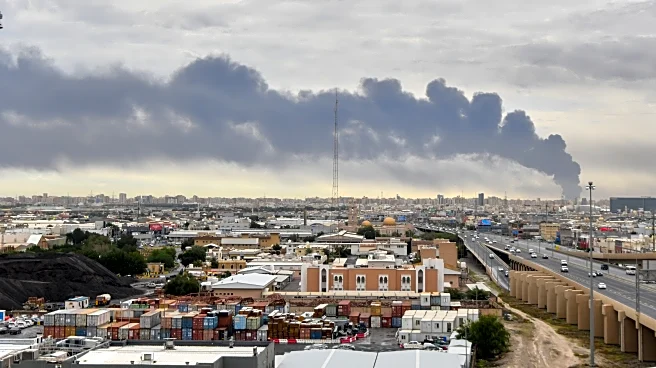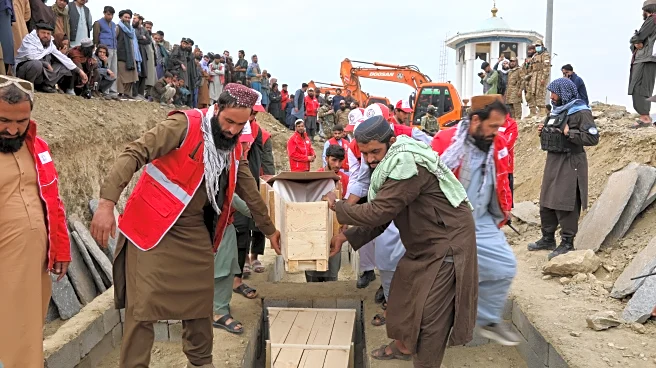

KABUL, Afghanistan (AP) — Dozens of people were buried in a Kabul cemetery on Thursday in the second mass funeral of victims killed in an airstrike that hit a drug rehabilitation center in the Afghan capital earlier this month.
Bulldozers opened a large pit into which individual graves were dug for the 60 coffins. Afghan officials have said hundreds of people were killed when a Pakistani airstrike hit the 2,000-bed Omid Addiction Treatment Hospital
on March 16.
The U.N. humanitarian affairs office has said the total death toll is still under verification. Pakistan has denied targeting civilians, saying it struck an ammunition depot.
The strike came amid escalating fighting between Pakistan and Afghanistan that began in February and has seen repeated cross-border clashes as well as airstrikes inside Afghanistan, including several in Kabul.
Pakistan accuses Afghanistan of providing a safe haven for militants who carry out attacks inside Pakistan, especially for the Pakistani Taliban. The group is separate but closely allied with the Afghan Taliban, which seized power in Afghanistan in 2021 during the chaotic withdrawal of U.S.-led troops. Kabul denies the charge.
Pakistan declared last month that it is at “open war” with Afghanistan. The conflict has alarmed the international community, particularly as the area is one where other militant organizations, including al-Qaida and the Islamic State group, still have a presence and have been trying to resurface.
The two sides declared a temporary truce last week ahead of the Muslim holiday of Eid al-Fitr, following mediation by Saudi Arabia, Turkey and Qatar. The truce expired this week, and renewed fighting erupted on Wednesday, with Afghan officials saying at least two civilians had been killed in eastern Afghanistan and others had been wounded.
Separately, the Pakistani Taliban — known as Tehrik-e-Taliban Pakistan, or TTP — said they have resumed attacks inside Pakistan after observing their own three-day Eid ceasefire.
Thursday’s funeral was the second mass funeral for victims at the addiction treatment center, after one was held for more than 50 people on March 18.
Health Ministry spokesman Sharafat Zaman said on Thursday that the death toll from the strike on the center now stood at 411 people, after two of the wounded died in hospital and one more body was pulled from the rubble in recent days. A further 263 people were wounded, he said.
Zaman said the remains of 20 young men, aged about 18 to 19 years old, were never found. The young men were all in a room in the treatment center that was completely destroyed in the strike. “No sign of them remained,” he said. “We have not yet found any body parts of them to identify.”
The spokesman said many people remain missing. He said hundreds of people were still going to Kabul’s forensic department seeking news of their loved ones who had been in the Omid treatment center, as their relatives are not listed among the confirmed dead or the wounded.
Samira Mohammadi said she has been searching since the explosion for her 20-year-old son Arif, who was a patient at the treatment center. Her visits to several hospitals in the capital have been fruitless.
“I'm looking for my child, but I haven't found him.” she said. “I'm searching for my son with all my heart, I'm telling you, Arif is no more.”
The Omid hospital had been expanded from a previously existing drug treatment facility as part of the Taliban government’s efforts to stamp out a significant drug addiction problem in Afghanistan. The country’s vast poppy fields have been the source of much of the world’s heroin, which in combination with decades of conflict and widespread poverty has fueled drug addiction that authorities have vowed to combat.
The site, near Kabul’s international airport, is adjacent to a former NATO military base, Camp Phoenix, where U.S. forces used to train the Afghan National Army.
The strike caused an intense fire at the hospital, and officials have said the bodies of many of the victims were too badly damaged to be identified.