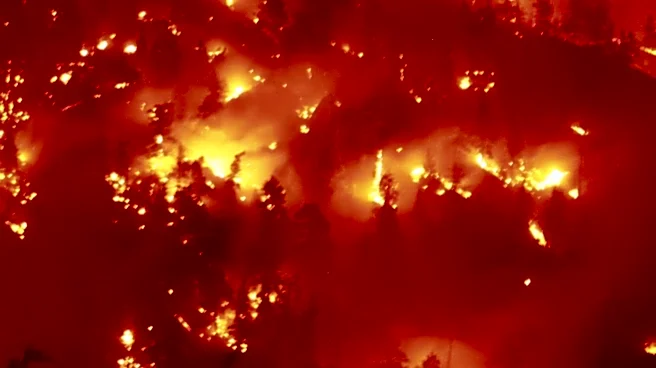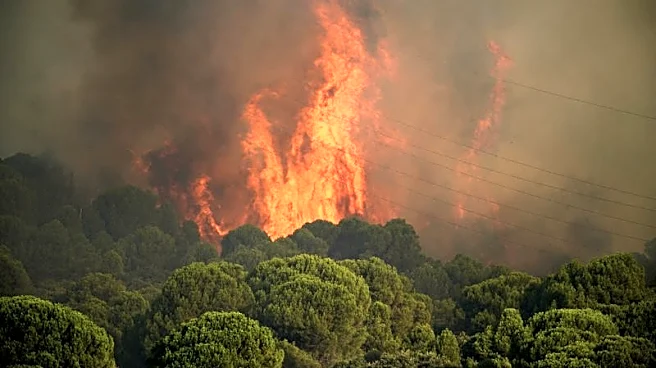

LEGE-CAP FERRET, France (AP) — A wildfire covering an area four times the size of Paris remained uncontained in southwest France on Wednesday as temperatures were forecast to reach 40 C (104 F), threatening
to erase firefighters’ overnight gains.
Authorities in the Gironde region said the blaze had not spread further during a calm night, but warned that forecast heat and winds could cause the flames to surge again.
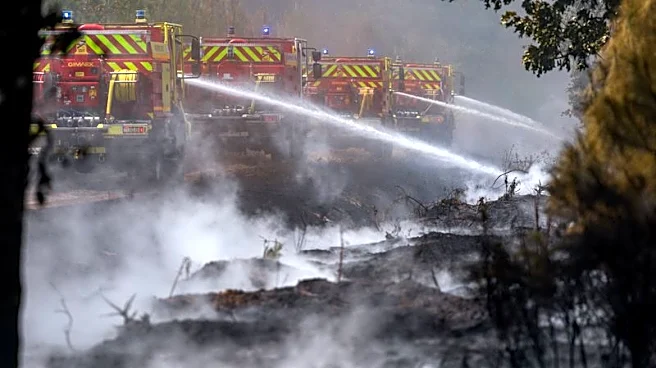
At the command center in Lège, firefighters bent over maps spread across a car hood as commanders tracked three danger zones: northern Cap-Ferret, the wooded corridor around Marcheprime, Cestas and Saint-Jean-d’Illac, and a military site near Martignas, where a significant new outbreak required a major deployment.
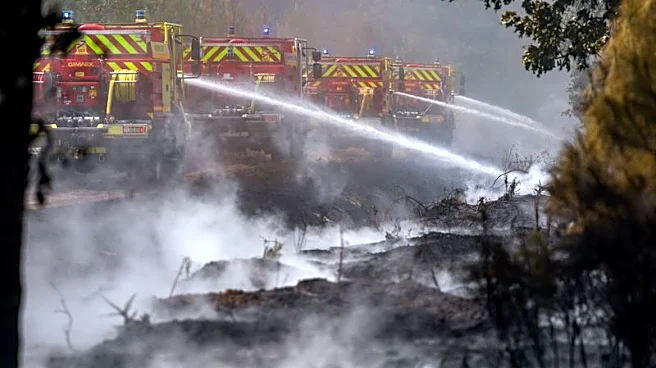
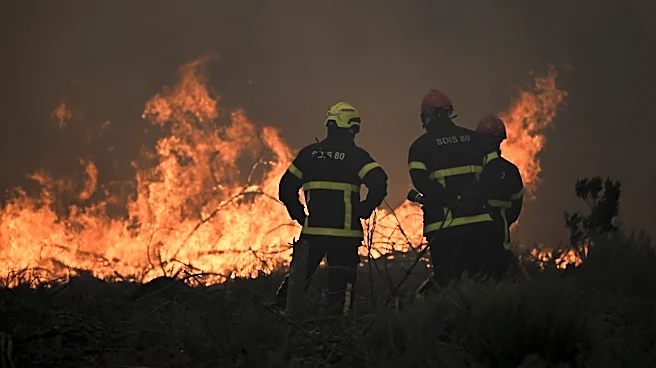
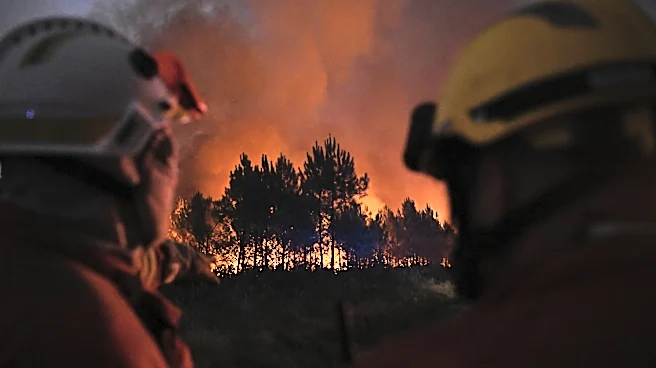
More than 2,200 firefighters and over 20 aircraft remain mobilized, supported by crews from across France and European partners.
“We strike quickly and strike hard at any new smoke emissions,” Gironde fire commander Matthieu Jomain said.
The fire forced 220,000 people to flee at its peak. Tens of thousands have since been allowed home, but authorities warned that the danger had not yet passed.
The extreme heat strips moisture from vegetation and drives humidity down, turning grasses, brush and forest litter into faster-burning fuel. Winds can lift embers over firebreaks and ignite new fronts beyond the reach of crews.
Météo-France, the national meteorological service, said Wednesday would be the hottest and driest day of the week, with elevated wildfire danger across every region of the country.
Drought now covers mainland France and Corsica, with soils approaching the record dryness reached in August 2022, the agency said.
In other regions, firefighters have secured two major victories. In Landes and Var fires were fixed, meaning their advance had been halted. That left Gironde as France’s biggest remaining wildfire battle, Interior Minister Laurent Nuñez said.
Smoke from the Gironde and Landes fires also triggered an ongoing particulate-pollution episode in both departments, regional air-quality monitors said.
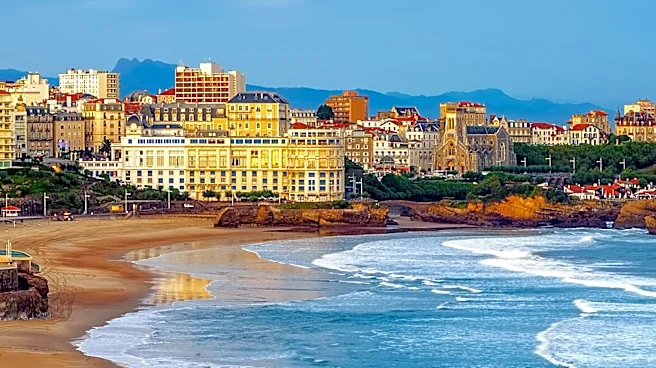
The Gironde authorities ordered 4,000 more people out of tourist sites along the Atlantic coast on Tuesday, widening what may be France’s largest peacetime evacuation.
“The situation remains complicated. That’s clear. We’re not out of the woods,” said Gironde prefect Sophie Brocas, who also authorized 60,000 evacuees to return to three Bordeaux suburbs untouched by fire.
The opposing movements — thousands ordered out of coastal resorts as others returned with mobile phones on and emergency bags packed — captured how precarious the fire’s hold remained.
At the height of the evacuations, roughly 330,000 people were driven from homes and vacation sites across France and Spain.
Spain is braced for its fourth heat wave of the summer, with several blazes still out of control, including the largest in its recorded history. Even so, Spanish authorities began lifting evacuation and stay-at-home orders for thousands of people after firefighters made progress.
At its height, the Gironde blaze created a black thundercloud, electrified and lit from within. It generated lightning, strong winds and new fires beyond the original front. The phenomenon, known as a pyrocumulonimbus, was the first recorded in France.
More than 1,160 square kilometers (448 square miles) have burned across France this year, according to the Interior Ministry.
Europe is the world’s fastest-warming continent, warming at more than twice the global average, according to the European Union’s Copernicus climate service. Western Europe recorded its hottest June on record, with extreme heat and widespread dryness contributing to the spread and intensification of fires in France and Spain, Copernicus said.
___
Adamson reported from Paris.