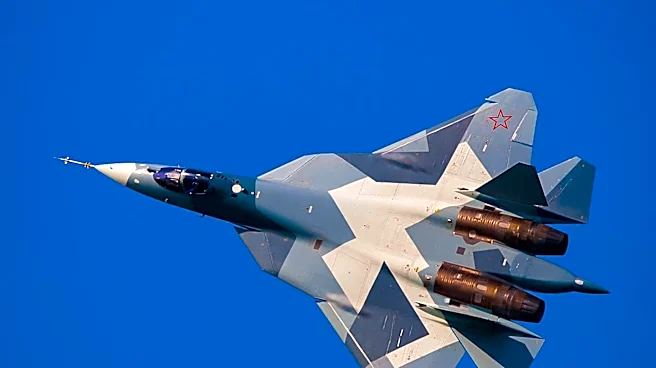




KYIV, Ukraine (AP) — Russia's new class of jet-powered drones rip across the night sky in Kyiv at hundreds of kilometers per hour, leaving Ukrainian air-defense units only moments to intercept them. It's rarely enough time.
With many of the drones getting through to the capital, defense manufacturers are scrambling to develop a new generation of interceptors to counter the deadly threat. They are building their own jet-propulsion systems and training
artificial intelligence to help guide the chase.
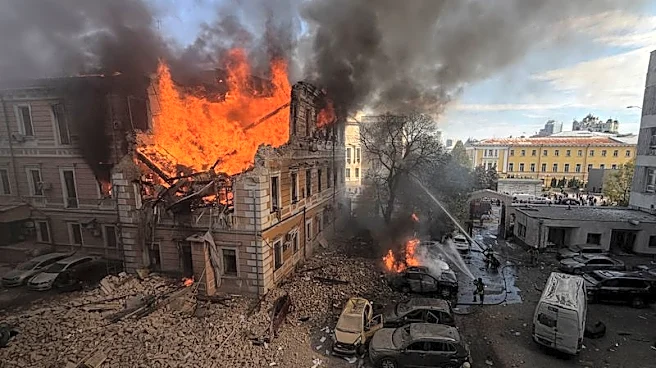
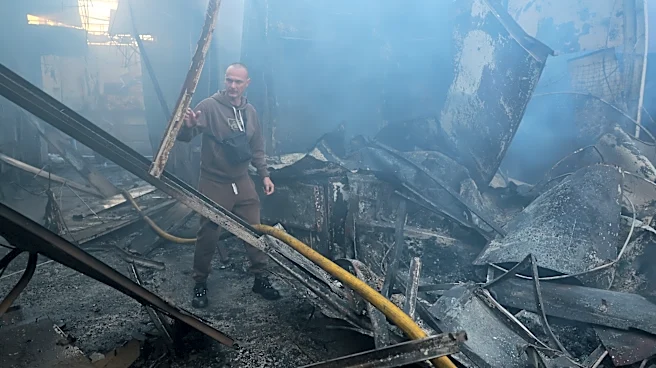
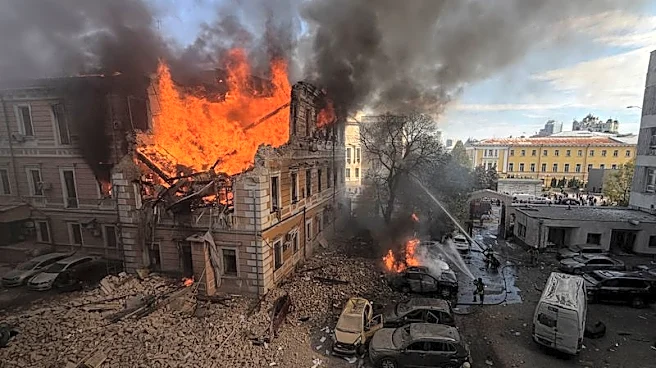
They need to move fast because the Russian drones are driving a new tactic, ramped up in recent weeks, to hit the infrastructure keeping Ukraine’s war-battered economy afloat. Recent targets have included energy systems, key industries, railways, post offices, shopping centers, telecom networks, gas stations and grain exports.
Russia also has an advantage with its ballistic missile arsenal, which poses another challenge as Ukraine runs low on interceptor missiles.
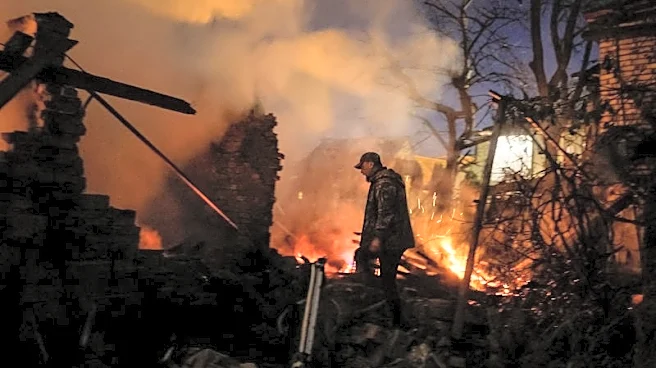
The effects of the barrage are being felt in Kyiv, which increasingly resembles a front-line city, without the relative safety that had long set it apart from the fighting. Food supplies have been disrupted, explosions echo day and night, and residents scramble for cover from strikes that reach closer to the city center.
Ukrainian officials say they are testing new interceptors that have successfully hit jet-powered Russian drones, which fly much higher and faster than propeller-driven drones and are much harder to stop.
“They’re moving so fast that we can’t get a proper lock on them,” said Volodymyr Serdiuk, commander of an air-defense unit.
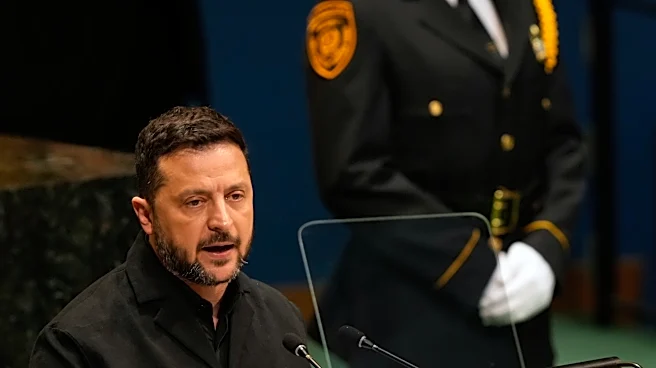
Building the prototype interceptors in sufficient numbers, and training pilots to fly them, could take up to six months, manufacturers say. President Volodymyr Zelenskyy has called for faster production.
Air-defense crews have no time to wait. Facing constant waves of drones, they improvise, but lives are lost almost daily.
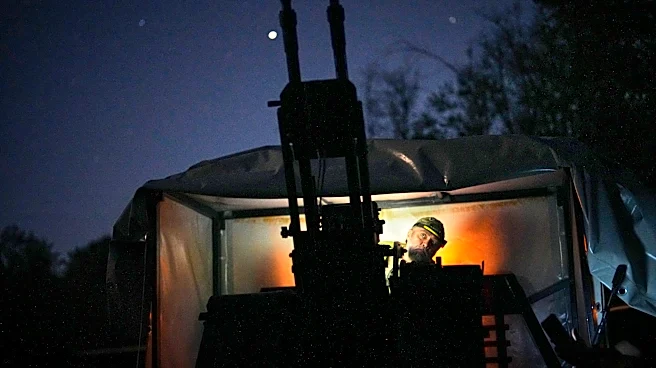
Serdiuk's air-defense crew begins their night shift at 8 p.m.
He studies a tablet connected to a centralized radar system to track the sky above his sector. A circle marks the stretch of airspace his unit is responsible for protecting.
“It’s like chasing a pig in the forest,” he said of the new drones, which are based on Iranian-designed Shahed models.
His son is serving on the front line in eastern Ukraine and now calls him in Kyiv just to check that he is safe, a measure of just how much life in the capital has deteriorated.
To the west, the lights of Kyiv twinkle on the horizon. To the east, the green countryside and suburbs stretch into the darkness, with a power plant visible in the distance.
Then a red marker appears on the screen, moving rapidly across the map. It's a jet-powered Shahed drone.
“Exit!” someone cries. Serdiuk looks up.
Moments later, the Shahed streaks across the night sky. It is already beyond his unit’s reach. His team relies on heavy machine guns, but their rounds cannot match the drone’s speed or altitude.
Then, a flash. Seconds later, the sound of an explosion reaches them from several kilometers away.
In that particular attack, it was not clear if the blast was from the Russian drone that flew past them, as official channels reported, or from a Ukrainian air-defense rocket, as witnesses at the site told The Associated Press.
The same sequence happened again and again throughout the night.
Even if the drones pass directly overhead, “the problem is they’re flying too high" to fire at them accurately, said Sean Almeida, a former U.S. Marine and volunteer for the unit.
Ukraine’s air defenses use electronic warfare and AI to steer incoming Russian drones into narrow corridors in the sky, giving interceptors a better chance of catching them.
But the latest jet-powered Shahed drones are testing that strategy. The fastest Ukrainian interceptors typically reach 300 to 400 kph (186 to 248 mph), not fast enough to meet the new threat.
Crews have started training on a new interceptor that includes a cooling system to keep its batteries from overheating as the drone is pushed to higher speeds to match the jet-powered enemy.
For now, salvation can appear on a radar screen as a blue blip representing one of Ukraine’s few F-16 fighter jets, scrambled to hunt down the fastest drones. They are capable of stopping the drones, but they need a lot of maintenance. Many are currently out of service and awaiting repairs.
“It’s very encouraging to see the blue part,” Almeida said.
Casualty reports soon began appearing on news channels. A mother and her child were killed in Kyiv’s Fastiv district, one said.
The deaths were from the explosion Serdiuk watched from several kilometers away.
As air-defense crews hunt drones, Ukrainian engineers are racing to set up industrial production.
Ukraine had been warned that faster, jet-powered drones were coming, but manufacturers did not have a ready solution when the new variants appeared, said Oleksii Babenko, CEO of Vyriy Drones.
Defense companies are now pursuing faster interceptors, new propulsion systems and autonomous guidance capabilities. The biggest challenge is scale. Acquiring components, testing designs and training crews take time.
Miniature turbojet engines are one of the bottlenecks, with much of the supply coming from European manufacturers whose production capacity is far below Ukraine’s potential needs.
At least one Ukrainian defense company has successfully tested an interceptor against the new threat. Babenko estimates it could take three to four months to scale up and close the gap. Military analyst Taras Chmut puts the timeline at six months or more.
“Right now, we’re in a race for speed,” Babenko said, “trying to build faster interceptors and new solutions.”
The improved interceptors cannot come soon enough for Ukrainians such as Daria Kuchynska.
The 31-year-old had just stepped into the road Friday outside her Kyiv flower shop when an explosion from a jet-powered drone went off without warning. The blast threw her to the ground and filled the street with dust and smoke. Beside her lay an unconscious woman.
Kuchynska checked for a pulse, but the woman was already dead.
“So many people are constantly dying around us. I don’t know how we survive. It’s simply a matter of luck," she said. “It's unreal.”