





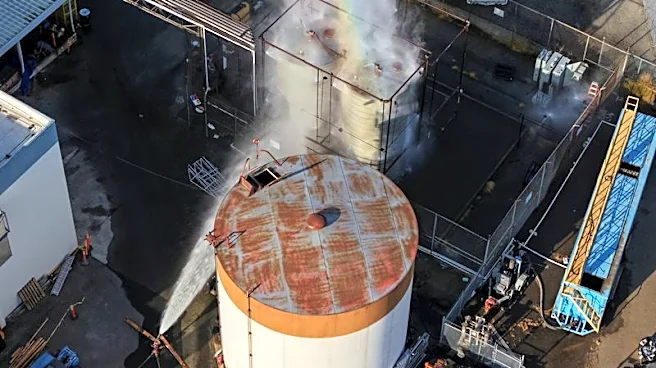

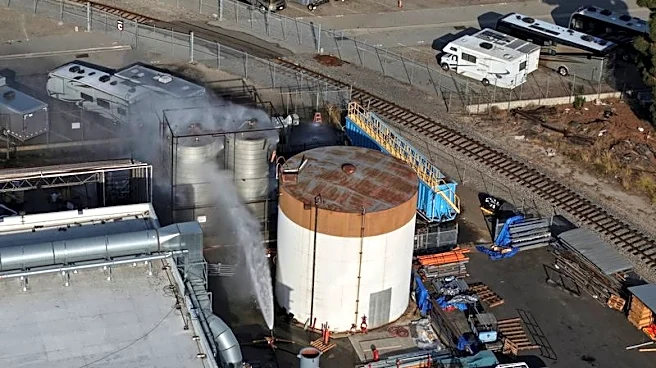
Authorities — scrambling to find a safe resolution after a tank containing a hazardous chemical at a Southern California aerospace plant was damaged — believe the risk of a catastrophic explosion has been eliminated. But the evacuation order affecting tens of thousands of residents remains.
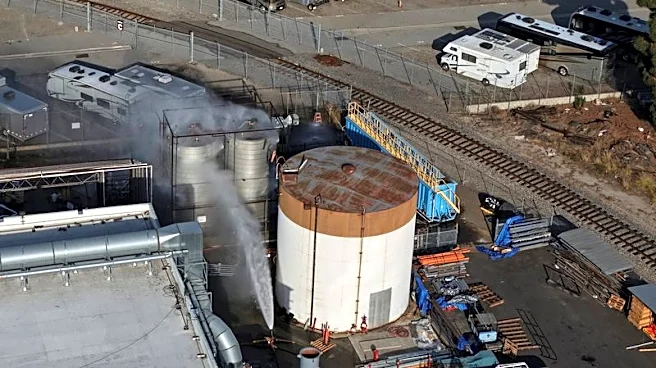
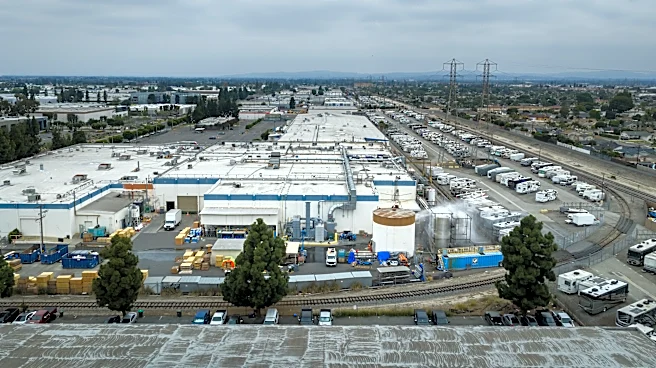
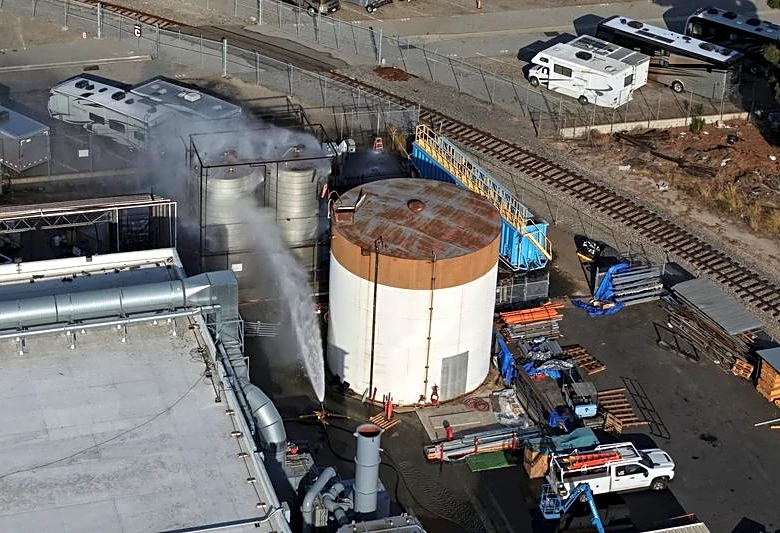
The storage tank at GKN Aerospace with about 6,000 to 7,000 gallons (22,713 to 26,498 liters) of methyl methacrylate used to make plastic parts overheated last week
and began venting vapors into the air around Garden Grove, a city in Orange County.
Officials had feared that the tank could leak all the chemical or even explode. But they said Monday that an overnight inspection confirmed that a crack in the tank relieved pressure and cooled the chemical.
There's no active leak and no chemicals have escaped from the tank, officials have said.
No injuries have been reported, but more than 50,000 residents were under an evacuation order over the Memorial Day weekend.
After the tank overheated Thursday, firefighters repeatedly sprayed it with water in an attempt to cool the chemical inside. Then, officials said Sunday that a crack that had developed in the tank could potentially lower the risk of an explosion, and a team was sent on an overnight mission to determine if the crack had relieved the pressure.
Orange County Fire Authority division chief Craig Covey said the results of the overnight evaluation of the tank — that the temperature inside had dropped and that pressure had been released — was “incredibly positive news.”
The tank’s interior reached 100 degrees (37.7 Celsius) Sunday, an increase of 10 degrees Fahrenheit (5.5 Celsius) since Saturday, according to Democratic state Sen. Tom Umberg. On Monday, Covey said the temperature fell to 93 degrees F (33.9 degrees C).
Methyl methacrylate is a flammable, colorless liquid used in the production of resins, plastics and plastic dentures and is a hazardous substance regulated by the federal government.
It can irritate the lungs, eyes and skin and in high doses can cause reduced lung function, along with dizziness and memory problems, according to the Environmental Protection Agency.
In prolonged cases, exposure to methyl methacrylate can cause serious respiratory problems or render a person unconscious.
Tests have found that air pollution in the evacuation zone is within normal limits.
The tank's drainage valves were not functioning, officials said.
If the temperature inside the tank climbed high enough, it would have caused pressure to build as the methyl methacrylate converted from a liquid to a gas, increasing the risk of explosion, which could have ignited other tanks at the site.
A blast that released the chemical would send it into a wider area and could create vapors that would be hazardous to inhale, according to Orange County's top health officer, Dr. Regina Chinsio-Kwong.
Aerial photos taken by The Associated Press showed streets in the area were empty Sunday, while several evacuation shelters were open.
The evacuation zone is west of Anaheim, home to Disneyland’s two theme parks, which were not under evacuation orders. Chinsio-Kwong said people outside the evacuation zone don't need to worry about health impacts.