





Americans overwhelmingly want to volunteer. Nonprofits desperately need them. The problem, according to the nonprofit Points of Light, is connecting the two.
The organization, founded by former President George H.W. Bush to encourage service, is set to unveil plans to improve that connection at its annual conference in Washington on June 22.
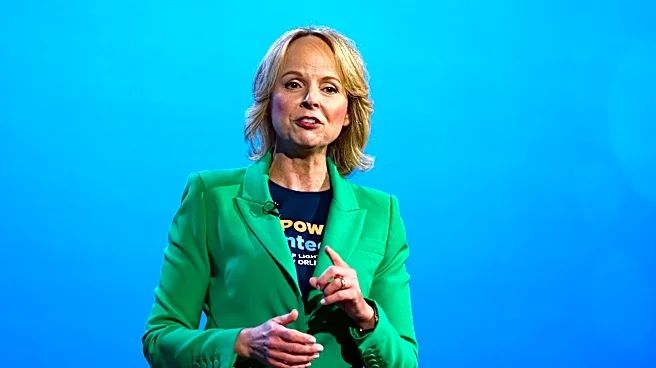
Jennifer Sirangelo, president and CEO of Points of Light, told The Associated Press that the group’s National
Volunteer Strategy initiative is the first phase in its $100 million plan to double the number of U.S. volunteers to 150 million by 2035.
“We believe that volunteering changes everything,” Sirangelo said in an interview. “It changes the people who serve. It uplifts the community. And we know that collectively it can change our society.”
The National Volunteer Strategy is Points of Light’s contribution to “building bridges, deepening empathy, and putting us on a path for having a more civil society where we can get along in a pluralistic environment,” she added.
The strategy – which includes investments in infrastructure and building standards for both volunteers and nonprofits – comes at a complicated time for volunteerism and the broader nonprofit sector. President Donald Trump’s administration gutted AmeriCorps, the federal agency for national service and volunteerism, in 2025, eliminating thousands of jobs and leaving nonprofits scrambling to replace the lost workers and funding.
Those cuts aggravated a decline in volunteerism caused by the COVID-19 pandemic that created a shortage of workers at many charities that have seen an uptick in demand. Though volunteers began to return in 2023, the most recent year the U.S. Census Bureau has released data for, the 28% of the population who donated their time is still below pre-pandemic levels.
Sirangelo said that rebound is a sign that the timing is right to roll out a significant strategy to foster more volunteerism. “So many people in the industry have applauded the effort and said, ‘I’ve been waiting for this for years’,” she said. “There has been enthusiastic engagement.”
Cathy Scott, UPS vice president for social impact and The UPS Foundation, said that she is excited about Points of Light’s plans, in part because her foundation has seen its own strategy to increase volunteerism succeed.
In 2011, The UPS Foundation set an ambitious goal for company workers to volunteer 30 million hours by 2030. UPS accomplished that goal in April — four years ahead of schedule.
Through its work with Points of Light, UPS was able to quantify how volunteering helped increase employee retention and employee pride in themselves and the company, Scott said. “We know that volunteerism increases well-being,” she said. “And we know that doing good is good for business.”
The idea that Points of Light’s volunteer strategy would help spread that kind of success to other companies and communities is something UPS wanted to support.
“We’re finding that (volunteerism) is bringing employees out of loneliness,” Scott said. “It’s creating additional professional networks. It is increasing skill development and talent development. It’s giving them a purpose… And people want to be part of a purpose and also find their own purpose.”
Points of Light developed its National Volunteer Strategy after a yearlong “listening tour” that included two national surveys, 23 roundtables with leaders from corporate, cultural, faith and governmental groups, and input from a 40-member advisory council.
What they learned, Sirangelo said, was that interest in volunteerism was strong, but the nonprofit infrastructure to bring those interested into the groups that need them and engage them with the work and the mission was lacking. To strengthen that infrastructure, Points of Light plans to support the millions of volunteer managers at the nation’s nonprofits.
“We will invest in them and their continued growth with tools and resources that help them be effective at building those transformative volunteer experiences,” she said, adding that nonprofit managers are essential to ensuring “volunteers are available to achieve what we need in hunger, youth development, the environment and other big nonprofit issues.”
Another part of that support is creating a sort of canon for volunteerism so that both volunteers and nonprofits better understand what to expect from each other and can have clearer common goals.
Sirangelo is quick to point out that the National Volunteer Strategy is the launch of the process to double U.S. volunteerism, not the final goal. One area that remains to be developed is the strategy to better engage Gen Z and younger people who have not embraced traditional volunteering in the way previous generations have.
That’s not to say young people are not as generous or as interested in volunteering.
Alex Edgar, youth engagement manager at the history education nonprofit Made by Us and a member of the Points of Light board of directors, said young people don’t often get the credit for their volunteer work and that no strategy for the future of volunteerism would be complete without engaging that group.
“There is a hunger for (nonprofits) to have more youth-focused things, but oftentimes these local volunteer action centers don’t have the staff or resources or best practices honestly to do that well,” said Edgar, 22, who is also the co-founder of Youth250 at Made By Us, which is connecting young people to the country’s upcoming 250th anniversary. “There is interest, there is energy around bringing young people in, in part, because people see how disconnected they are, how much they distrust our institutions."
Edgar is hopeful Points of Light can help create a framework that shows young people the career pathways available to them in the nonprofit sector. “It is going to be incredibly beneficial for young people who are interested in service, but may not really see much of a ecosystem out there right now, especially given the changes in funding,” he said.
There are plenty of economic and cultural barriers to overcome before young people can volunteer more, experts say. And Edgar says no strategy can address all of them.
“For so many young people, we’re not 100% there yet in terms of showing them, ‘This is for you. This is something that we can do with you’,” he said. “But we have to start somewhere.”
_____
Associated Press coverage of philanthropy and nonprofits receives support through the AP’s collaboration with The Conversation US, with funding from Lilly Endowment Inc. The AP is solely responsible for this content. For all of AP’s philanthropy coverage, visit https://apnews.com/hub/philanthropy.