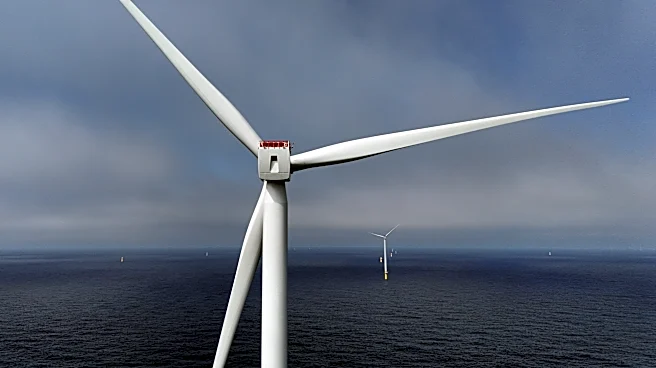

President Donald Trump is stopping offshore wind projects in the United States, just as the industry was poised to grow significantly.
Offshore wind energy has the potential to deliver large amounts of
clean energy along U.S. coastlines. Three offshore wind farms are open in the United States and three more have begun delivering power as they finish construction or final testing before fully opening.
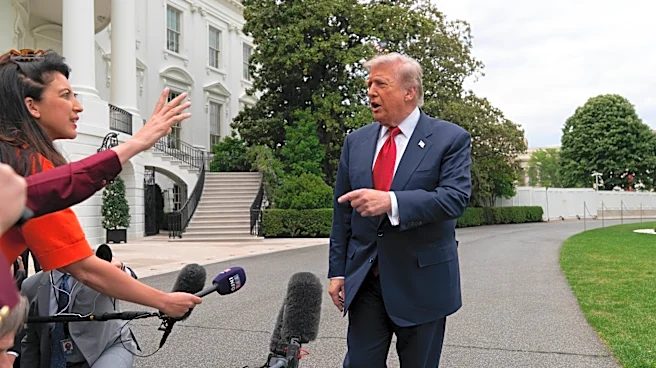
There are more than 40 federal offshore wind leases. The Trump administration is buying some leases back, giving payouts to energy companies to walk away from offshore wind. Trump has erected other roadblocks for the industry, while going all-in on fossil fuels.
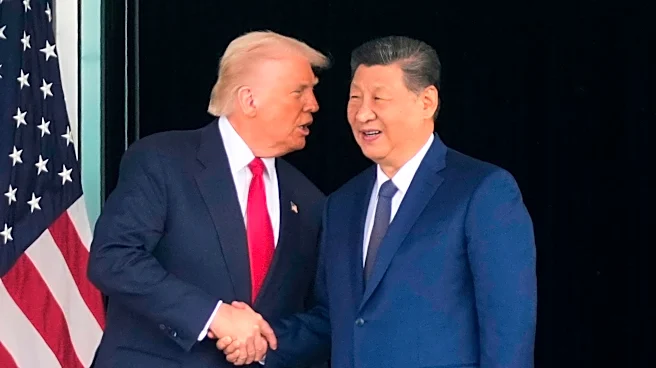
His stance runs counter to many other countries that are embracing using wind turbines at sea to help meet a growing demand for electricity cleanly. China, where Trump is attending a summit this week, is the global leader in offshore wind. Unlike burning oil, coal and natural gas, wind turbines produce electricity without warming the planet.
Here is a look at the offshore wind industry, both in the U.S. and globally, by the numbers:
There are 19 countries and markets powered with offshore wind energy: China is the global leader, followed by the U.K. and Germany, in terms of the number and the capacity of the wind farms installed. Other places building offshore wind farms are the Netherlands, Taiwan, Denmark, Belgium, France, Vietnam, South Korea, Japan, Sweden, United States, Norway, Finland, Italy, Portugal, Ireland and Spain, according to the Global Wind Energy Council.
China added 6.6 gigawatts of new offshore wind capacity in 2025, according to GWEC. China’s total offshore wind capacity stood at 48.4 gigawatts by the end of 2025, the group said.
Globally, countries added enough offshore wind energy to power 10.2 million homes in 2025 alone. The total was nearly 9.3 gigawatts, an increase of 16% over the previous year, GWEC said. The amount of offshore wind currently installed globally can produce enough energy to power the equivalent of 102 million homes, according to GWEC’s calculations.
China is expected to account for about 56% of the offshore wind capacity forecast to be added worldwide from 2026 to 2030, according to GWEC. About 29% is expected to come from the European Union over that period and 5% from the U.S., the group said.
The three open offshore wind farms in the U.S. are: the nation’s first, the Block Island Wind Farm, in state waters off Rhode Island; Dominion Energy’s Coastal Virginia Offshore Wind pilot project, the first in federal waters; and South Fork Wind, the first large U.S. offshore wind farm sending power to New York.
The other three are: Vineyard Wind in Massachusetts; Revolution Wind in Rhode Island; and the full-scale Coastal Virginia Offshore Wind project, adjacent to the pilot turbines off Virginia Beach. Vineyard Wind, the furthest along of these three, is expected to reach full operations in the coming months.
The Trump administration ordered that construction stop on all five East Coast offshore wind projects that were under construction in December, citing national security concerns. Along with impacting Vineyard Wind, Revolution Wind and Coastal Virginia Offshore Wind, the order paused work on two major offshore wind projects for New York, Empire Wind and Sunrise Wind.
Developers and states sued. Federal judges allowed all five to resume construction, essentially concluding that the government didn’t show that the national security risk was so imminent that construction must halt.
Hornsea 2, the world’s largest operating offshore wind farm, has 165 turbines. Located in the North Sea 55 miles (89 kilometers) from England's Yorkshire coast and next to its sister project Hornsea 1, it generates enough energy to power over 1.4 million U.K. homes and covers an area of 178 square miles (462 square kilometers). Another U.K. project under construction will surpass that.
There are 18,000 jobs in the United States supported by the offshore wind industry, according to the American Clean Power Association.
Coastal Virginia Offshore Wind will produce enough electricity for up to 660,000 homes. It started sending power to the electric grid in March.
The 2.6-gigawatt project is the largest U.S. wind farm to date. It is located off the state that's home to the world's data center capital and critical U.S. military infrastructure, said the offshore wind advocacy group Turn Forward.
Vineyard Wind will save Massachusetts customers a projected $1.4 billion on their electricity bills over the next 20 years, according to Massachusetts Gov. Maura Healey’s office. Vineyard Wind lowered electricity prices this past winter by competing in wholesale electricity markets, consistently offering lower prices than other sources of electricity.
Vineyard Wind is the first offshore wind project to finish construction during Trump's tenure. It has 62 turbines that will generate a total of 800 megawatts, enough clean electricity to power about 400,000 homes.
Offshore wind development has spawned $25.5 billion in investments into U.S. ports, the steel industry, transmission upgrades, shipbuilding, workforce training and research and development, according to the Oceantic Network, a nonprofit working to advance the offshore energy sector. This domestic supply chain for the industry includes more than 1,000 U.S. companies across at least 40 states, it said. Oceantic estimates that the economic hit for a canceled 1-gigawatt project in the Northeast nears $10 billion, mainly due to the lost jobs and investments, while ratepayers in the region also lose out on energy savings.
___
The Associated Press’ climate and environmental coverage receives financial support from multiple private foundations. AP is solely responsible for all content. Find AP’s standards for working with philanthropies, a list of supporters and funded coverage areas at AP.org.