
LONDON (AP) — The European Union said Tuesday it plans to phase out gear supplied by companies based in “high risk” countries from critical infrastructure such as high-speed telecom networks, in a move
seen as targeting Chinese companies including Huawei and ZTE.
Brussels' proposed measures to tighten up cybersecurity come amid rising concerns that the bloc's 27 member countries are vulnerable both to the dominance of Chinese high tech manufacturing and U.S. Big Tech services.
Under the draft legislation released by the EU's executive commission, telecom equipment from so-called high risk suppliers in third countries would be phased out within three years.
The proposals don't mention any countries or companies by name, but the term “high risk” has been previously used to refer to countries like China, home to tech giant Huawei. The company is the world's biggest maker of networking equipment but has long been banned from the United States.
The bloc's executive said in 2023 that EU countries were justified in restricting or excluding Huawei and ZTE, another Chinese tech company sanctioned by the U.S., because they posed higher risks. But previous EU measures for 5G cybersecurity were recommended or voluntary, which resulted in uneven application across the bloc, with some countries buying Chinese gear while others shunned it.
Under the new rules, the cybersecurity measures would become mandatory.
Huawei said that as a “legally operating company in Europe,” it reserves the right to safeguard its “legitimate interests.”
“A legislative proposal to limit or exclude non-EU suppliers based on country of origin, rather than factual evidence and technical standards, violates the EU’s basic legal principles of fairness, non-discrimination, and proportionality, as well as its WTO obligations," the company said in a statement.
The proposed restrictions also cover equipment in other sectors like security scanners used at border checkpoints, water supply systems and health and medical devices.
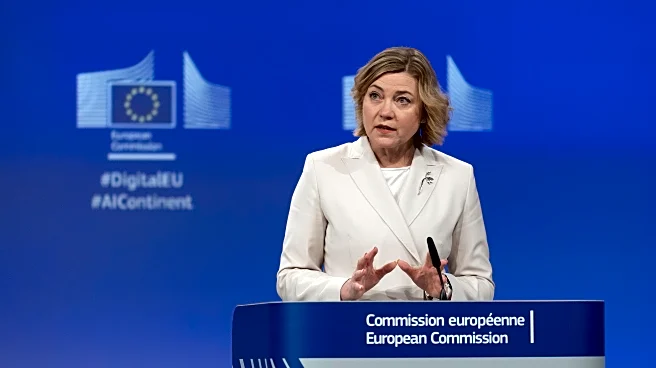
“Our proposal is about protecting EU citizens and businesses by securing the ICT supply chains that support the critical sectors of our economy and society,” European Commission Vice President Henna Virkkunen told lawmakers at the European Parliament in Strasbourg, France, which will need to approve the proposals.