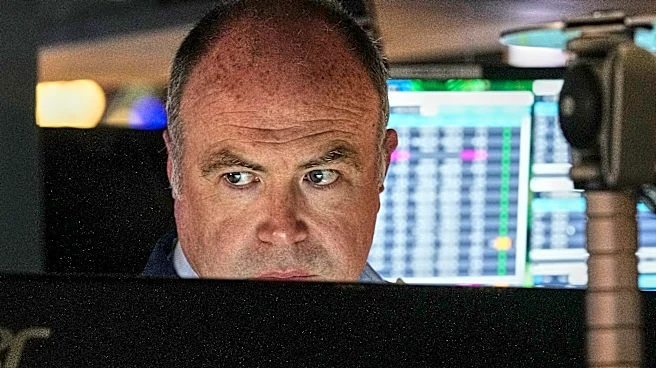



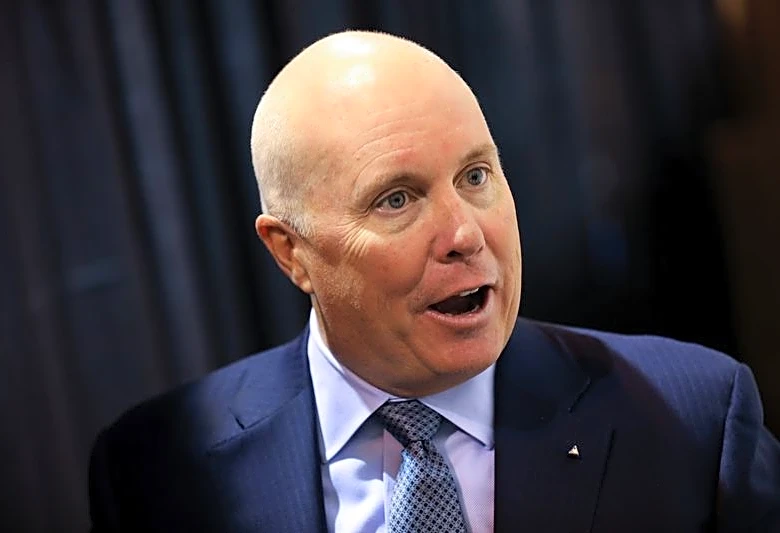

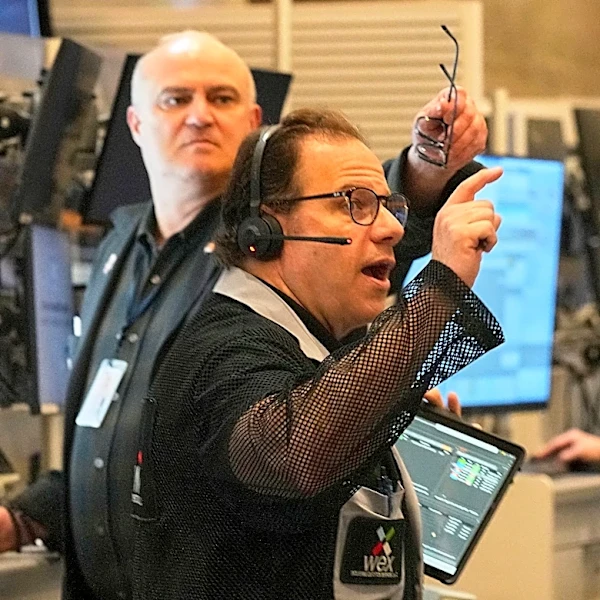

NEW YORK (AP) — The U.S. stock market is falling from its record heights Monday, while oil prices jump following escalations in the Middle East that may be undermining the ceasefire in the war with Iran.
The S&P 500 fell 0.7%, coming off its latest all-time high. The Dow Jones Industrial Average was down 564 points, or 1.1%, as of 12:15 p.m. Eastern time, and the Nasdaq composite was 0.7% lower.
The action was even stronger in the oil market, where
the price for a barrel of Brent crude leaped 5.3% to $113.93. It jolted higher after the United Arab Emirates said it came under attack by Iran for the first time since the fragile ceasefire took hold in early April. The attacks appeared to be in response to U.S. President Donald Trump’s latest efforts to reopen the Strait of Hormuz.
Iran’s closure of the strait has kept oil tankers pent up in the Persian Gulf and away from customers worldwide. That in turn has sent the price of Brent soaring from roughly $70 per barrel before the war.
Trump said Sunday that the United States would guide ships through the strait, which could get oil flowing again and bring down its price. But prices instead climbed after Iranian news agencies claimed Monday that Iran had struck a U.S. Navy vessel southeast of the Strait of Hormuz, accusing it of “violating maritime security and navigation norms.”
The U.S. military rejected the claim and then said that two American-flagged merchant ships had successfully transited through the Strait of Hormuz.
Even with all the uncertainty about how long the war with Iran will last, the U.S. stock market has managed to power to record after record. Hope is still high on Wall Street that the global economy can avoid a worst-case scenario because of the war. And in the meantime, companies continue to deliver big growth in profits. That's key because stock prices tend to follow the path of corporate profits over the long term.
The strength so far this reporting season has been broad-based and not confined to just the Big Tech superstars that dominate the market. The median stock in the S&P 500 is tracking for the best growth since 2021, according to Savita Subramanian, a strategist at Bank of America.
Tyson Foods joined the list Monday of those topping analysts’ expectations for both profit and revenue during the latest quarter.
It sold less beef than it did a year ago, but it did so at prices that were 11.5% higher, so its total beef revenue edged up. It also sold more chicken and pork than a year earlier, at slightly higher prices. Its stock rose 3.5%.
Norwegian Cruise Line Holdings likewise delivered a better profit for the latest quarter than analysts expected. But it’s feeling the effects of the war, which has not only raised pressure on fuel prices but also pushed some customers to think twice about travel plans, particularly to Europe.
The cruise operator said some “execution missteps” also have bookings below where it would like, and its stock fell 9.1%.
GameStop slumped after it said it wants to buy its eBay for $125 per share in cash and stock. Coming into the day, eBay had a total market value that was nearly quadruple GameStop’s.
GameStop said it has already built a 5% stake in eBay and sees opportunities to cut $2 billion in annual costs quickly. GameStop, whose stock briefly soared to market-shaking heights during the meme stock craze of 2021, fell 10.2%, while eBay rose 4.6%.
Several Big Tech stocks were strong, continuing a big run for companies involved in artificial-intelligence technology. Micron Technology gained 6.2% for one of the biggest gains in the S&P 500. Oracle rallied 5.2%, and Sandisk climbed 3.9%.
In stock markets abroad, gains for tech stocks helped indexes jump 5.1% in South Korea and 1.2% in Hong Kong, while markets were closed in mainland China and Japan for holidays.
European indexes fared worse, and France’s CAC 40 fell 1.7%.
In the bond market, Treasury yield jumped up as oil prices climbed. The yield on the 10-year Treasury rose to 4.45% from 4.39% late Friday. It was at just 3.97% before the war began, and the rise has made mortgages and other kinds of loans for U.S. households and businesses more expensive.
___
AP Business Writers Matt Ott and Elaine Kurtenbach contributed.