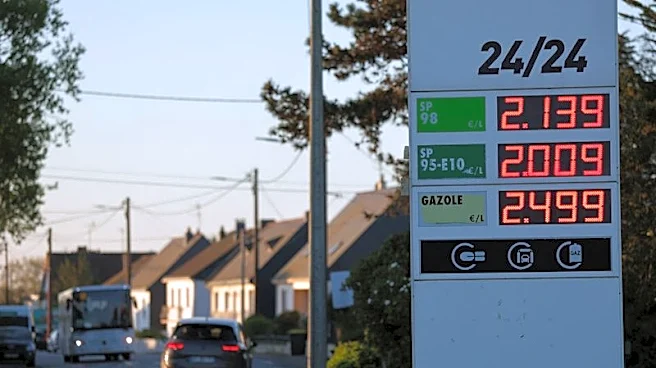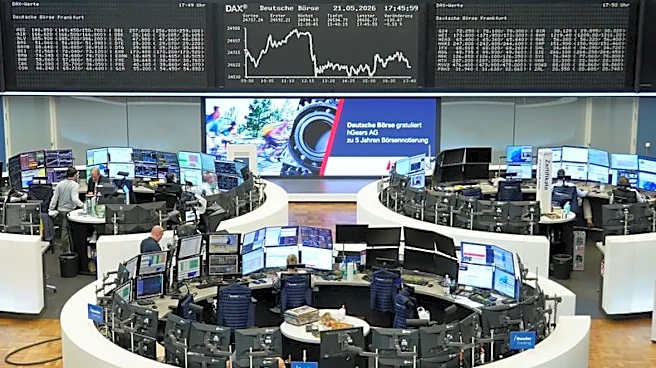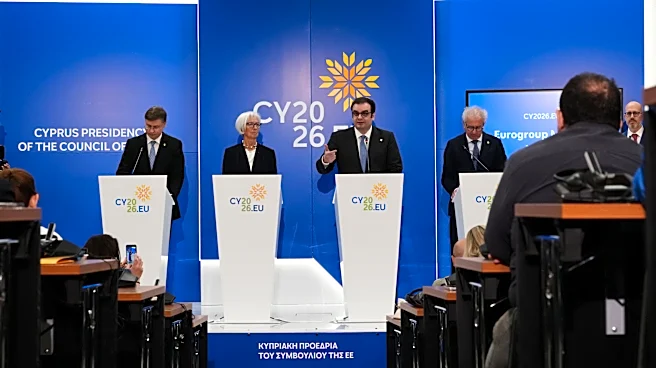








NICOSIA, Cyprus (AP) — European Union officials said Friday that Europeans can expect oil and gas prices to remain above what they were before the Iran war for at least until the end of 2027, with prices of other goods also following an upward trajectory.
EU Economy Commissioner Valdis Dombrovskis said that higher energy prices are primarily responsible for driving inflation to a forecast 3.1% for this year and 2.4% for 2027. That’s significantly higher than
the earlier forecast for this year of 1.9%.
“We expect that this energy inflation will gradually also trickle down to different sectors of the economy,” Dombrovskis said after a meeting of the 21-member eurozone's finance ministers, who make up the Eurogroup.
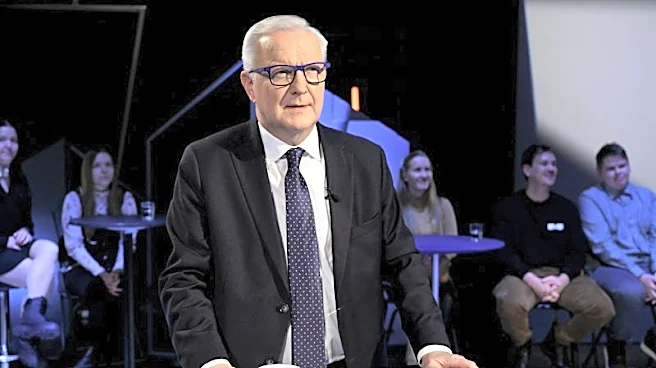
European Central Bank President Christine Lagarde said that even if the conflict in the Middle East ended now, “lagging effects” would keep the prices of goods elevated.
“And it’s probably a fact that price levels will be higher at the end of this crisis, when we see the end of the crisis,” Lagarde said.
She said that the ECB would take “all the necessary measures” to keep price stability at 2% by paying close attention to the aftereffects of the initial economic shock brought on by the energy price hike. She also pointed to how much oil the EU holds in reserve to meet possible demand.
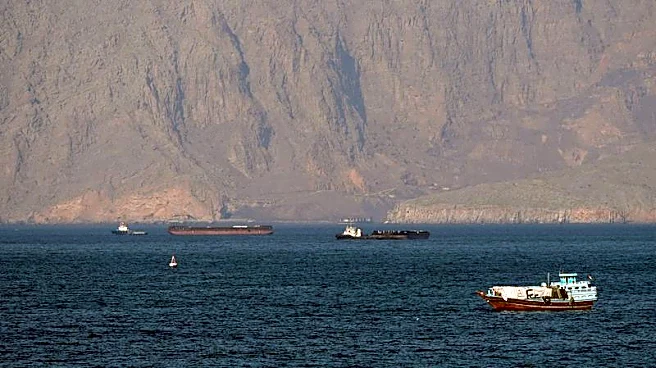
Eurogroup President Kyriakos Pierrakakis said that for the EU, an end to the crisis would mean a return to free navigation without the imposition of any tolls through the Strait of Hormuz, from which roughly a fifth of the world’s oil and gas passes.
Pierrakakis affirmed that economic growth within the eurozone would reach 0.9% this year and 1.2% in 2027, lower than the previous forecast, “but clearly far from a recession scenario.”
Although higher inflation projections have led to predictions that the ECB would raise its interest rate benchmarks to combat inflation, Lagarde didn’t offer any indication of how the bank would act.
“We will continue to follow a data-dependent and meeting-by-meeting approach in order to determine the most appropriate monetary policy stance in order to deliver on our 2% medium-term target,” Lagarde said.