
MANILA, Philippines (AP) — Japan and the Philippines signed a defense pact on Thursday that would allow the tax-free provision of ammunition, fuel, food and other necessities when their forces stage joint
training to boost deterrence against China’s growing aggression in the region and to bolster their preparation for natural disasters.
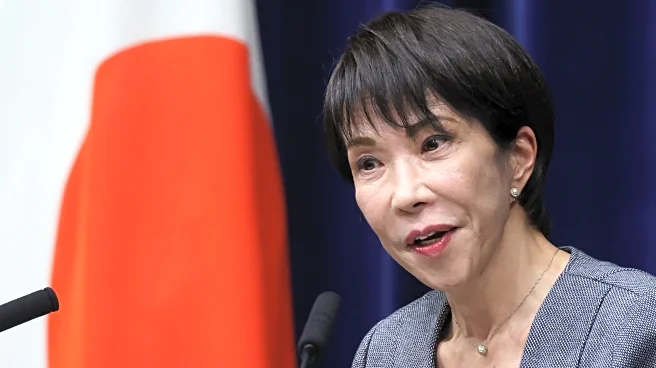
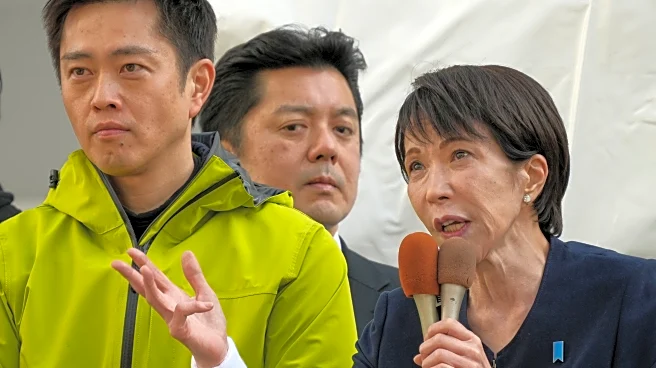
Japan has faced increasing political, trade and security tensions with China, which was angered by Prime Minister Sanae Takaichi ’s remark that potential Chinese action against Taiwan could spark Japanese intervention.
Japan and the Philippines have also had separate territorial conflicts with Beijing in the East China Sea and South China Sea that have continued to flare and threaten to draw in the United States, a treaty ally of the two Asian nations.
Japanese Foreign Minister Toshimitsu Motegi signed the Acquisition and Cross-Servicing Agreement with Philippine Foreign Secretary Theresa Lazaro in Manila. During the ceremony, Japan also announced new security and economic development assistance to the Philippines.
The military logistical agreement, which has to be ratified by Japanese legislators before it takes effect, is the latest key defense pact to be forged between Japan and the Philippines to deepen their security alliance.
Aside from facilitating joint combat drills, it would also help Japan and the Philippines jointly respond to natural disasters, a mutual concern, and participate in peacekeeping operations by the United Nations, according to Japanese and Philippine officials.
In mid-2024, both countries signed the Reciprocal Access Agreement, which allows the deployment of forces of either country to the other’s territory for joint and larger combat exercises, including live-fire drills. The RAA took effect in September.
Japanese and Philippine officials are still negotiating another agreement that aims to boost the security of highly confidential defense and military information the countries could share.
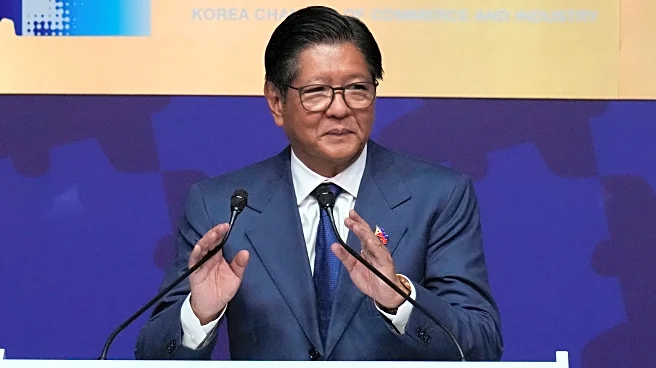
When Philippine President Ferdinand Marcos Jr. and then-Japanese Prime Minister Shigeru Ishiba jointly announced the start of negotiations for the Acquisition and Cross-servicing Agreement in Manila in April last year, Ishiba underscored the opposition by their countries of “any attempt to unilaterally change the status quo through force or coercion in the East and South China seas.”
Ishiba’s statement then was an obvious reprimand of China, though he didn’t name the country. “I hope that our two countries will continue to work closely together to realize a free and open Indo-Pacific based on the rule of law,” Ishiba said.
Chinese and Philippine coast guard ships have had increasingly hostile confrontations in the South China Sea under Marcos, who took office in 2022. His predecessor, Rodrigo Duterte, nurtured cozy ties with Chinese President Xi Jinping and Russian leader Vladimir Putin.
Beijing claims virtually the entire waterway, where it has bolstered its coast guard and naval presence and built artificial island bases to fortify its claims. Malaysia, Vietnam, Brunei and Taiwan have also been involved in the long-seething territorial standoffs.
In the East China Sea, China has routinely sent coast guard vessels and planes into waters and airspace that surround islands, which are claimed by both Tokyo and Beijing, to harass Japanese vessels. That has prompted Japan at times to scramble jets in response.
The U.S. has repeatedly warned China over its escalating acts of aggression in the disputed waters against Japan and the Philippines, which are among Washington’s staunchest treaty allies in Asia.
___
Associated Press video journalist Joeal Calupitan in Manila contributed to this report.