





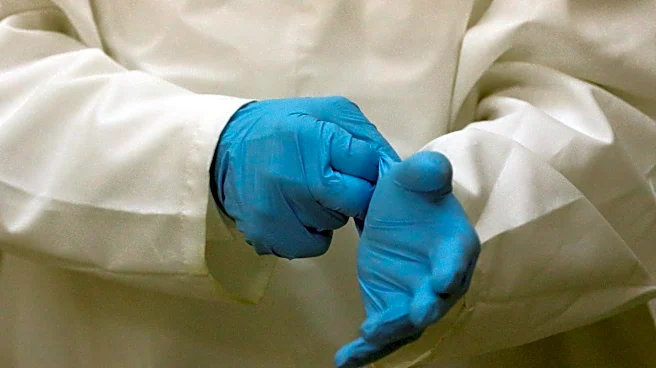

GENEVA (AP) — The death of a pathogen researcher in Siberia has raised concerns about the pneumonic plague, as Russian authorities provide little information publicly.
The severe disease is less common than the better-known bubonic plague linked to the Black Death in the Middle Ages. Pneumonic plague spreads from person to person, causing a severe form of pneumonia, but recovery rates are high if it is detected and treated in time.
The World Health
Organization says it has yet to determine the cause of death for the 28-year-old woman, who worked at an anti-plague research institute, and has asked Russia to provide more information. The U.N. health agency has cited initial, unconfirmed reports suggesting pneumonic plague.
Russian authorities say the lab worker died of what initially presented as a “typical” acute respiratory viral infection and that no recent cases of plague have been detected, according to the WHO. A local mayor said the hospital where the woman died was placed under quarantine.
The case has revived memories of the COVID-19 pandemic and allegations the coronavirus may have emerged at a Chinese lab. The WHO has not provided a definitive answer to how the pandemic began.
Pneumonic plague and bubonic plague are caused by the same bacteria. The former is spread by respiratory particles while the latter is spread through bites from fleas that have jumped from infected rodents. Bubonic plague causes pus-filled sores.
The bacteria, called Yersinia pestis, caused the Black Death in the 14th century. The single deadliest event in recorded human history spread throughout Europe, the Middle East and northern Africa, wiping out up to 30% to 50% of the population.
It was never eliminated, but it is treatable with antibiotics.
Symptoms of pneumonic plague include shortness of breath and coughing up blood, and they can occur in as little as 24 hours after exposure, according to the WHO. If untreated, the illness can be fatal.
Through an international health alert system, Russian health officials on Tuesday said a full range of preventive measures had been carried out — including tracing of the deceased woman's contacts, medical monitoring and lab tests.
“Test results showed no presence of dangerous infectious disease pathogens in any of the contacts,” said the note from Russian authorities, which was relayed to The Associated Press by the WHO.
“Medical monitoring for 100% of the contacts has now been concluded,” it said. “The epidemiological situation is stable and remains under monitoring.”
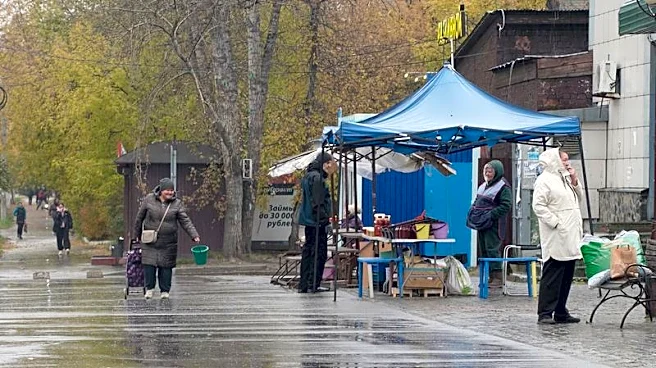
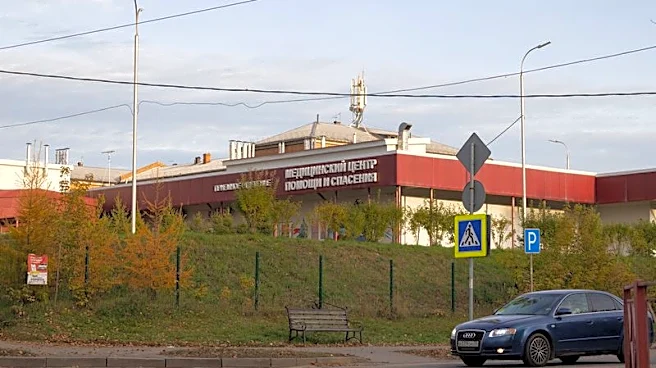
The woman worked at an anti-plague research institute in the city of Irkutsk in Siberia, where the plague occurs naturally in wild animals. She died at a hospital in nearby Shelekhov that the mayor said had been placed under quarantine. Top Russian health officials have traveled to the region.
On Monday, Kremlin spokesman Dmitry Peskov advised the public to follow official statements from the health watchdog agency, Rospotrebnadzor, rather than “rumors or speculation.”
Maria Van Kerkhove, the WHO director of epidemic and pandemic management, said Wednesday that the agency doesn’t know what the “causative agent” was behind the woman’s Oct. 2 death.
Initial reports indicated she contracted plague following “an alleged accidental laboratory exposure,” the WHO said earlier.
WHO officials said it needs information in a regular and timely way — and noted an “iterative” process of questions and answers in such cases.
“We have posed these questions to our colleagues in the Russian Federation. In fairness, they have responded. We’ve gone back with more questions,” Van Kerkhove said.
Russia has told the WHO that 200 contacts have been placed in quarantine, Tedros Adhanom Ghebreyesus, the director-general of the Geneva-based health agency, told reporters on Wednesday.
He said his agency has requested more information on lab tests conducted on the deceased woman, the health status of the contacts and about what prompted the public health measures. He said the agency was also looking into reports of a second employee at the research institute contracting pneumonia.
“We don’t yet have the full picture of this event, and we are not able to conduct a full risk assessment,” Ghebreyesus said.
Many countries respect the International Health Regulations, the WHO’s rule book for global cooperation, but sometimes countries don’t follow its rules even though it is legally binding in theory. The agency has no power to force countries to act.
The WHO last year helped shepherd through passage of a draft pandemic treaty, but it’s still not fully operable because of disagreements over how much poorer countries will share pathogens and how much richer countries will share diagnostic tools, vaccines and treatments.
Russia repeatedly sought but failed to obtain WHO authorization for its Sputnik vaccine against the coronavirus.
Not all countries are willing to allow independent WHO experts to visit. China did allow in WHO teams during the COVID pandemic, but not as often or quickly as the agency would have liked.
___
Associated Press writer Dasha Litvinova in Tallinn, Estonia, contributed to this report.