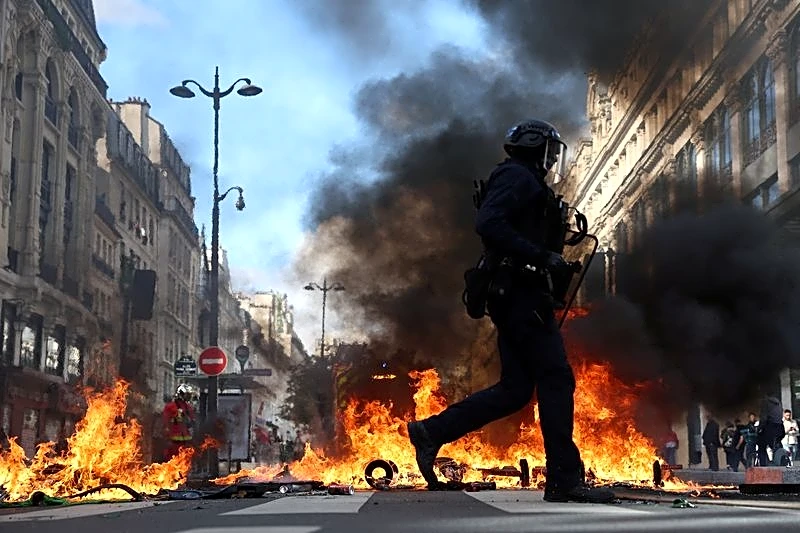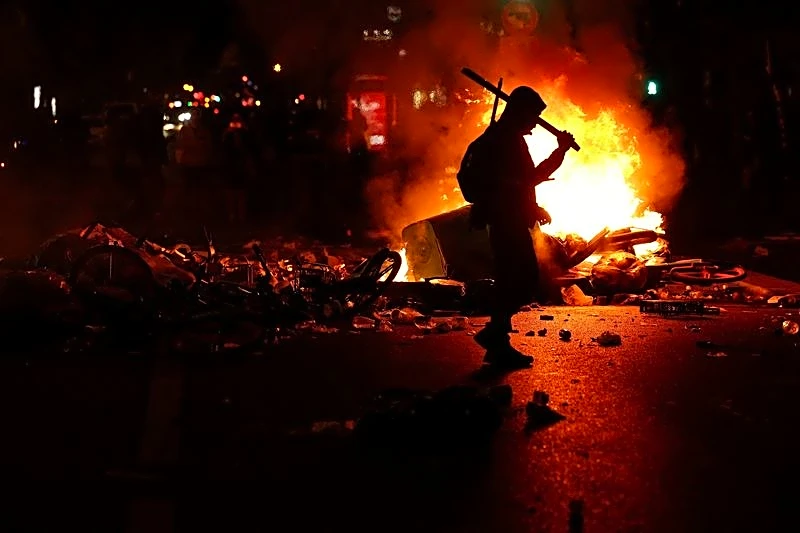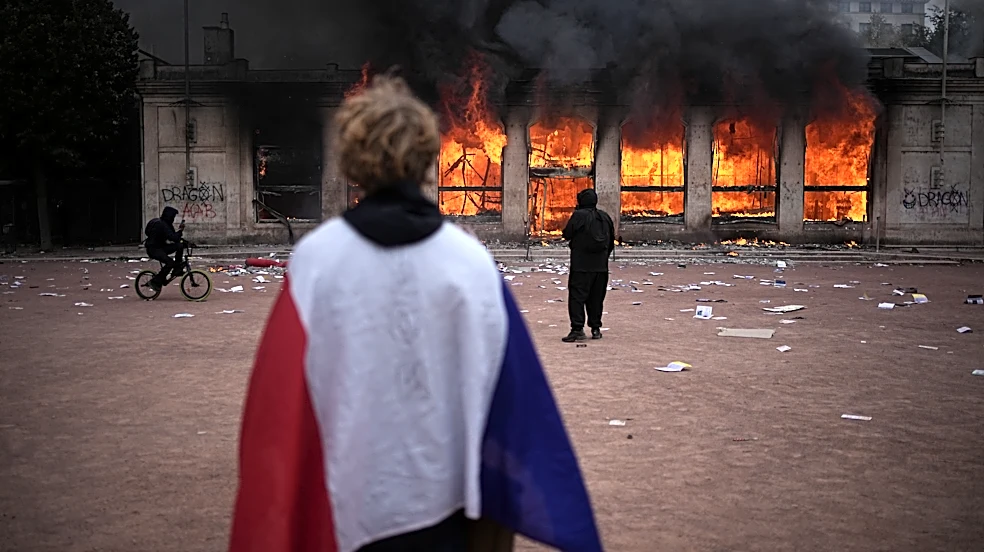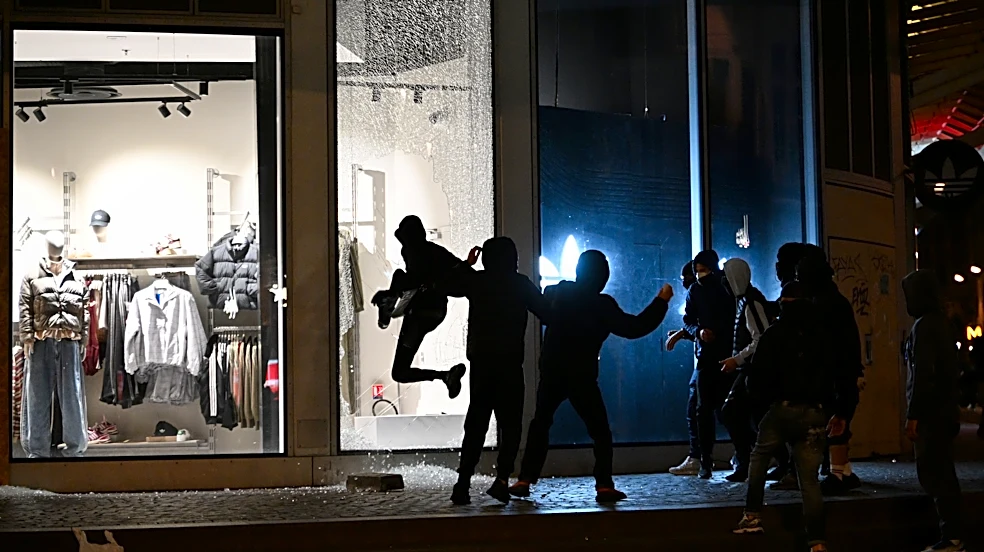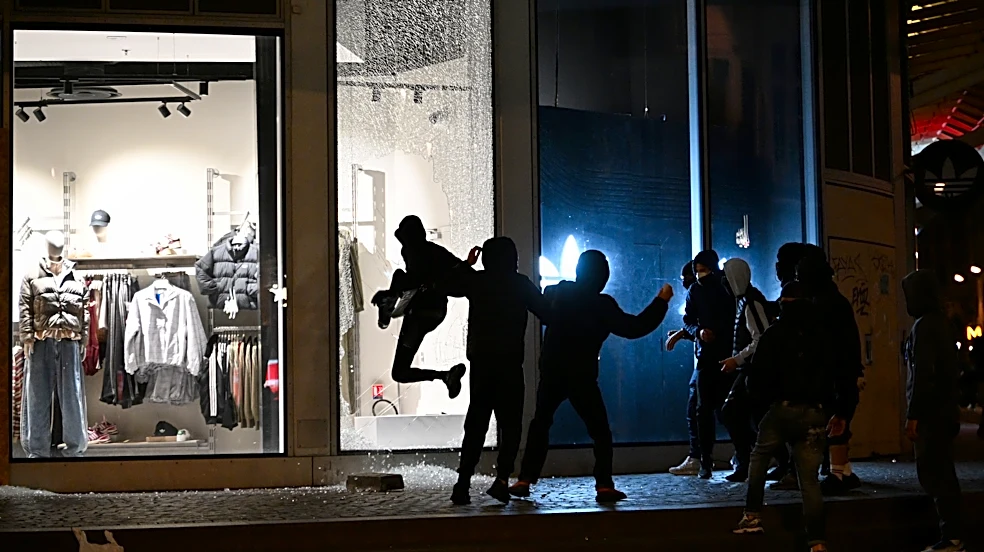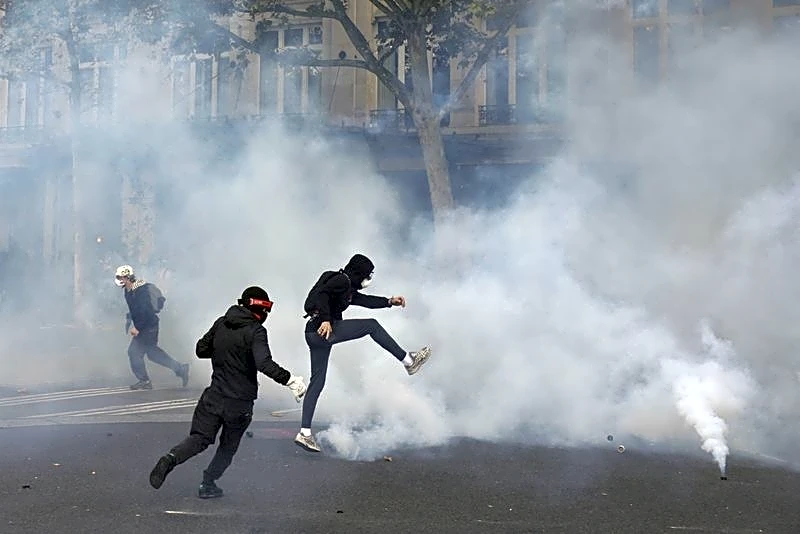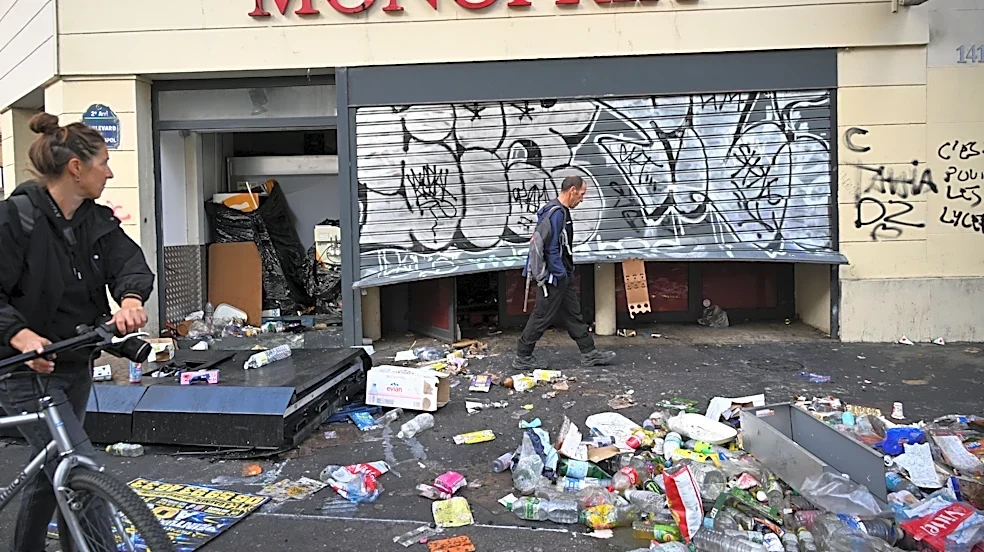




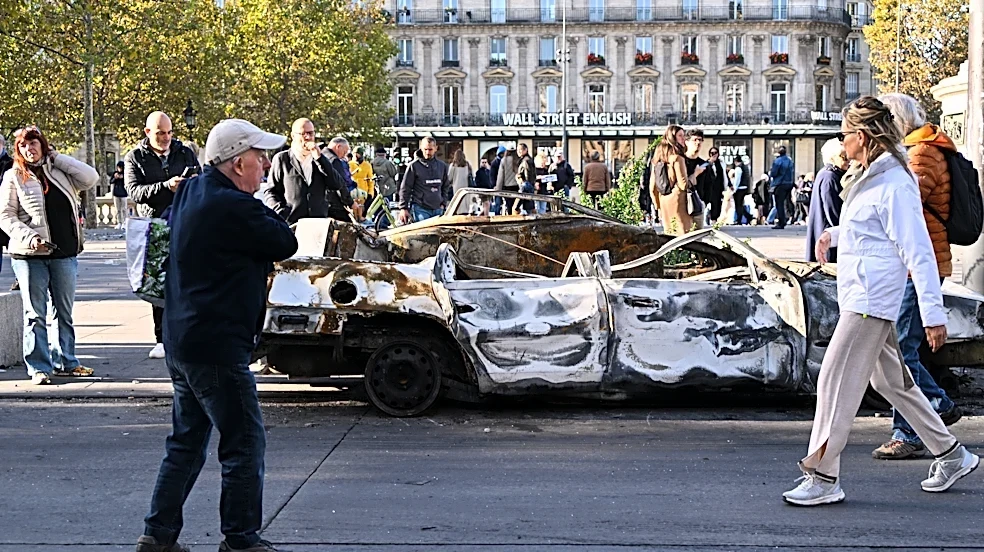
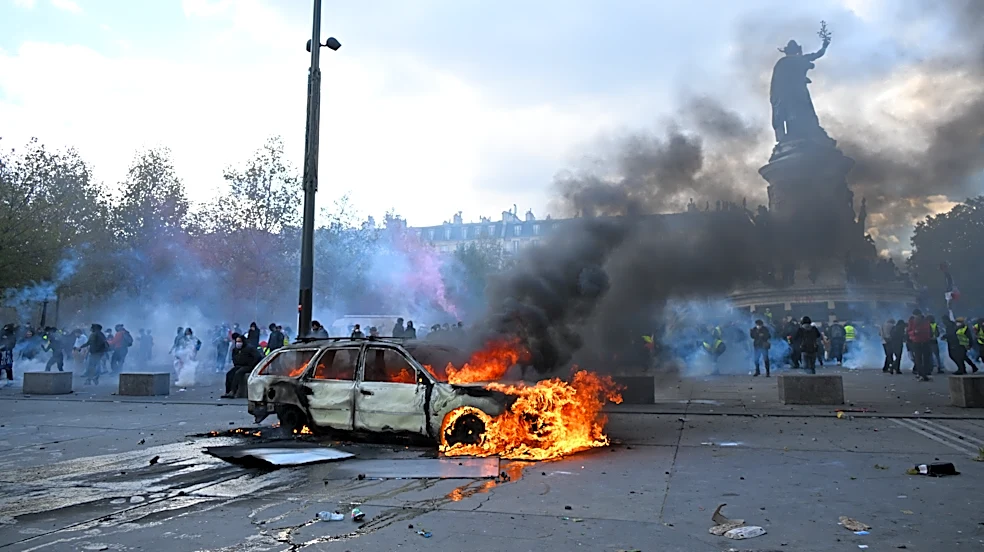
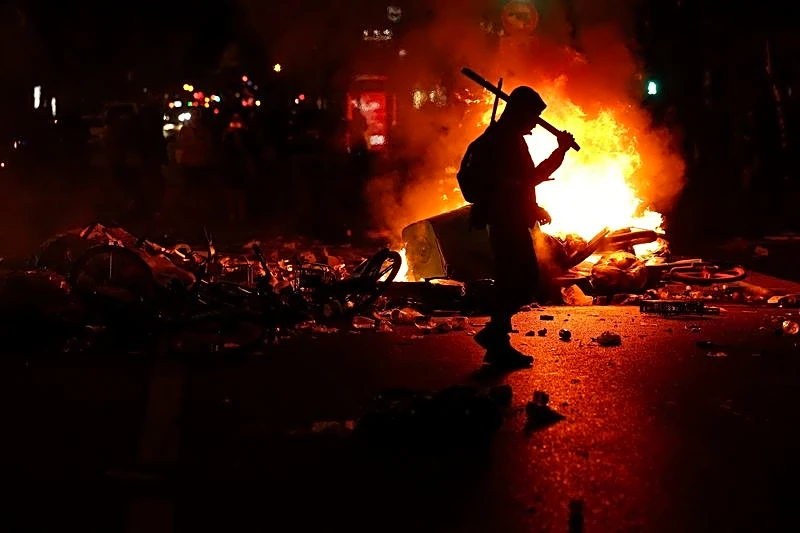

PARIS (AP) — Rioters clashed with police, set cars on fire, stormed public buildings and engulfed a historic city hall in flames in France’s worst civil unrest in years as violence and looting swept through major cities during nationwide protests.
About 2,400 people were arrested over the weekend, and authorities said thousands of businesses were damaged or looted. The rioting overshadowed demonstrations against rising living costs and poor conditions
in schools in which hundreds of thousands of people marched peacefully.
President Emmanuel Macron denounced “unrestrained violence” by “insurrectionist elements from radical far-left groups, joined by numerous criminals.”
More protests could be in store. High school and university student organizations called for more demonstrations Thursday and Saturday. The National High School Student Coordination group urged young people to “take to the streets” and backed continued blockades and demonstrations.
A group of activists seeking to revive the 2018 “yellow vest” movement against perceived social injustices also announced nationwide demonstrations planned for Saturday under the slogan “Macron must go.”
The damage was comparable to the yellow vest protests at their peak, said Sebastian Roché, a research professor at the Sciences Po Grenoble political institute who studies policing.
The movement, initially driven by opposition to fuel tax increases, brought repeated demonstrations against Macron’s government. Some demonstrations turned violent, with cars burned, shops looted and the Arc de Triomphe vandalized during clashes in Paris.
“In terms of destruction and damage, it is probably close to the first two weekends of December 2018,” Roché said.
In June 2023, the police killing of a 17-year-old outside Paris also triggered days of nationwide unrest. Rioters looted shops and torched public buildings. Thousands were arrested and hundreds were injured.
France also experienced three weeks of rioting in 2005, prompting the government to declare a state of emergency.
What sets this latest unrest apart, argued Roché, who has studied policing and violence for more than 30 years, are the injuries from police weapons.
“We have a toll that has not been seen in the past 40 years,” he said. Roché said six people, including minors, had been maimed in three weeks of protests, losing hands or eyes.
Police have drawn sharp scrutiny over their use of grenades and other riot-control weapons during recent demonstrations.
“There is no other country in Europe where the police maim protesters as much,” Roché said, citing university databases that rank Spain a distant second.
Authorities repeatedly blamed some of the violence on groups of “far-left radicals,” followed by groups of criminals who see an opportunity for looting. Prime Minister Sébastien Lecornu described “disorder organized in an unprecedented way.”
However, Roché said the far-left fringe was too small and loosely organized to account alone for violence on this scale. French intelligence services estimate the movement at around 3,000 people across its various factions, which lack formal structures, he said.
Violent far-left activists and looters also pursue different targets, Roché noted.
The activists typically attack symbols of capitalism and the global economy, such as banks and McDonald’s restaurants. Looters target sportswear and electronics stores to steal goods rather than make a political statement, he said. “Their aim is not symbolic. It is acquisitive.”
Macron vowed that the government would take an “uncompromising” stance against rioters, adding that the government’s regional representatives known as prefects would use whatever measures were needed to protect businesses and public buildings, including banning certain gatherings if needed.
Macron also ordered an investigation into failures in intelligence gathering and planning that may have led authorities to underestimate the potential for violence.
Authorities decided to impose localized curfews when necessary. That included an overnight curfew to take effect Monday evening in two areas in Paris that have been affected by the violence.
About 2,400 people were arrested Saturday across France, including 855 in the Paris area, 101 in Marseille and 199 in Lyon, authorities said.
In the capital region, the arrests resulted in 557 people being placed in police custody, 78% of them adults, Paris prosecutors said.
In Limoges, fire nearly destroyed the 19th century city hall.
Most criminal cases involve property damage, participation in groups formed with the intent to commit violence and assault on police officers, according to prosecutors.