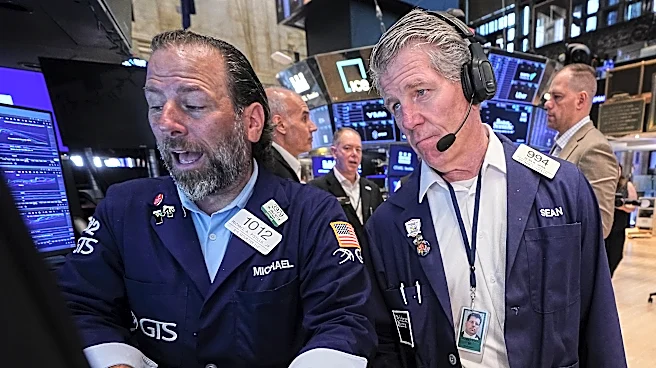








WASHINGTON (AP) — The Federal Reserve kept its key rate unchanged Wednesday yet almost half the central bank’s policymakers said they could support a rate hike later this year, an unexpectedly aggressive outcome that would disappoint President Trump and suggests heightened concerns about persistent inflation.
In an unusually short statement after their two-day meeting, Fed officials dropped language that had suggested their next move would be to cut
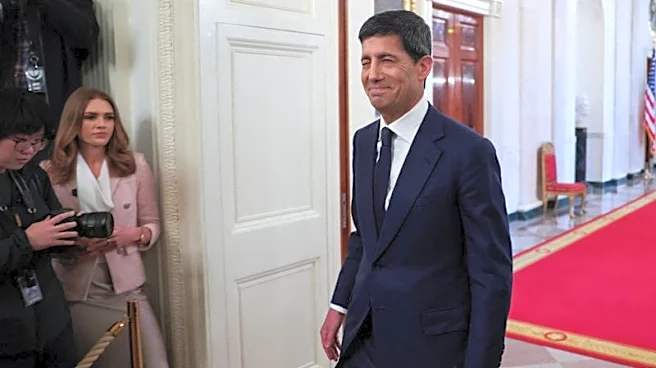
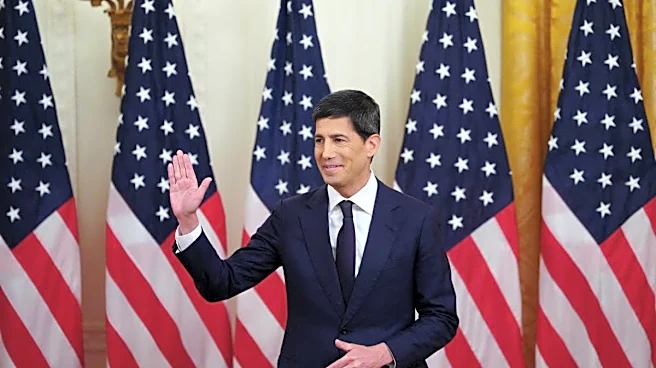
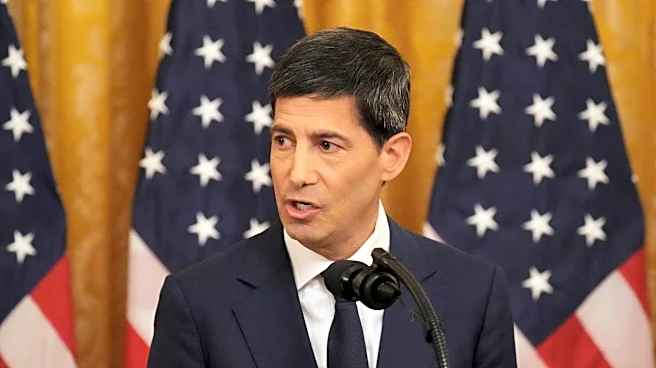
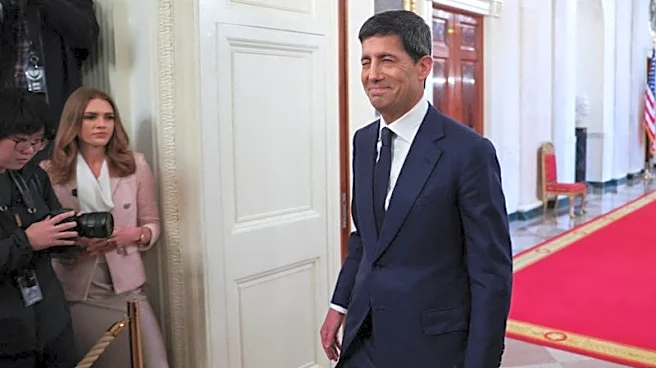
their key rate. The brief statement likely reflects the influence of new chair Kevin Warsh, appointed by Trump, who has previously criticized the Fed for commenting too broadly on the economy.
In a set of quarterly projections, nine Fed officials said they expected at least one rate hike this year, with six supporting two or more. It’s a sharp change from March, when no policymakers penciled in a hike and the committee as a whole forecast one cut in 2026. The change is an acknowledgement that inflation is at its highest level in three years and many officials have said in recent speeches that if inflation doesn’t decline, higher rates may be necessary as early as the end of the year.
There was another sign of how Warsh may change the way the Fed operates: He appears to not have submitted a forecast for how the Fed might change its key rate in the coming years. A chart illustrating the projections showed just 18 dots, even though there are 19 policymakers. He has previously criticized the projections for potentially locking the Fed into a specific policy outlook.
Wednesday’s policy meeting is the first for Warsh, who was appointed by Trump after the president sharply criticized Warsh’s predecessor, Jerome Powell, for not reducing rates deeply enough. The attacks largely backfired because they prompted Powell to stay on the Fed’s governing board, where he voted Wednesday in favor of keeping rates at about 3.6%.
THIS IS A BREAKING NEWS UPDATE. AP’s earlier story follows below.
WASHINGTON (AP) — The Federal Reserve will enter the Kevin Warsh era Wednesday, as President Trump's pick to lead the central bank oversees his first policy meeting and holds his first news conference.
Yet Warsh isn't expected to immediately usher in significant policy changes. The Fed is likely to keep its key rate unchanged Wednesday at about 3.6% for the fourth straight meeting, economists say. Fed policymakers could change their post-meeting statement so that it no longer signals the central bank's next move will be to reduce interest rates. Such a change would suggest it could keep rates unchanged for an extended period — or even raise them if inflation stays elevated.
Wednesday's highlight is likely to be the press conference Warsh will hold in the afternoon, which Wall Street investors, economists, and quite likely the White House will closely watch to see how Warsh conducts himself. Warsh was previously an investment banker, a member of the Fed's board of governors from 2006-2011, and a visiting fellow at the conservative Hoover Institution.
Fed-watchers will look for clues to the answers to some key questions: What, if anything, will he signal about where interest rates will head next? How does he think the Fed should address the elevated inflation stemming from the Iran war and its boost to gas prices? Will he change the Fed's communication practices, and how?
It's possible, for example, that Warsh could cut the number of press conferences each year from eight — one after each meeting — to four, or one after every other meeting, which was the approach taken by former chair Ben Bernanke when he inaugurated the post-meeting press conference. Warsh has said he would like the Fed to lower its public profile and reduce its commentary on the economy, which he thinks can lock in Fed officials to supporting specific policies for too long, simply because they've expressed their support publicly.
Yet reduced communication — whether through fewer press conferences or other means — risks alienating the public and financial markets, which have grown used to clear guidance on where the Fed is headed.
Warsh also faces a sharply different economic environment than when he appeared to campaign for the job of Fed chair last year. Back then, he was outspoken in favor of lower interest rates, as Trump has demanded. He pointed to the development of AI as a technology that could vastly expand the economy's ability to produce goods and services cheaply, which would over time bring down inflation.
Even then, many economists were skeptical of his claim. At least in the short run, analysts note that soaring investment in semiconductors and computing equipment is contributing to higher inflation.
Indeed, since the Iran war began Feb. 28, inflation has accelerated to a three-year high of 4.2%, lifted mostly by costlier gas stemming from the Iran war. The Fed typically fights higher inflation by raising its key interest rate to cool spending and growth.
Trump has announced an initial peace agreement that could bring the three-month conflict to an end, but it's not clear if peace will hold. And even if oil flows freely out of the Middle East again, it could take months for prices of gas, groceries, and items such as airline fares, to cool. Already, inflation according to the Fed's preferred measure has topped its 2% target for more than five years.
At the same time, hiring has picked up in recent months, removing a key rationale for cutting rates. In January, the Fed forecast that it would reduce rates twice this year, as part of its quarterly economic projections. A big reason for those potential cuts is that employers were shedding jobs and policymakers worried that the unemployment rate would rise. The central bank typically cuts its key rate to spur economic growth and hiring.
But earlier this month a government report showed that hiring jumped in May, when employers added 172,000 jobs, the third straight month of solid job gains.
Since returning to the White House last year, Trump has repeatedly demanded that the Fed cut its key rate. Yet in recent weeks as inflation has picked up, he has said he wants “Kevin” to be independent and make his own decisions. But he also said earlier this month that the Fed shouldn't raise rates, despite higher inflation.
Trump repeatedly attacked Warsh's predecessor, Jerome Powell, for not cutting rates deeply enough. In January, the Department of Justice even launched an unprecedented investigation into Powell over brief testimony he gave last July about a building renovation. A federal judge threw out the DOJ's subpoenas in the case and the government dropped the investigation.
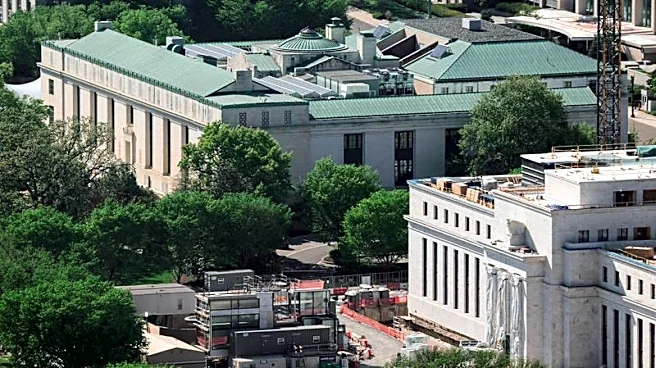
The move largely backfired, as Powell decided to stay on the Fed's board of governors even after his term as chair ended May 15. He can serve a separate term as governor until January 2028. By staying on, he has denied the Trump administration an opportunity to fill an additional seat on the seven-member board. Powell is expected to vote on the Fed's rate decision Wednesday.