





When Carla Crowder walked into a Jefferson County courtroom in August 2019, she didn’t expect to change the direction of her small nonprofit, the Alabama Appleseed Center for Law and Justice. She was there for one man: 58-year-old Alvin Kennard, who had spent 36 years behind bars for stealing $50.75 from a bakery in 1983 at age 22. His earlier burglaries meant he was sentenced under Alabama’s harsh “three strikes” law to life without parole for a crime
in which no one was physically harmed.
Crowder’s group hadn’t taken on individual clients before. The tiny policy and advocacy shop she had joined months earlier focused on researching and reforming the state’s criminal-justice system. But when a judge asked her to represent Kennard, she agreed. When he was released, the story ricocheted nationally. That case reshaped the organization’s trajectory.
It convinced Crowder that pairing policy research with direct legal work could unlock reforms that data alone had not.
In a state dominated by a Republican supermajority and long resistant to criminal justice reform, Alabama Appleseed has become one of the South’s most unexpectedly effective advocacy groups. While expanding its programs, it has kept its focus narrow, zeroing in on freeing older inmates who received harsh sentences for nonviolent crimes committed decades earlier. Personal stories gave its research a human face to engage lawmakers and supporters. And it built coalitions in unlikely places — persuading conservative lawmakers, faith leaders, and national funders that a small, locally rooted organization could have outsize impact.
Those choices transformed the group from a four-person research shop into a 10-person, $1.4 million organization supported by national grantmakers like the NFL. Part of the broader Appleseed Network of justice centers across the United States and Mexico, Alabama Appleseed was among the first to directly represent incarcerated people. It also runs reentry services, has won bipartisan policy changes, and has come within a few votes of passing sweeping sentencing reform — offering a model for how small nonprofits can influence large public systems.
“Alabama Appleseed is doing hard work in a hard system in a state where not everyone is pumped up about rehabilitation,” says Rachel Estes, director of outreach at Canterbury United Methodist Church, which partners with Appleseed clients through its Books to Prisons program. “In a state where it’s just not top of mind, they’ve done an excellent job of educating people, of advocating for people, and helping be a liaison of this really weird thing called incarceration and prison.”
A former crime reporter who later became a lawyer, Crowder spent years covering Alabama’s troubled prison system before deciding she “couldn’t sit on the sidelines anymore,” she says. She joined Alabama Appleseed in early 2019, when its annual budget was under $400,000 and its work centered on fines, fees, and racial disparities. Staff worked out of a rickety historic house in Montgomery. “There were opossums in the roof,” she says.
That same year, the U.S. Department of Justice released a scathing report detailing unconstitutional violence, corruption, and deadly conditions inside Alabama’s men’s prisons. The findings briefly opened a window that allowed for passage of several legislative reforms. But even some lawmakers who expressed outrage balked at meaningful sentencing reforms. For Crowder, it underscored the limits of a relying on a data-driven approach to policy change.
Crowder shifted the organization’s focus toward two goals: reducing the number of people entering prison and helping those serving extreme sentences get out.
In the past, Alabama Appleseed relied on other organizations for client stories. “We offered little more than putting their face and their terrible plight on the pages of a report,” Crowder said. “That always seemed exploitative to me.”
Taking individual cases filled a gap in legal services and gave the organization firsthand insight into how sentencing laws played out in real lives.
As more people were freed, letters poured in. Just as demand for help was growing, an unexpected opportunity arrived.
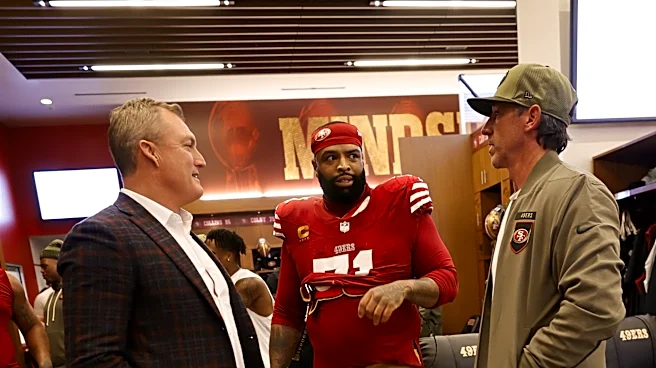
In late 2019, the National Football League invited Appleseed to apply for funding and received a $100,000 grant to support reentry work in 2020 as part of the NFL's Inspire Change program, which started in 2017 as its social-justice platform and has helped steer more than $460 million in grants to nonprofits.
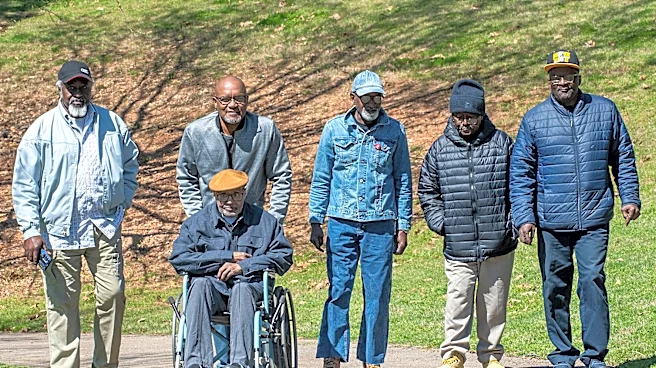
Crowder used the funds to hire another lawyer. Their next case was Ronald McKeithen, who had served 37 years for robbery. After his release, he joined Appleseed’s staff and now works on reentry support.
Today the organization has a full-time staff attorney, a part-time attorney, a case manager, a social worker, and a reentry team serving more than 30 formerly incarcerated people.
Other major funders, including Arnold Ventures, the Annie E. Casey Foundation, and the Just Trust, have also supported Alabama Appleseed’s policy and sentencing-reform work.
Clare Graff, the NFL’s vice president of social responsibility, said the group’s scale never deterred the league. “It doesn’t much matter what the number is when the number is literally one individual’s freedom,” she said.
By working directly with incarcerated clients, the organization learned that positive, relatable stories often persuade lawmakers more effectively than grim statistics.
But storytelling alone isn’t enough. “More people just need lawyers or reentry services. There needs to be a moment where the services available catch up to the stories,” she added.
Alabama Appleseed has also learned when not to be the messenger. Sometimes a pastor, a victim’s advocate, or a conservative lawmaker can make the case more effectively.
That discipline has helped the group win support from both parties and from Republican Gov. Kay Ivey. Twice, legislation it supported — a Second Chance Act, which would create a process for judges to review certain life-without-parole sentences — came within a few votes of passing.
Pragmatism has been central to its effectiveness, said Kevin Ring of Arnold Ventures. The organization works with anyone who can help move reform forward — prosecutors, victims’ advocates, faith leaders, and lawmakers from both parties. “They only want to see lives changed and saved,” he said.
Alabama Appleseed’s approach has influenced other affiliates in the Appleseed Network.
“They were one of the first ones to especially do the sort of client work that they do,” says Benet Magnuson, executive director of the Appleseed Foundation.
Within Alabama, Crowder is focused on expanding reentry support and preparing to revisit second-chance legislation.
With new support from the NFL, the group is collaborating with Appleseed centers in Oklahoma and Missouri to support women serving long sentences that are a result of abusive or coercive relationships.
Crowder says she’s learned to remain hopeful while focused on an issue littered with failures. “There are too many people talking about what’s wrong, what’s broken, what’s unjust. What sets Alabama Appleseed apart is: Yes, we identify all of those things — but then we step up and say, here’s how to make it better.”
_____
Eden Stiffman is a senior editor at the Chronicle of Philanthropy, where you can read the full article. This article was provided to The Associated Press by the Chronicle of Philanthropy as part of a partnership to cover philanthropy and nonprofits supported by the Lilly Endowment. The Chronicle is solely responsible for the content. For all of AP’s philanthropy coverage, visit https://apnews.com/hub/philanthropy.