









Technology companies are spending big to incorporate artificial intelligence into their businesses and to build huge data centers. Investors who had jumped on the bandwagon appear to be having second thoughts.
Proponents of artificial intelligence see it as the next great revolution for the global economy. The revolution won't come cheap. Just four companies — Alphabet, Amazon, Meta Platforms and Microsoft — plan to spend up to $720 billion this year,
primarily on AI data centers.
This week, investors are looking at the huge sums being spent and questioning whether AI can produce the profits and productivity necessary to make all the investment worth it. Critics have been talking about the possibility of a bubble in AI investment. On Monday, Amazon and Alphabet fell about 5%.
On Tuesday, several companies that make the chips needed for the data center buildup — Nvidia, Micron Technology, Broadcom and Lam Research — led the market lower.
At first, Microsoft, Alphabet and other so-called hyperscalers turned to cash on hand to fund the AI expansion. But they're increasingly relying on the markets to raise cash.
Alphabet, the parent company of Google, said earlier this month that it’s raising $80 billion in cash to help pay for its investments by selling shares of its stock. Overall, Alphabet is planning to spend as much as $190 billion this year — more than all the stock of The Walt Disney Co. is worth, and Alphabet is forecasting its spending on investments next year will “significantly increase.”
In March, Amazon sold $54 billion of bonds in the U.S. and Europe as it plans to spend around $200 billion this year on AI investments.
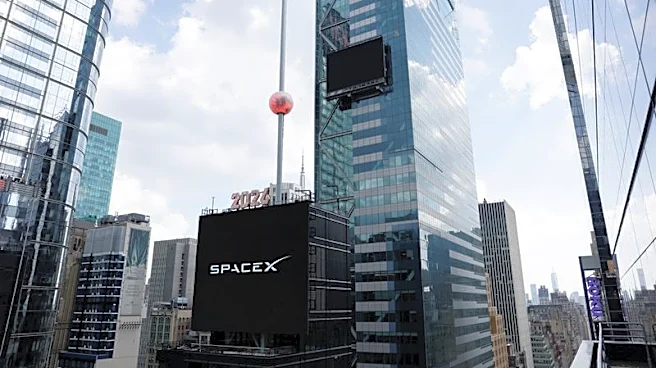
Elon Musk's rocket maker SpaceX was on a three-day skid heading into Tuesday. It regained some lost ground, but was trending only modestly higher relative to the closing price on its first day of trading on June 12. Musk acknowledges that SpaceX will have to spend heavily to fulfill its plans of sending AI data centers into space, and the company has announced that part of an upcoming bond offering will fund its AI buildout.
A number of chip companies have soared as the demand for memory and processing power for AI data centers and other projects has led to a surge in prices. As investors push up the stock price in anticipation of growing profits, a key measure of how expensive a stock is, called the price-to-earnings ratio, can skyrocket.
Marvell Technologies lost money for five straight years before turning a profit of $2.7 billion in the fiscal year ended in January, thanks to gains in its data center business. The stock has more than tripled so far this year and its P/E ratio has gone from about 30 at the start of 2026 to near 100. Some data storage companies have seen even more eye-popping gains. Sandisk shares have soared more than 700% year to date and its P/E ratio stands at 68.
On Tuesday, investors unloaded at least some of their holdings in these stocks. Sandisk sank 12.2%, while Marvell lost 8.1%.
The sell-off also took a bite out of exchange-traded funds, or ETFs, that invest heavily in tech stocks. The Invesco QQQ Trust Series ETF was down 2.6%, while iShares Semiconductor ETF slumped 7.1%.
While some investors may have doubts that companies going full throttle on AI infrastructure spending will ultimately be able to generate profits to justify their investment, it's likely some of the selling this week may be investors pausing to pocket some of their gains after the stock market’s recent string of all-time highs.
“With no clear catalyst driving the move lower, we believe today’s pullback likely reflects profit-taking following a strong rally from the March lows,” said Brock Weimer, an investments strategy analyst at Edward Jones.
Big Tech gains have powered major stock indexes on record-setting runs this year. Within the S&P 500, the tech sector alone is up nearly 27% just over the last three months and roughly 18% for the year. In Asia, South Korea’s Kospi has nearly doubled so far in 2026.
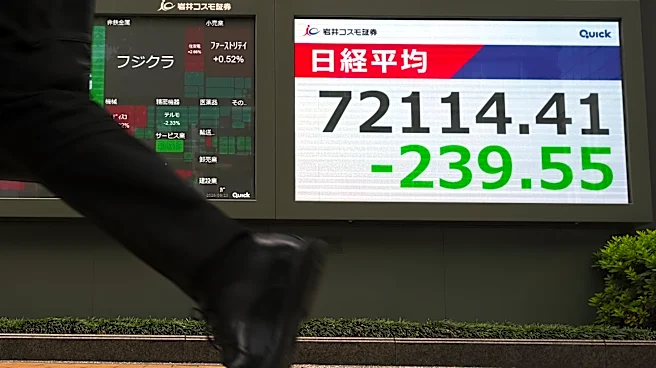
Heavy selling on Tuesday triggered a halt in trading in the Kospi, which set the stage for the wave of tech stock selling when trading opened in U.S. markets, Wedbush analyst Dan Ives wrote in a research note Tuesday.
Overall AI enterprise demand in Asia is “showing no cracks in the armor, which continue to make us very bullish on owning the tech AI winners over the coming year,” he added.
Still, tech companies’ race to invest in the expansion of AI infrastructure could ultimately be sowing the seeds of future oversupply, according to Philip Straehl, chief investment officer at Morningstar Wealth.
“Periods of elevated capital investment have historically not translated into strong outcomes for investors, leaving us cautious on the outlook,” Straehl wrote in a report last week.
He expects that the rapid expansion of AI computing power will weigh on pricing, hurting companies’ returns and eventually result in a pullback in investing. Semiconductor companies are “particularly exposed to this dynamic,” Straehl wrote.
A supply shortage and rising prices for computer memory has helped stocks like Sandisk rally this year, but the supply and demand dynamic is also likely to spur other companies, like Nvidia, to explore how to get a slice of that market, he noted.
Straehl suggests that as AI-related companies take up a greater share of major stock indexes, investors may benefit from diversifying into sectors such as healthcare and other areas less dependent on AI expectations.