









PODGORICA, Montenegro (AP) — As a heat wave that baked western Europe reached the Balkans this week, animal welfare activists in small Montenegro have expressed alarm over the decades-old problem of abandoned animals.
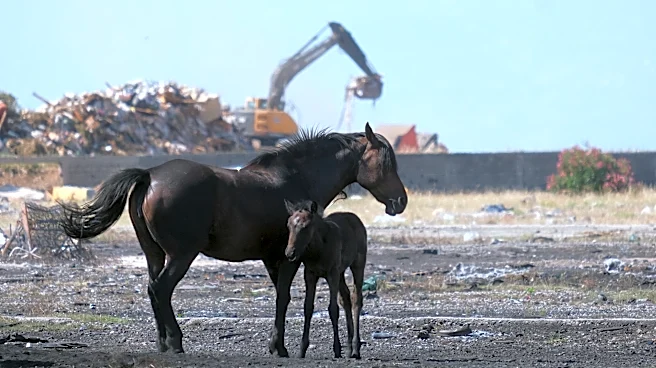
Several unattended horses roamed the outskirts of the capital, Podgorica, without shelter, water or food. With temperatures reaching nearly 40 degrees Celsius (104 Fahrenheit), activists said they fear the animals are in danger.
“This
is only 4 kilometers (2.4 miles) from the city center,” animal protection activist Marta Darmanovic said. “It is not in the middle of nowhere.”
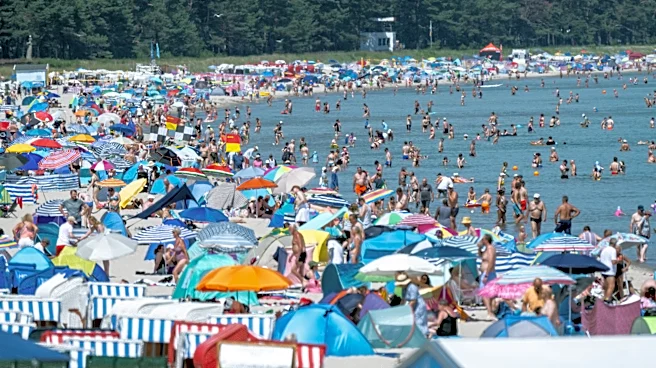
Throughout Europe, extreme heat has broken temperature records, overburdened hospitals and left people struggling to cool down. In France, temperatures this week have been higher than a historic 2003 heat wave that was blamed for 15,000 deaths, many of them older people.
In Hungary on Tuesday, a national heat record dating back to 2007 was broken when temperatures reached 42 C (107.6 F), according to preliminary figures from the National Meteorological Service.
In Montenegro's capital, the open area where horses have gathered is close to an illegal dumpsite and several unregistered, improvised settlements. It was unclear how the animals got there or if they belonged to anyone.
“It is simply unbelievable that a country does not have a shelter for large animals, for confiscated horses, confiscated livestock, stray livestock and wild animals,” Darmanovic said. “Montenegro has effectively legalized animal abuse because it has failed to provide even minimum infrastructure needed for the regulations to be enforced.”
The Adriatic nation of 620,000 people is attempting to join the European Union by 2028. EU candidate nations must have laws regulating animal welfare to join.
Branko Kovacevic, the head of Podgorica’s Municipal Inspection Administration, said city authorities have established shelters for dogs and cats and his agency is now attempting to deal with large animals within the established regulations.
“Horses and some other abandoned domestic animals keep appearing,” he said. “As far as the law allows us, we deal with the problem.”
Kovacevic contended that “unfortunately, nobody is responsible” for providing water or food for the animals.
While Montenegro and the rest of the Balkans are more used to hot summer weather than countries such as Britain or France, authorities have advised people to stay indoors and drink a lot of water. Temperatures in the region are expected to fall later Tuesday and Wednesday.
In the eastern Croatian town of Osijek, animals at the local zoo were being served ice cream made of fruit and meat. Zoo employee Zeljko Busljeta told HRT that monkeys choose to stay indoors and rest.
“They like cold water melons, melons and grapes,” he said. “They also get lemonade and cold tea.”