
TORONTO (AP) — Canadian Prime Minister Mark Carney said Wednesday that U.S. President Donald Trump has not raised with him concerns about Canada’s military aired by the Pentagon this week, as he defended
his country’s defense spending and NATO contributions.
The comment by Carney, who speaks regularly with Trump, followed an unusually blunt Pentagon fact sheet on Monday that accused Canada of falling short as a credible partner in defending North America and lacking a credible, fully costed plan to meet NATO’s spending target.
“The commander in chief of the U.S. military is the president of the United States,” Carney said. “And I can assure (you) that in my discussions with the president of the United States we’re focused on conflict resolution around the world and he has not raised issues such as has been reported recently.”
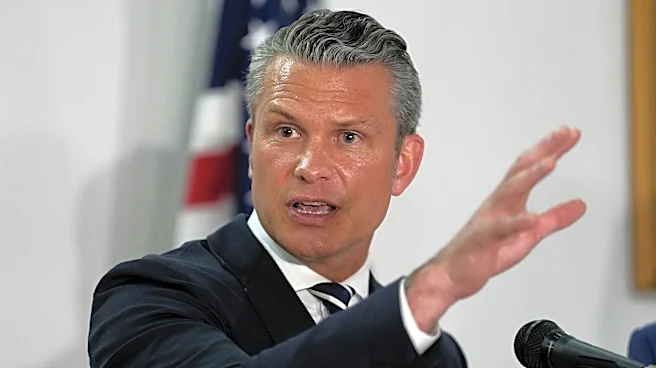
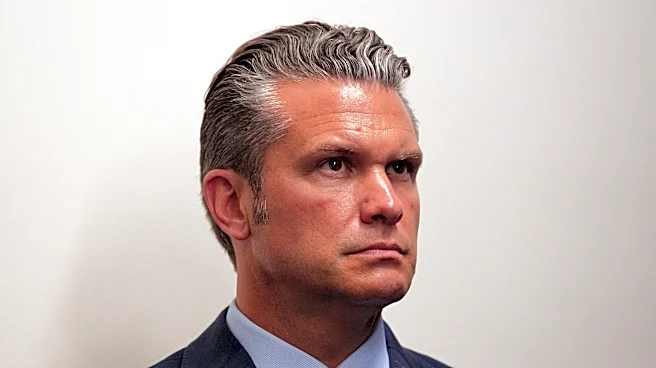
The Pentagon said U.S. Defense Secretary Pete Hegseth was “laser focused” on modernizing Canada’s military, accusing Ottawa of relying for decades on American taxpayers to foot its defense bill.
“Canada’s defense shortfalls speak for themselves,” it said. “Canada must get serious and focused.”
Carney pointed to Canada’s NATO deployment in Latvia and cooperation with the U.S. and European allies across the Arctic and Europe.
“Canada is taking responsibility for our defense,” he said. “We’re at the front lines of NATO’s defense.”
He also defended what he called historic military investments, including higher pay for Canadian service members.
On Tuesday, Canadian Defense Minister David McGuinty told reporters that “Canada is a sovereign nation” and that it doesn't report to Washington.
He insisted Canada remained on track to meet NATO’s pledge to spend 5% of gross domestic product on defense and related security investments by 2035, while emphasizing that allies had agreed to review the spending plan in 2029.
Stephen Fuhr, Canada’s secretary of state for defense procurement, acknowledged shortcomings in military readiness but said the government was accelerating purchases and recruitment.
“Our readiness has been not where we want it to be, and we all acknowledge that, but we’re making great progress and changing it,” he said Wednesday.
Canada reached NATO’s previous 2% target. Its latest budget projects combined defense and security spending of 4.1% of GDP by 2027-28, including 2.6% for core defense. Canada’s parliamentary budget watchdog has questioned how the government will reach 5%.
The Pentagon also criticized Ottawa’s review of its planned purchase of 88 American-made F-35 fighters, warning that a mixed fleet could worsen personnel shortages and create uncertainty for the North American Aerospace Defense Command, or NORAD, which the countries operate jointly.
Carney ordered the review as Trump imposed tariffs and threatened to make Canada the 51st state. Canada has examined Swedish-made Gripen fighters, which could bring manufacturing jobs.
In February, NATO Secretary-General Mark Rutte praised Canada, saying he was “really proud” of the country.
“Canada is back in NATO, on the 2%, leading the charge when it comes to the support for Ukraine,” Rutte said, referring to the alliance’s previous target of spending 2% of GDP on defense.
___
Associated Press writer Lorne Cook in Brussels contributed to this report.