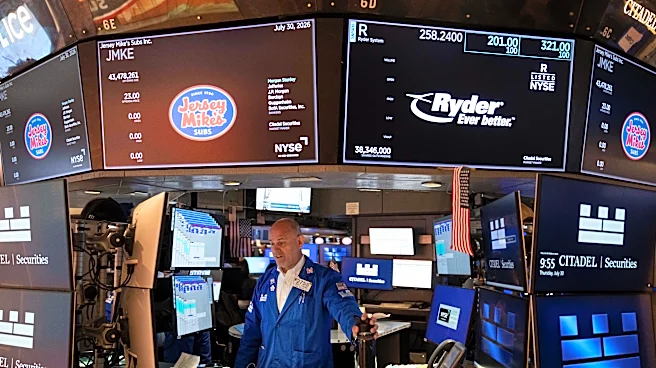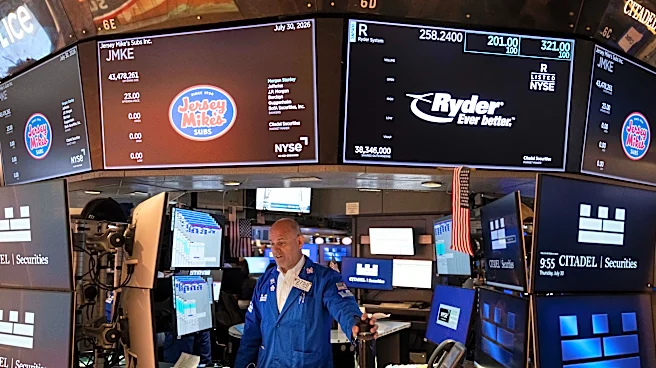





NEW YORK (AP) — Oil prices are easing on Monday and helping to calm Wall Street’s worries that inflation could potentially get even worse. That has U.S. stock indexes rallying, though sharp swings are continuing to roil underneath the surface.
The S&P 500 rose 1% following its wild July, where it swung up and down as oil prices shot higher because of the war with Iran and worries grew about whether Big Tech’s massive investments in artificial-intelligence
technology will translate into profits and whether chipmaker stocks soared too high in the euphoria around AI.
The Dow Jones Industrial Average was up 711 points, or 1.4%, as of 10:15 a.m. Eastern time, and the Nasdaq composite was 1.2% higher.
Some of the strongest action was in the oil market, where the price for a barrel of Brent crude fell 5.4% to $83.17. It dropped after President Donald Trump said over the weekend that he decided to hold off on new strikes against Iran at the urging of allies in the region.
Brent careened between $72 and $102 last month as worries rose and fell about when the war with Iran would allow oil tankers to freely exit the Persian Gulf again to deliver crude to customers worldwide.
The latest acquiescence by Trump on Iran helped to ease worries about inflation potentially getting worse, and Treasury yields correspondingly fell in the bond market.
The yield on the 10-year Treasury sank to 4.68% from 4.75% late Friday. It, though, remains well above its 3.97% level from before the war with Iran.
That jump is threatening to undercut prices for stocks and other investments, while slowing the economy by making borrowing more expensive for U.S. households and businesses. The average long-term U.S. mortgage rate has already leaped to its highest level in a year.
Monday's drop in oil prices helped airlines and other companies with big fuel bills lead the market. United Airlines flew 6.7% higher, while American Airlines climbed 6.4%. Norwegian Cruise Line Holdings steamed 4.3% higher.
Tyson Foods rose 1.8% and erased an early-morning loss after it reported a stronger profit for the spring than analysts expected. CEO Donnie King said strength is continuing in the company's chicken business and its prepared foods, which includes brands like Jimmy Dean and Hillshire Farm.
It joined a lengthening list of big U.S. companies to deliver stronger-than-expected profit for the spring. That's imperative for Wall Street because stock prices tend to follow the path of corporate earnings over the long term.
Companies in the S&P 500 are on track to deliver earnings per share for the spring that are 47% higher than a year before, according to FactSet, with more than half of the companies having already reported. If that ends up being the case, it would be the strongest growth since the spring of 2021, when the economy was roaring out of the COVID pandemic.
On the losing end of Wall Street Monday were stocks of companies that make computer chips, which have been swinging sharply on worries about whether their surging revenues because of the AI boom are sustainable.
If AI ends up produce less profit and productivity than hoped, Big Tech companies could curtail their spending sprees on data centers that have helped chip stocks soar to tremendous heights.
Micron Technology fell 3.2% Monday and was one of the heaviest weights on the S&P 500, but its stock is still up nearly 180% for the year so far. Advanced Micro Devices fell 1.1%, but its price is still roughly 120% higher than it was at the end of last year.
The manic swings for AI stocks have been most dramatic in South Korea, where the Kospi index is dominated by just two tech titans, Samsung Electronics and SK Hynix.
Seoul’s Kospi fell 5.1% Monday, coming off Friday's 17.9% surge that was its best day in history.
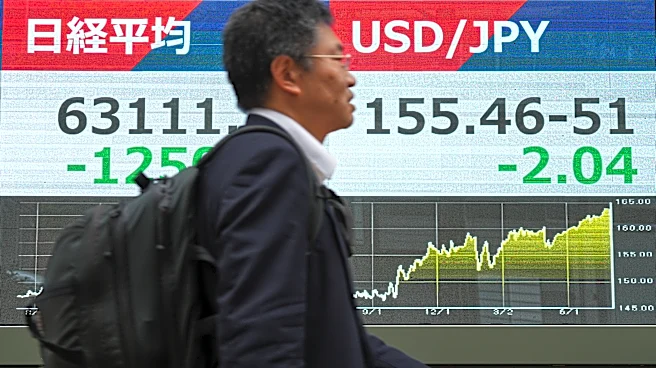
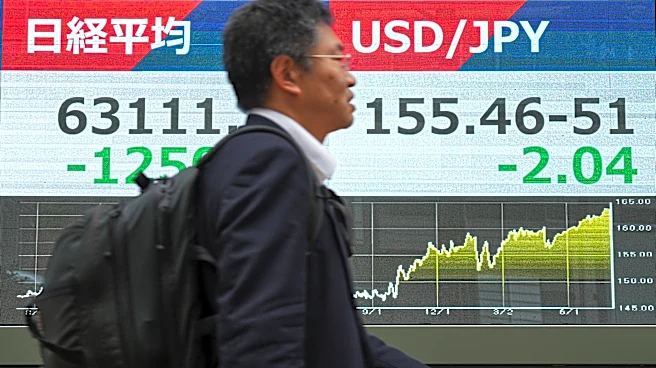
In neighboring Japan, Tokyo’s Nikkei 225 fell 0.9% after the United States and Japan confirmed they had moved together to to prop up the value of the Japanese yen against the dollar. A stronger yen would help to limit inflation in Japan, but it could also potentially hurt Japan’s exporters.
___
AP Writers Matt Ott, Elaine Kurtenbach, Mayuko Ono and Mari Yamaguchi contributed to this report.