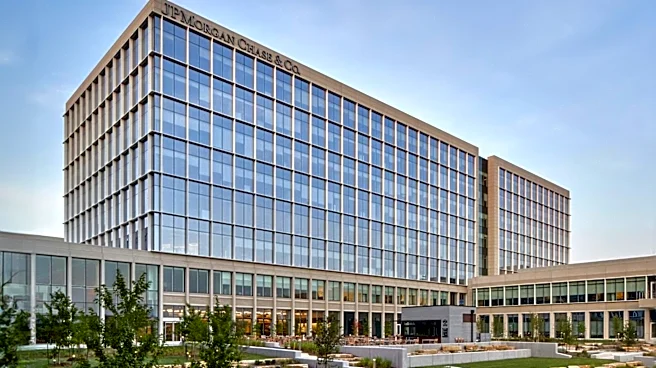

JPMorgan Chase has resolved a technical issue that caused problems throughout the financial system Monday and added to jitters caused by recent outages affecting Microsoft products and that U.S. aviation
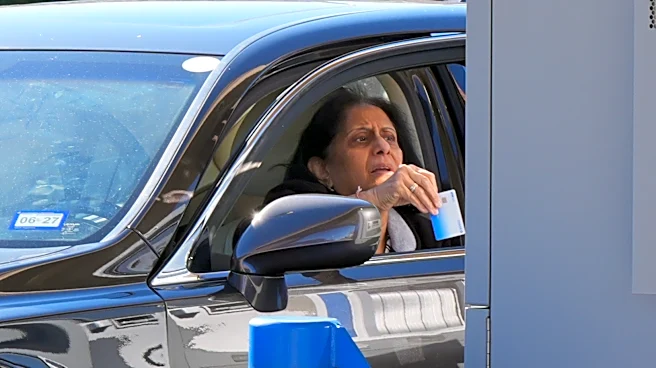
system. Thousands of customers reported difficulty accessing online accounts at several major U.S. banks and the money transfer service Zelle.
Here’s what we know.
JPMorgan Chase, the largest U.S. bank by total assets, said a software bug was affecting its internal hardware systems and causing transaction delays.
Some Chase customers received a message Monday that said, “Some services aren’t available. We’re working on them. Please try back later.”
A Chase spokesperson said in an email Tuesday that the problem was resolved later Monday and that “transactions are processing normally.”
No. While the disruptions took place just days apart, government officials and company leaders have said they were unrelated.
The major outage by Microsoft on Thursday that lasted for hours, severely impacting services including Outlook, Teams and AI assistant Copilot, was due to a technical issue that arose during an upgrade. The tech giant has said there is “no indication” that the disruptions were caused by malicious activity, such as a cyberattack or due to action by artificial intelligence agents.
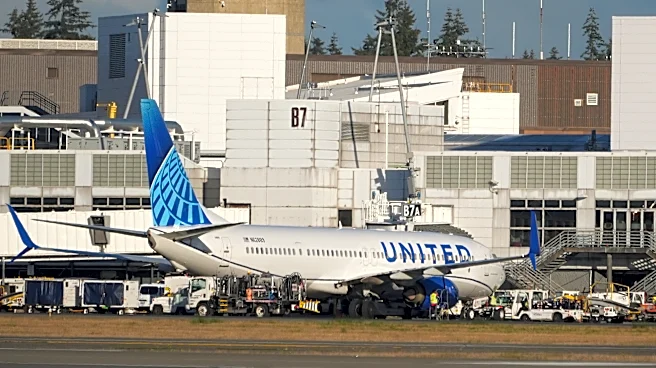
Another outage that affected the nation’s air traffic control system Friday, grounding all U.S. flights for several hours and disruptingdomestic air travel over the weekend, was caused by a router that malfunctioned and overwhelmed the aging air traffic control system, according to the Federal Aviation Administration.
Even when online banking services are down, the money in the actual account remains safe and untouched. Bank deposits are insured up to $250,000 by the Federal Deposit Insurance Corporation.
Chase said that the technical problem was not the result of a cyberattack, stressing that it was an isolated incident and not related to anything other than a bug.
In a sense, yes. Customers at Bank of America, Citigroup and other banks trying to transact with Chase may have seen their transactions slow, even though those banks were not having issues with their services.
“Other banks may have been impacted by slowness in transactions only to the extent that they were a party to a transaction with us,” explained Joe Evangelisti, a spokesperson for Chase.
So while this incident was isolated to technical problems at Chase, the way the modern financial system works is that a failure at one bank can make it appear like other banks are impacted, even if they are operating normally.
“Even when the cause is a technical failure rather than a cyberattack, an issue at one point in the system can disrupt transactions elsewhere,” said Christina Powers, who specializes in cybersecurity and banking issues at West Monroe.
Zelle was not directly affected by the Chase glitch. But customers at other banks may have experienced transaction delays while trying to send or receive Zelle payments involving a Chase customer.
Zelle is a rapid peer-to-peer payment system used by major U.S. banks. The platform is owned by Arizona-based Early Warning Services, which in turn is owned by financial institutions including Bank of America, Capital One, JPMorgan Chase, PNC Bank, Truist, U.S. Bank and Wells Fargo.
A spokesperson for Early Warning Services said the Zelle network was fully operational.
___
Associated Press journalist Hannah Schoenbaum contributed from Salt Lake City.