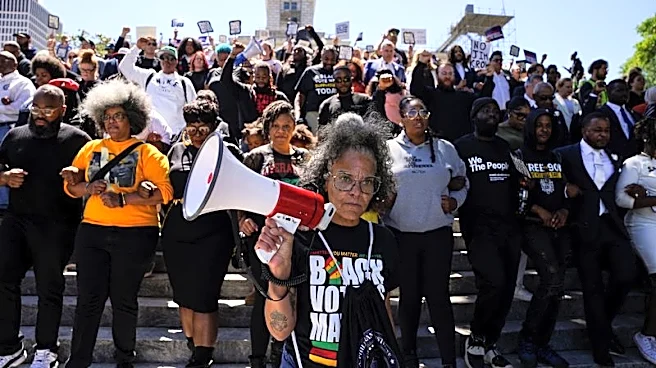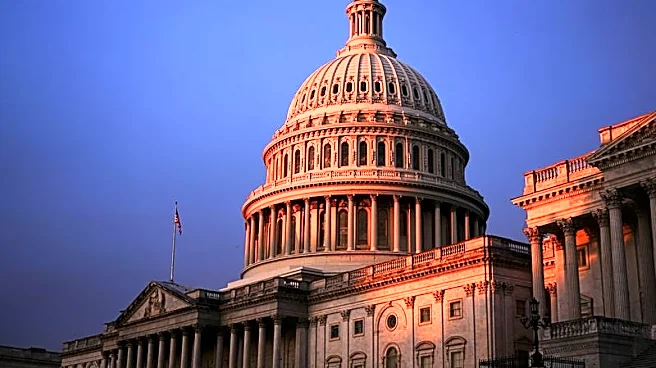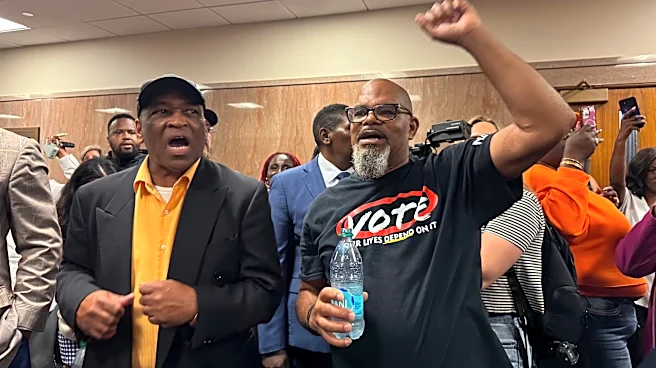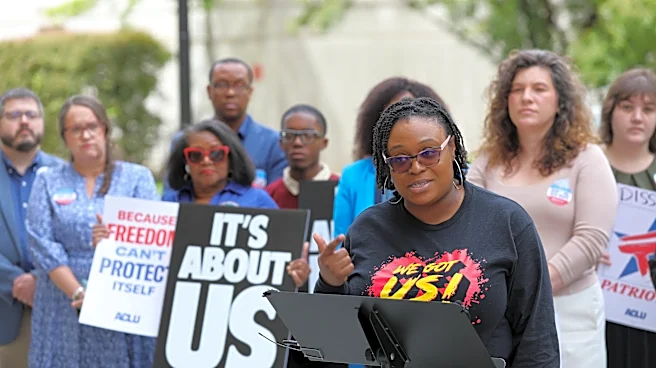





BATON ROUGE, La. (AP) — Republican senators in Louisiana advanced a plan Wednesday to eliminate one of two majority-Black congressional seats before the November midterm elections while Georgia's governor announced that he will call lawmakers back to work to redraw legislative voting districts for the 2028 elections.
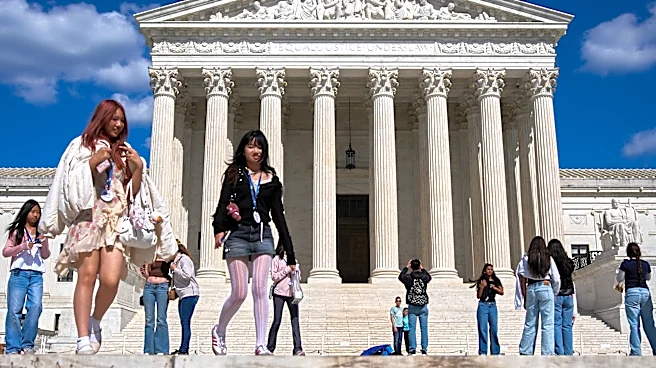
The developments showed the far-reaching ripples of a recent U.S. Supreme Court ruling that struck down Louisiana's congressional map
as an illegal racial gerrymander, weakening the protections of the federal Voting Rights Act. The decision has prompted various Republican-led states to try to dismantle districts with large minority populations that have elected Democrats.
Since the court's ruling, Tennessee and Alabama already have acted to implement different House maps that could help Republicans win an additional seat in the November elections, where control of the closely divided chamber is at stake. A similar effort fizzled Tuesday in the South Carolina Senate but may not be over.
The redistricting efforts to undo minority districts are the latest in a 10-month-long national redistricting battle that already has involved about one-third of the states. It gained steam when President Donald Trump urged Texas Republicans last year to redraw House districts in an attempt to win more seats in the midterm elections. Democrats in California responded with their own new districts. Numerous Republican states have redistricted since then.
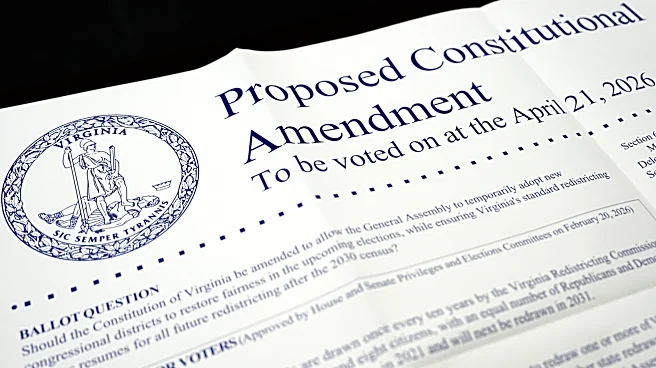
Republicans think they could gain as many as 15 seats so far from new House maps in Texas, Missouri, North Carolina, Ohio, Florida, Tennessee and Alabama. Democrats, meanwhile, think they could gain six seats from new maps in California and Utah. The Virginia Supreme Court last week struck down a redistricting effort that could have yielded four more winnable seats for Democrats.
Republican Georgia Gov. Brian Kemp called a special legislative session on redistricting to begin June 17, the day after runoffs will settle party nominees for the November elections. Kemp has said he doesn’t want to change Georgia’s voting districts for this year's elections, because voters have already been casting ballots ahead of Tuesday’s first round of primaries.
The governor’s proclamation is the first to focus on the 2028 elections since the Supreme Court's ruling in the Louisiana case. Other states could follow, including Democratic states such as New York that were already looking at ways to enact new legislative districts by the next presidential election.
By acting now, Georgia Republicans could guard against the possibility that a Democrat could win the governor's race in November and veto new voting districts if the legislature had waited to act until its regular session next year.
Five of Georgia’s 14 U.S. House members are Black Democrats. The easiest target for Republicans could be U.S. Rep. Sanford Bishop’s district in southwest Georgia. Republicans could also try to pick off one or more of the four Democrats who represent parts of the Atlanta area, but spreading out too many Democrats could make more Republican districts competitive.
Kemp’s proclamation allows new boundaries not only for U.S. House districts but also for the state Senate and state House. A court previously ordered some state House and Senate districts be redrawn to help Black voters elect more candidates, voiding an initial map the GOP-controlled legislature drew after the 2020 Census. Republicans could choose to revert to that map or take a more aggressive path, especially in the 180-member state House, where the GOP’s majority has shrunk over time to 99 seats.
Democratic U.S. Sen. Raphael Warnock said Wednesday he would “fight this with everything I have.”
“There is an extreme movement in this country that will stop at nothing to hold on to power, even if it means stripping representation away from millions,” Warnock wrote in an online post.
The Louisiana Senate could vote Thursday on the new House map advanced by a redistricting committee.
The plan keeps a New Orleans-based, majority-Black district represented by Democratic U.S. Rep. Troy Carter while also including a portion of Baton Rouge. It significantly reshapes the 6th District, represented by Democratic U.S. Rep. Cleo Fields, which currently snakes northwest from Baton Rouge to Shreveport to create a second majority-Black district. That district would instead be clustered around predominantly white communities in southern Louisiana around Baton Rouge.
Fields, a Baton Rouge resident, said he won't decide whether to seek reelection until the maps are finalized. But he said he would not challenge Carter in a primary.
“I’ve said from day one, I have no interest in running against Troy Carter. Period,” Fields told The Associated Press. “The real issue is not whether I serve another second in Congress. The real issue is whether or not a person like me will have the opportunity to serve in Congress.”
State Sen. Jay Morris, a Republican who sponsored the revised map, said the new districts are very similar to those used in 2022 that resulted in five Republicans and one Democrat winning election.
A federal judge struck down the 2022 map for violating the Voting Rights Act. Then in 2023, the U.S. Supreme Court ruled that Alabama had to create its own second largely Black congressional district.
In light of the Alabama ruling, the Louisiana Legislature passed a revised map, creating a second majority-Black district that was used in the 2024 elections. That map also was challenged, leading to last month's U.S. Supreme Court ruling that Louisiana's districts had relied too heavily on race. The Supreme Court followed with a decision also overturning a judicial order mandating that Alabama use a House map with two largely Black congressional districts.
Republican Gov. Jeff Landry has postponed Louisiana's U.S. House primaries, scheduled for Saturday, until either July 15 or a date to be determined by the Legislature in order to allow time for new districts to be put in place.
___
Amy reported from Atlanta and Lieb from Jefferson City, Missouri.