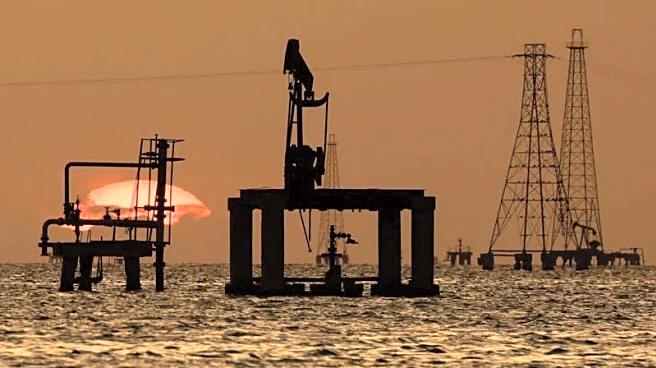

WASHINGTON (AP) — President Donald Trump on Friday called on oil executives to rush back into Venezuela as the White House looks to quickly secure $100 billion in investments to revive the country's ability to fully tap into its expansive reserves of petroleum.
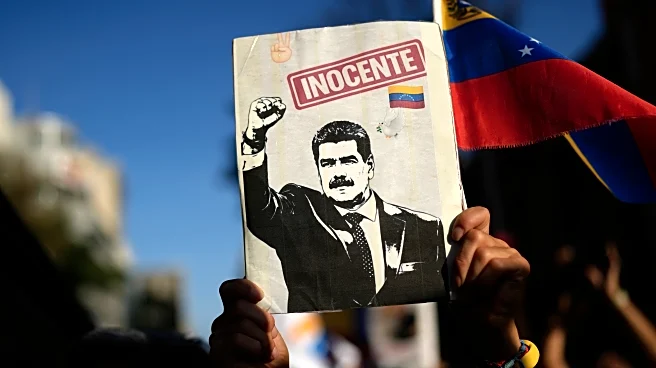
Since the U.S. military raid to capture former Venezuelan leader Nicolás Maduro on Saturday, Trump has quickly pivoted to portraying the move as a newfound economic opportunity for the U.S.,
seizing tankers carrying Venezuelan oil, and saying the U.S. is taking over the sales of 30 million to 50 million barrels of previously sanctioned Venezuelan oil and will be controlling sales worldwide indefinitely.
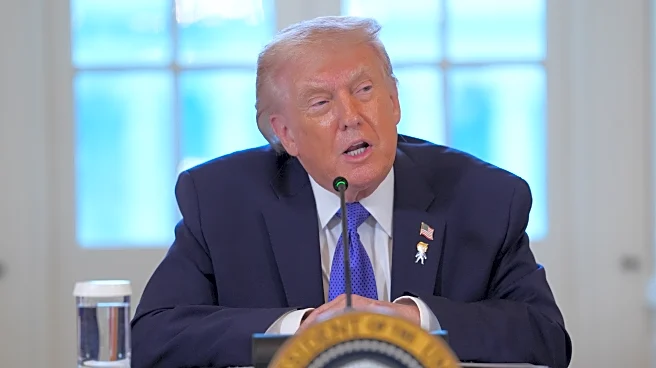
Trump, as he opened the meeting with oil industry executives, sought to assure them that they need not be skeptical of quickly investing in and, in some cases, returning to the South American country with a history of state asset seizures as well as ongoing U.S. sanctions and the current political uncertainty.
“You have total safety,” Trump told the executives. “You’re dealing with us directly and not dealing with Venezuela at all. We don’t want you to deal with Venezuela.”
Trump added: “Our giant oil companies will be spending at least $100 billion of their money, not the government’s money. They don’t need government money. But they need government protection."
Trump welcomed the oil executives to the White House after U.S. forces earlier Friday seized their fifth tanker over the past month that has been linked to Venezuelan oil. The action reflected the determination of the U.S. to fully control the exporting, refining and production of Venezuelan petroleum, a sign of the Trump administration's plans for ongoing involvement in the sector as it seeks commitments from private companies.
It's all part of a broader push by Trump to keep gasoline prices low. At a time when many Americans are concerned about affordability, the incursion in Venezuela melds Trump’s assertive use of presidential powers with an optical spectacle meant to convince Americans that he can bring down energy prices.
“At least 100 Billion Dollars will be invested by BIG OIL, all of whom I will be meeting with today at The White House,” Trump said Friday in a pre-dawn social media post.
The White House said it invited oil executives from 17 companies, including Chevron, which still operates in Venezuela, as well as ExxonMobil and ConocoPhillips, which both had oil projects in the country that were lost as part of a 2007 nationalization of private businesses under Maduro’s predecessor, Hugo Chávez.
“If we look at the commercial constructs and frameworks in place today in Venezuela, today it's un-investable,” said Darren Woods, the ExxonMobil CEO. “And so significant changes have to be made to those commercial frameworks, the legal system, there has to be durable investment protections and there has to be change to the hydrocarbon laws in the country.”
Other companies invited included Halliburton, Valero, Marathon, Shell, Singapore-based Trafigura, Italy-based Eni and Spain-based Repsol as well as a vast swath of domestic and international companies with interests ranging from construction to the commodity markets.
Large U.S. oil companies have so far largely refrained from affirming investments in Venezuela as contracts and guarantees need to be in place. Trump has suggested that the U.S. would help to backstop any investments.
Venezuela’s oil production has slumped below one million barrels a day. Part of Trump's challenge to turn that around will be to convince oil companies that his administration has a stable relationship with Venezuela’s interim President Delcy Rodríguez, as well as protections for companies entering the market.
While Rodriguez has publicly denounced Trump and the ouster of Maduro, the U.S. president has said that to date Venezuela's interim leader has been cooperating behind the scenes with his administration.
Tyson Slocum, director of the consumer advocacy group Public Citizen’s energy program, criticized the gathering and called the U.S. military’s removal of Maduro “violent imperialism." Slocum added that Trump’s goal appears to be to “hand billionaires control over Venezuela’s oil.”
Meanwhile, the United States and Venezuelan governments said Friday they were exploring the possibility of restoring diplomatic relations between the two countries, and a delegation from the Trump administration arrived in the South American nation Friday.
The small team of U.S. diplomats and diplomatic security officials traveled to Venezuela to make a preliminary assessment about the potential reopening of the U.S. Embassy in Caracas, the State Department said in a statement.
Trump also announced Friday he’d meet with President Gustavo Petro in early February, but called on the Colombian leader to make quick progress on stemming flow of cocaine into the U.S.
Trump, following the ouster of Maduro, had made vague threats to take similar action against Petro, describing the Colombia leader as a “sick man who likes making cocaine and selling it to the United States”
Trump abruptly changed his tone Wednesday about his Colombian counterpart after a friendly phone call in which he invited Petro to visit the White House.
The seeming détente between Petro, a leftist, and Trump, a conservative, appears to reflect that their shared interests override their deep differences.
For Colombia, the U.S. remains key to the military’s fight against leftist guerrillas and drug traffickers. Washington has provided Bogotá with roughly $14 billion in the last two decades.
For the U.S., Colombia, the world's biggest cocaine producer, remains the cornerstone of its counternarcotics strategy abroad, providing crucial intelligence used to interdict drugs in the Caribbean.