






BELGRADE, Serbia (AP) — The body of the former Bosnian Serb army commander Ratko Mladic, who died last week while serving a life sentence for genocide and other atrocities during the war in Bosnia, was flown to Serbia from The Hague, Netherlands, on a government plane on Thursday.
Serbian army soldiers carried the coffin with Mladic's body that was wrapped in the national flag from the plane to a van in a ceremony that was broadcast live on the pro-government
Informer television.
Serbia's Justice Minister Nenad Vujic was on the plane along with Mladic's son Darko Mladic and Mladic's former military associates, according to the same source. The report said that the body was transferred to the military hospital in Belgrade for an autopsy.
Mladic was sentenced in 2017 to life imprisonment for orchestrating the massacre of more than 8,000 Muslims in Srebrenica in 1995; the yearslong siege of Bosnian capital of Sarajevo during the 1992-95 conflict; and other war crimes, including setting up concentration camps for detained non-Serb civilians and enemy soldiers.
Earlier on Thursday, President Aleksandar Vucic told reporters that the U.N. court in The Hague, Netherlands, released Mladic's body after he died in a hospital there.
The court confirmed in a written statement that Mladic's remains had been handed over to his next of kin at Rotterdam The Hague airport on Thursday afternoon.
Vucic said Mladic's family will announce funeral plans in the coming days. Pro-government media said a military commemoration will be held on Saturday and the funeral on Monday.
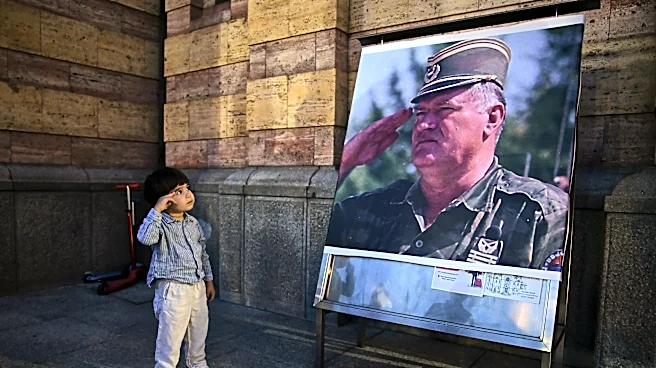
Vucic predicted that Mladic's admirers could come to the funeral in large numbers. Many Serbs consider Mladic a hero despite his conviction for genocide, war crimes and crimes against humanity by the U.N. tribunal.
“It will be hard to secure and guarantee security to everybody,” Vucic said. He added that Serbia’s police and the state security agency predict that “tens of thousands” could attend. “It will be a demanding job for our (security) services and we will use everything at our disposal to provide security.”
After Mladic died last Thursday, thousands of Serbs held vigils and marches in his honor. That drew condemnation in the volatile region that remains ethnically divided more than three decades after the war, which started when Bosnia's Serbs took control over swaths of the country's territory to form their own state.
The legacy court in The Hague, formally known as the International Residual Mechanism for Criminal Tribunals, said it stood “in solidarity with the victims, survivors and their families who suffered the crimes for which Mr. Mladic was found guilty.” It condemned “any actions that glorify those convicted of war crimes, crimes against humanity and genocide by international courts.”
Families of Mladic's victims have said that his conviction by the U.N. court brought at least some justice for the brutal deaths of their loved ones.
Serbia, which backed the Bosnian Serbs during the war, is formally seeking European Union entry but remains defiant over its war role. Vucic last week accused the West and The Hague tribunal of blaming only Serbs for the crimes and bringing no justice for the Serb victims. He also accused the court of uncivilized behavior for not releasing Mladic on humanitarian grounds to die at home.
The EU's Enlargement Commissioner has warned that “the glorification of war criminals has no place nor in an EU member country nor in a candidate country.”
The massacre in Srebrenica was Europe’s first acknowledged genocide after World War II. A U.N. “safe haven” for Muslims, Srebrenica ended up being overrun by Serbs who forced men and boys to strip, killed them and bulldozed their bodies into mass graves.
Mladic was one of the most notorious figures of the war in Bosnia that left more than 100,000 people dead and over 1 million homeless before it ended in 1995 in a U.S.-brokered peace agreement.