






CAIRO (AP) — The United States and Iran each fired barrages of missiles Thursday, as the pattern of back-and-forth strikes took hold again and hope dimmed for a quick end to the five-month conflict.
Following a few days of respite, fears of a wider war have grown, with renewed fighting threatening to engulf even more countries: Jordan said Thursday it intercepted Iranian missiles for the second consecutive day, while Kuwait said a strike in the northern
part of the country killed one person. Also this week, drones caused fires on ships at an Egyptian port, and Saudi Arabia said it came under fire from Iran-backed militias in Iraq.
The war — which in its early days President Donald Trump said would last four to five weeks, although he warned it could take longer — has caused the price of fuel to spike and roiled the global economy. As months have passed, concerns have deepened about using up the stockpile of weapons the U.S. needs to defend its bases and allies.
The recent pause in fighting, which began over the weekend and spurred hopes among mediators of diplomatic progress, ended with increasing missile and drone attacks across many countries in the Middle East.
“We note with concern that the security situation remains precarious,” said Pakistani Foreign Ministry spokesperson Tahir Andrabi, whose country has been a key mediator, adding that diplomats were still seeking an end to the fighting.
Talks “are ongoing to normalize the situation, particularly the situation in the Strait of Hormuz," he told reporters.
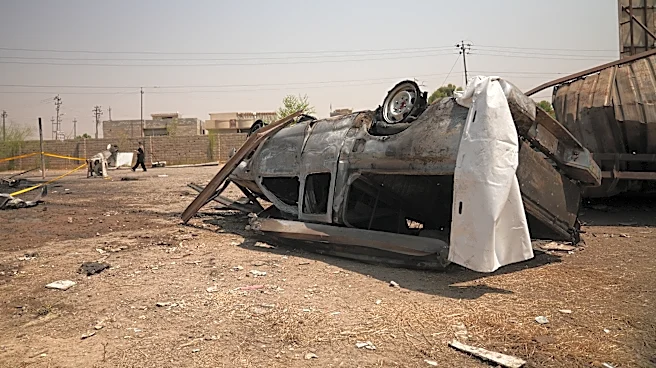
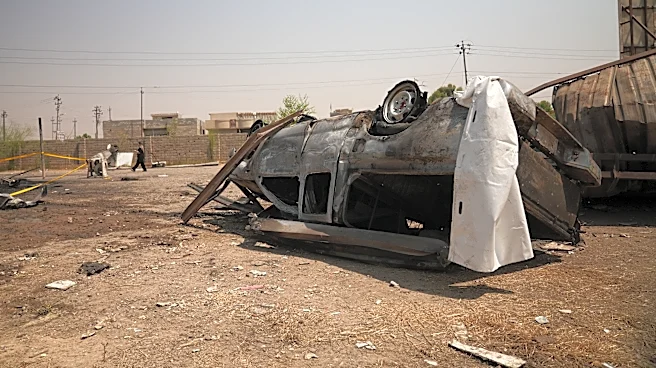
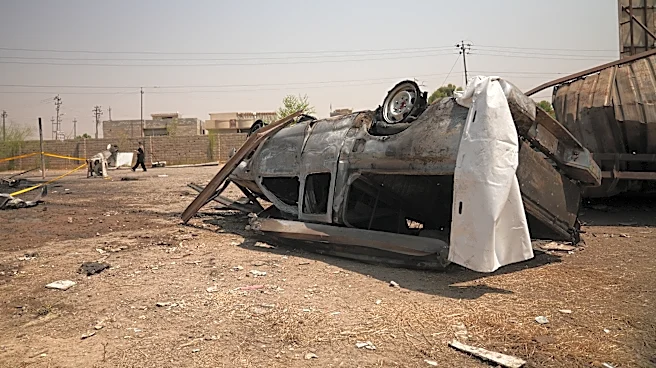
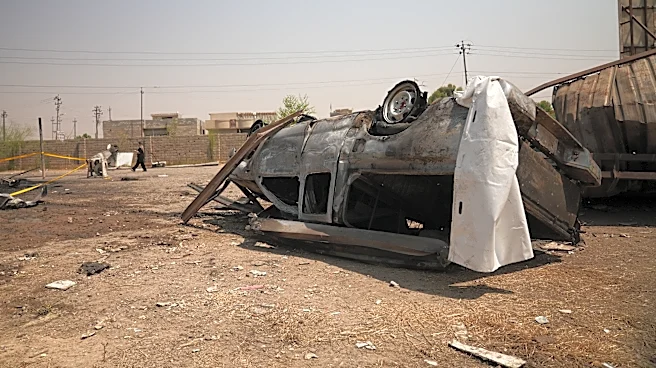
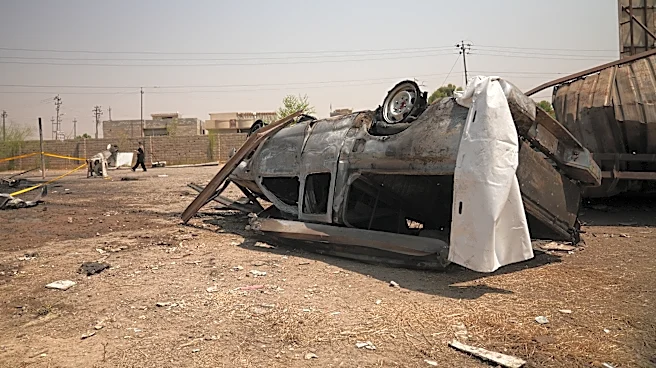
An Iranian strike hit a Chinese firm’s building in Kuwait on Thursday, severely damaging the structure and killing a worker, Kuwait’s military said, hours after Jordan’s air defenses shot down five missiles launched from Iran.
No injuries were reported from Jordan’s interception, Jordan’s state-run Petra news agency said, quoting the spokesman for the country’s armed forces. Both countries are U.S. allies and host American troops.
The attacks came after the U.S. military said it completed “a heavy wave of strikes against Iran,” conducted in response to an earlier Iranian missile attack on a U.S. base in Jordan.
The military's Central Command said in a social media post that the U.S. struck dozens of targets belonging to Iran’s Revolutionary Guard, including military command centers, missile and drone facilities, and coastal surveillance and defense sites.
Iran's official IRNA news agency said three people were killed and two were wounded in a strike on the island of Qeshm, which lies just off the Iranian mainland in the Strait of Hormuz — a crucial waterway for the world's energy supplies that has been at the center of the conflict.
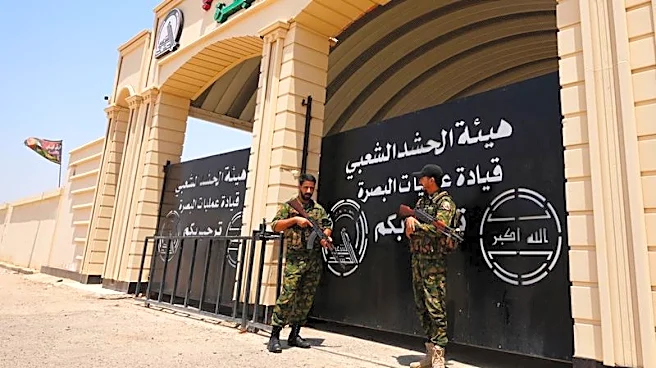
The latest barrage came after the U.S. partnered with Saudi Arabia on Wednesday to strike Iran-backed militias in Iraq, killing at least 20 fighters and six Iranian advisers.
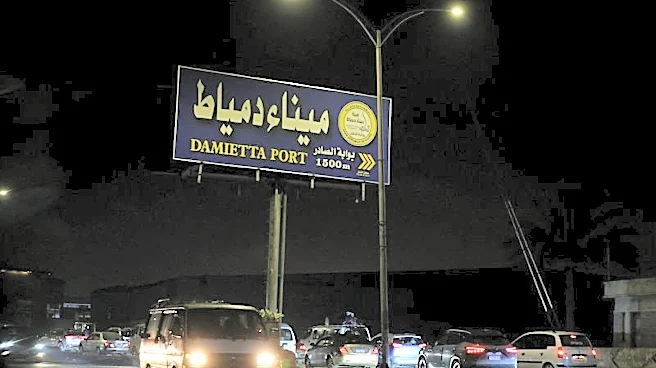
Also on Wednesday, British maritime security firm Ambrey said drone strikes ignited fires on two natural gas vessels at the Egyptian port of Damietta. It was not immediately clear who was responsible for the strikes on a U.S.-owned floating storage facility and a Greek-owned tanker. No injuries were reported.
The office of the Egyptian prime minister said initial investigations showed the fires on the two vessels had been caused by a drone.
Egypt, a close U.S. ally and regional mediator, is one of the only countries in the Middle East to have been spared direct military action during the war. A strike by Iran or its allies, if confirmed, would mark a significant widening of the conflict.
Asked during an Oval Office event if Iran was responsible for the strikes on the vessels, Trump responded: “It’s a little more of the same.”
The Damietta Port Authority said Thursday in a statement on Facebook that the facility was fully operational. The Iran-backed Houthi rebels in Yemen denied they were behind the attack.
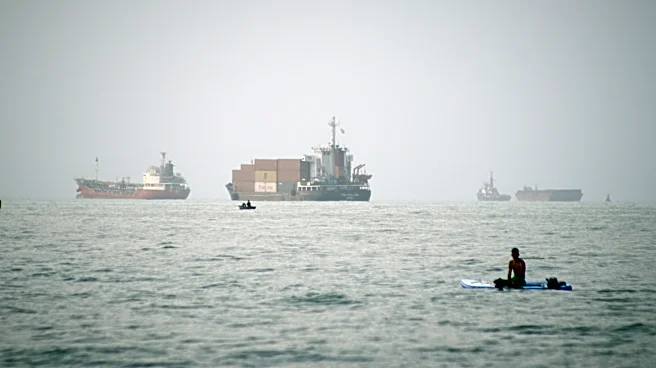
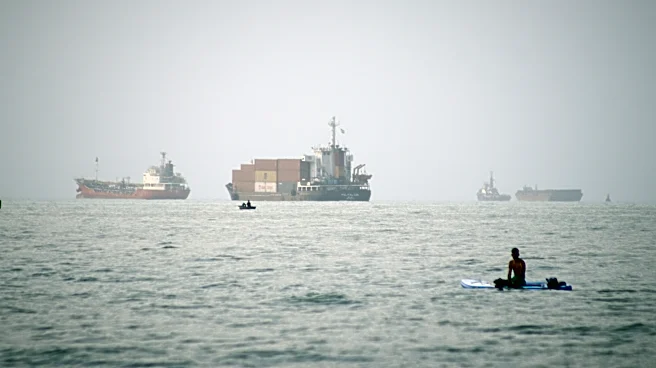
Since Iran began threatening and firing on ships in the Strait of Hormuz early in the war, the conflict has wreaked havoc on the global economy as energy shipments through the waterway ground to a near halt. Much of the diplomacy around ending the war has focused on reopening the strait, through which 20% of oil and natural gas shipments passed in peacetime.
The strait is once again effectively closed — and in recent weeks, fighting elsewhere has squeezed energy supplies further.
Saudi Arabia has accused the Iraqi militias of firing drones against its oil facilities over the past days. An umbrella group of Iraqi militias initially denied the allegations, while the Houthi rebels said they had attacked Saudi energy facilities as part of a separate but related conflict.
The Houthis have declared a blockade of Saudi shipping and threatened to choke off another crucial Middle East trade route, the Bab el-Mandeb Strait from the Red Sea into the Gulf of Aden. That route became even more important during the war, as Saudi Arabia used it to bypass the Strait of Hormuz.
On Monday, the Houthis said they had launched drones targeting facilities used to transport oil across Saudi Arabia to the Red Sea port of Yanbu. The rebels said the attack was in response to a Saudi drone they said breached Yemen’s airspace.
Planet Labs satellite imagery from Monday analyzed by The Associated Press showed damage to Saudi Aramco’s Abqaiq oil-processing facility, which is capable of processing approximately 7 million barrels of crude oil per day.
Saudi Defense Minister Khalid bin Salman met Wednesday with Trump and Vice President JD Vance, according to two people familiar with the matter who were not authorized to comment publicly about the private meetings.
They said the Saudi decision to join the U.S. attacks against the Iraqi militias was meant to send a message to Iran that the kingdom would not tolerate Iran or its proxies targeting the Saudi oil industry and other critical infrastructure. At the same time, the defense minister underscored to Trump and Vance that the Saudis want to see a de-escalation in the war and for Washington and Tehran to return to negotiations.
___
Becatoros reported from Athens, Greece. Associated Press writers Konstantin Toropin in Washington, Qassim Abdul-Zahra in Baghdad and Fatma Khaled in Cairo contributed.