






After the engine flew off a UPS cargo plane and caused a crash that killed 15 people in Kentucky, investigators quickly discovered cracks in parts of the engine mount. Then they found records showing similar flaws had been found during maintenance on the wings of 10 other planes — most of which had not been reported to the FAA.
The National Transportation Safety Board focused Tuesday on why no one in government or the industry spotted the concerning
trend and took action to prevent it before last November’s crash. Investigators also released more than 2,000 pages of related documents during a two-day hearing in Washington to examine the disaster's root causes.
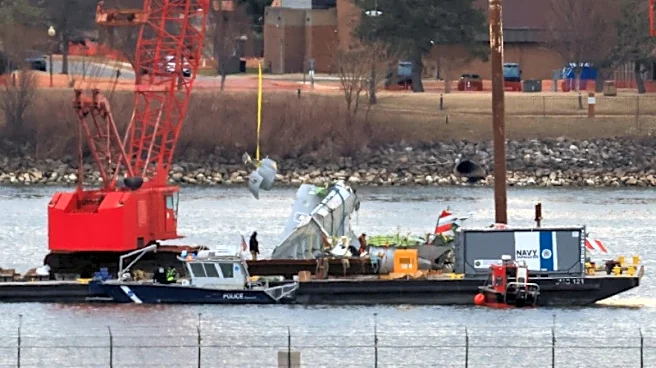
The engine separated from the MD-11’s left wing as it accelerated down the runway Louisville’s Muhammad Ali International Airport. The crash killed all three pilots on the plane and 12 people on the ground. Twenty-three more were injured. There has only been one other crash involving a similar plane model when the engine fell off.
FAA and UPS officials said the reports they did get about problems related to the spherical bearings may not have included enough information. UPS's David Springer said Boeing's service letters made the bearing problem “sound almost benign” and didn't mention any of the collateral damage that could be caused to the lugs that attach the engine to the wing.
“I think if we would have known that at UPS, I think we would have asked a lot of different questions over the years,” Springer said.
The families represented by attorney Bradley Cosgrove believe that actions should have been taken years earlier. “What happened was a systemic failure to recognize and address a known risk before it resulted in a horrific catastrophe,” Cosgrove said.
The hearings at the NTSB headquarters involve rounds of questions and answers among board members, investigators, and representatives of Boeing, UPS, the mechanics’ union and other parties. The NTSB’s final report will look at every potential factor and likely won’t be ready until more than a year after the crash.
Here’s what you should know:
The documents released Tuesday revealed that UPS switched planes hours before takeoff, after a preflight inspection found a fuel leak in the first plane loaded for the trip to Hawaii. The cargo was then moved onto a second plane, and the flight crew shared good-natured banter with the maintenance team during its inspection about “meeting again” so soon.
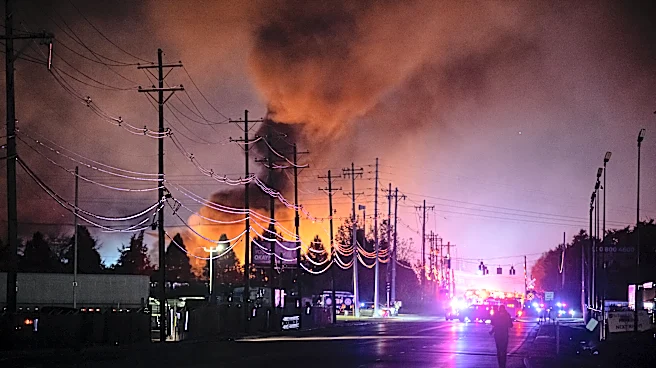
This second plane barely cleared the airport fence before crashing into nearby businesses in a massive fireball. Dramatic images showed the engine detaching as flames erupted on the wing, leaving trails of smoke.
Examining the wreckage, investigators found cracks in parts of the engine mounts that had not been caught in regular maintenance, which raised questions about the adequacy of the maintenance schedule, the NTSB said. The last time the key parts were examined closely was in October 2021, and another detailed inspection wasn't due for roughly 7,000 more takeoffs and landings.
After all MD-11s and DC-10s, a predecessor aircraft, were grounded following the Louisville crash, similar flaws were found in three other UPS planes and a DC-10, NTSB investigators said Tuesday.
NTSB member Tom Chapman said investigators also found records indicating that similar flaws had been found 10 times in other planes during the previous 15 years, but only four were reported to the FAA. Chapman said all should have been reported. FAA officials testified Tuesday that four, spread over years, would not have been enough to demonstrate a problem trend.
Boeing determined that those flaws “would not result in a safety of flight condition,” so didn’t require plane owners to make repairs, instead simply recommending that the bearings be replaced with a redesigned part that was less likely to fail. The FAA never issued an airworthiness directive that would have ensured that was done.
The FAA's Melanie Violette told the NTSB that she believes the risks associated with spherical bearing failure within the lug were misunderstood when the concern was raised in 2007.
“The lug was designed to be fail-safe so that one side could fail and the other would continue to take the load. And the failure of that one lug would be very visible and very obvious and much easier to detect,” Violette said. “The actual way things played out was not the way it was understood. So that is also an important aspect of this.”
Since the crash, Boeing has “invested heavily” in modeling to understand the stress on the part, said Justin Konopaske, the plane manufacturer's director of airframe service engineering.
UPS officials told the NTSB that they could have done more, had they known it could cause a crash.
The Louisville disaster was reminiscent of a 1979 crash in Chicago involving a DC-10 that lost its left engine, killing 273 people. That led to the worldwide grounding of 274 DC-10s.
The airliner returned to the skies because the NTSB determined that maintenance workers had damaged the plane while improperly using a forklift to reattach the engine — meaning it wasn't caused by a fatal design flaw. But even at that point, the plane’s manufacturer, McDonnell Douglas, which later merged with Boeing, raised concerns about the spherical bearings.
Some MD-11s, a workhorse of the cargo fleet, are now back in the air.
FedEx resumed using the planes to deliver packages on May 10, but UPS has said it plans to retire its fleet of MD-11s. Western Global also uses MD-11s but hasn’t said what it plans to do.
Some experts had speculated that the MD-11s might never fly again if the repairs proved cost-prohibitive. But Boeing said it found a way to address the safety concerns simply by replacing the bearings and stepping up inspections, and the FAA approved that plan.