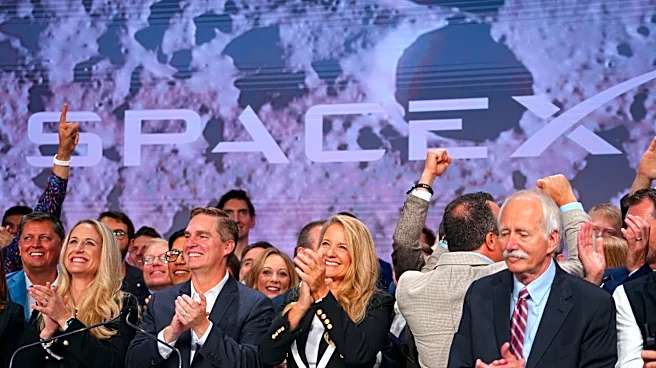





NEW YORK (AP) — Elon Musk, the world's richest man and now first-ever trillionaire, controls a lot of different businesses.
Electric vehicles. Brain implants. Underground tunnels. A social media platform once called Twitter. And a rocket maker that blasted off its trading from Wall Street this week.
Over time, more and more of these ventures have found themselves under the same roof. Musk merged SpaceX — which went public on Friday — with his artificial
intelligence company xAI just earlier this year. But he still holds the CEO role at several corporations today, in addition to other various executive titles or ownership stakes.
Here's a look at Musk's vast business empire.
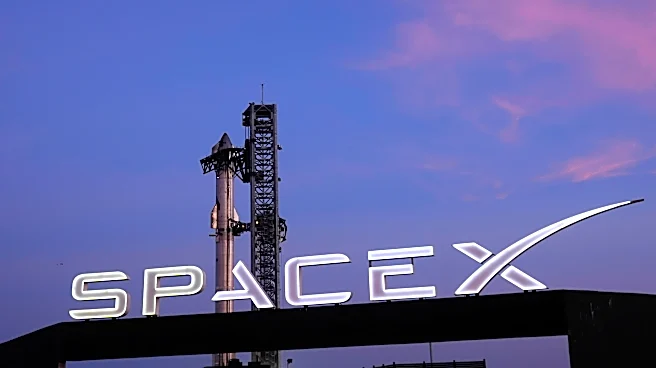
Musk is CEO of SpaceX, which he founded in 2002. The company has grown far beyond rockets. It owns satellite communications service Starlink, a big source of cash for the company that generated $4.4 billion in operating income last year. SpaceX also houses social media platform X, formerly known as Twitter, which Musk bought for $44 billion in 2022 and parked it under xAI, the maker of the Grok chatbot.
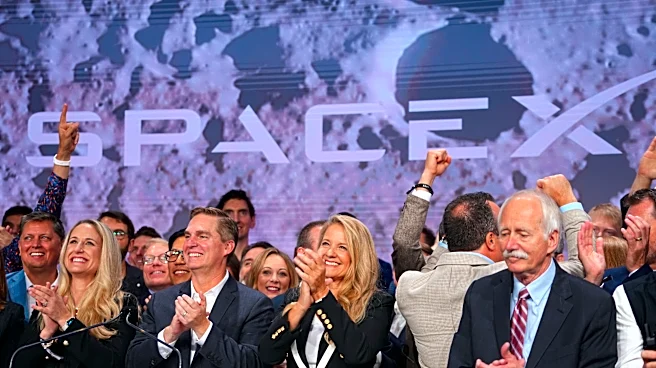
Both xAI and X are money losers (the AI business lost $6.4 billion in operations last year). Nonetheless, SpaceX — which lost $2.6 billion overall from operations last year — was able to whip up enough market hype to debut with the biggest initial public offering in history on Friday, closing at just below $161 per share, or a total market value of $2.1 trillion.
Some think that price tag significantly overvalues the company. SpaceX has promised it will become a leader in AI and one day help make human life multiplanetary — with lofty, and at times sci-fi sounding, goals that range from putting data centers in space to colonizing Mars. But the bulk of that hinges on unproven technology and massive capital needs.
Musk is also CEO of Tesla, a role he has held at the electric car maker since 2008.
Tesla has struggled with rising competition in the EV space. Last year, the company lost its crown as the world’s largest EV maker to China’s BYD. Sales were also bruised during boycotts over Musk’s politics. Those numbers have since rebounded some, but Musk has repeatedly shrugged off troubles — emphasizing that Tesla’s future lies less in car sales than getting people to take rides in them as self-driving taxis.
Beyond the road, Tesla has been upping production of robots for homes and businesses. And it's also been in the solar energy business for about a decade with it purchase of SolarCity, which was founded by Musk and two of his cousins. Tesla went public in 2010, and went on to join the trillion dollar club on the S&P 500. Its market cap currently stands around $1.5 trillion.
Musk has also the CEO title at Neuralink, a brain-computer interface company he co-founded in 2016.
Neuralink is one of many groups working to connect the human nervous system to machines. It's launched clinical trials for people who have spinal cord injuries, ALS and other conditions. The company (and sometimes Musk himself ) has announced a handful of brain implants over recent years. In January, Neuralink said it had 21 trial participants worldwide.
Musk also founded The Boring Company, a decade-old tunnel digging and underground transportation business.
The Boring Company is behind projects like the “Vegas Loop” — a network of underground, Tesla-hailing tunnels that first opened around around the Las Vegas Convention Center in 2021. It's promised to deliver a network of high speed transit — with plans to also make tunnels in Dubai and Nashville. Still, pushback has piled up along the way. The company has been accused of breaking multiple safety and environmental requirements in Las Vegas, where its full route is still unfinished, and other criticism from some local officials in Nashville.
Musk made his initial fortune by creating two companies, Zip2 and PayPal ( once X.com ). Those then-startups were sold to new owners decades ago — but netted him about $200 million at sale, which Musk used to later start SpaceX and invest in Tesla.