
BERLIN (AP) — German Chancellor Friedrich Merz was facing pressure Monday after his party was crushed by the Alternative for Germany party in a regional election that could result in it leading the first
far-right state government since the Nazi era.
The AfD, classified by Germany's domestic intelligence agency as an extremist group in some regions of the country, fell just short of a majority in Sunday's election in the eastern state of Saxony-Anhalt.
While Sunday's election was only regional, it has major national implications. Merz had vowed to weaken the AfD when he came to office, and the election result shows that he has been unable to deliver on that promise.
AfD's strong victory is also a major distraction for Germany and Merz at a time when Europe faces several challenges, including Russia's continued aggression against Ukraine and a suspected sabotage campaign targeting NATO countries, and difficult dealings with U.S. President Donald Trump.
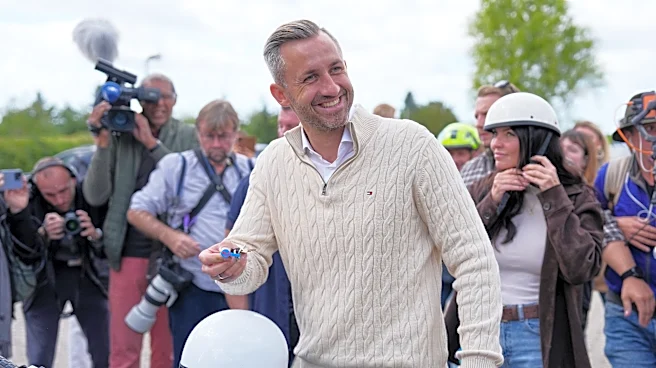
Tricky coalition talks lie ahead, and the AfD candidate for governor, Ulrich Siegmund, still aims to become the first head of government from the far-right party on the state level.
“Very clearly, we want voters finally to get after the election what they voted for,” Siegmund told public broadcaster ZDF late Sunday. “Over 44% voted for political change ... and that must be implemented after the election.”
The vote weakens the chancellor and he will be partly held responsible for his party’s historic loss after it led the state for the past 24 years. Merz’s center-right Christian Democrats party, or CDU, saw its election results cut in half, while AfD more than doubled its share of the vote. The result could also energize the AfD in other state elections later this month.
Merz is expected to comment on the election result later Monday after meetings of his party and government leaders.
AfD, known for its pro-Russian and radical anti-immigration stance, is the biggest opposition party in Germany’s national parliament and is strongest in the formerly communist and less prosperous east, where Saxony-Anhalt is located.
Tricky coalition talks in the state are expected in the days and possibly weeks ahead.
Leading a state government would be the biggest prize for AfD in its 13-year history, coming at a time of widespread discontent with a national government that has yet to persuade voters that it can get the country’s sluggish economy moving.
While Siegmund has rejected an AfD minority government, his party could possibly govern with the hard-left BSW party. The two parties share a Russia-friendly course and oppose immigration but do not agree on some other subjects.
On Monday, BSW's lead candidate in the election, Thomas Schulze, expressed his party's willingness again to help an AfD minister-president take office in the state parliament.
Forming a government that excludes the AfD would only be possible if all the other parties that were elected worked together — CDU, Social Democrats, the Greens, the Left Party, and the BSW. However, a coalition involving five partners would be extremely unusual, very complicated and hardly conceivable.
It's also possible that newly elected lawmakers from other parties could defect to AfD — it would only need three people to get a majority to govern.
Either way, coalition negotiations are going to be complicated and likely it will take weeks to form a new government.
Even though Saxony-Anhalt is one of Germany's smaller states and only 2.1 million people live there, the election received outsized attention, not just in the country but also internationally.
Unlike other countries in Europe, modern Germany hasn’t yet had a far-right or right-wing populist party leading a national, state or major-city government — and due to the country's Nazi past, far-right movements have always received strong scrutiny.
However, not everyone was worried about the victorious emergence of AfD.
Billionaire Elon Musk congratulated the party on its election victory with a “Well done!” on his online platform X.
Siegmund immediately thanked him for his support, replying in English: “If we take on responsibility here, I would very much welcome the opportunity for strong and constructive cooperation. Germany would then once again be a place worth investing in. Best regards from Saxony-Anhalt!”
U.S. President Donald Trump posted a screenshot of the election projection on his “Truth Social” platform without any comment.
Russian presidential envoy Kirill Dmitriev on X described the outcome of the election as a “historic win for the pragmatic AfD that will put migration under control.” In a separate post, Dmitriev said that “AfD will restore Germany and Europe by leading the commons-sense approach that migrant-friendly, warmongering Biden-think EU politicians tried to eradicate.”
The leaders of right-wing populist parties in Spain and Portugal also congratulated AfD, German news agency dpa reported.
“Congratulations to Alice Weidel and Ulrich Siegmund on this spectacular result, which offers great hope for Germany and Europe,” Santiago Abascal, leader of the Spanish party Vox, wrote on X.
In Portugal, André Ventura from the Chega party wrote on X that “Germans, too, are increasingly opening their eyes to illegal and uncontrolled immigration, corruption, and the erosion of our freedom and identity. Congratulations!”
Not everybody was excited about the AfD win.
“In Poland, only idiots or traitors could rejoice the AfD triumph in Germany,” Polish Prime Minister Donald Tusk wrote on X on Monday morning.
AfD won 43.8% of the vote, more than double its showing five years ago in the region west of Berlin.
That was far ahead of Merz’s party, which polled 17.2% — losing about half its support — and won 15 seats. The center-left Social Democrats polled 9.3%, the Greens 8.9% and the Left Party 8.6%, winning eight seats apiece.
The BSW party took 5.3% and five seats.
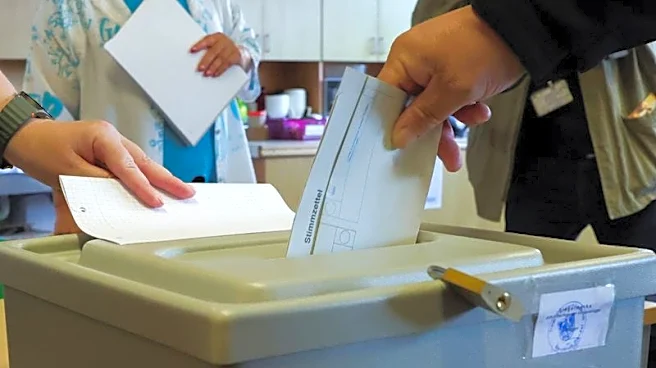
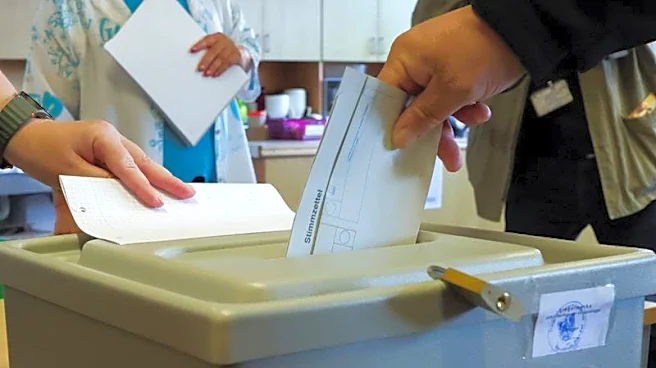
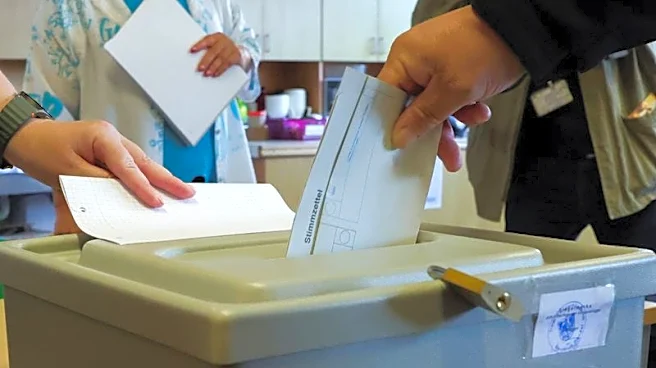
Turnout was very high at 77.8%. AfD appeared to have won over many people who didn’t vote at all five years ago.
___
AP journalist Claudia Ciobanu contributed from Warsaw.