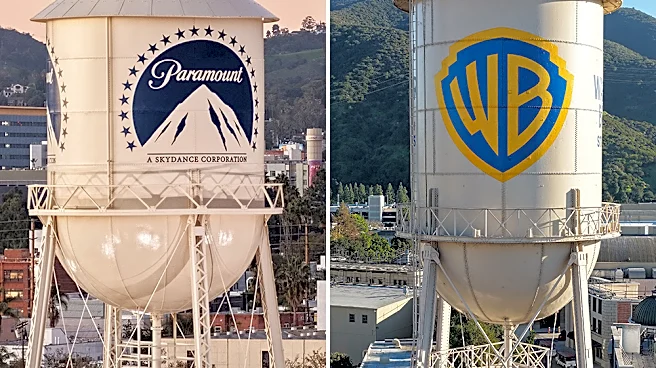






NEW YORK (AP) — Movie studio Paramount on Monday agreed to settle an antitrust lawsuit filed by 12 states, the last big obstacle blocking the company's $81 billion acquisition of Warner Bros. Discovery in a deal that would transform the movie industry landscape.
In the settlement, which still needs to be approved by a judge, Paramount agreed to terms including a five-year movie production plan and to invest $1.5 billion in domestic movies.
State attorneys
general say the settlement guarantees investment in domestic movie production and provides worker protection. But analysts say the deal is still likely to lead to less competition in the industry — and higher prices for consumers.
“Where I’m looking at this is through the consumer’s point of view and resoundingly consumers are concerned about price hikes and they are preparing for price hikes,” said Forrester research director Mike Proulx. “They care less about the theatrical releases and some of the other industry terms. What they care about is how this is going to hit their wallets.”
Here's a closer look at the biggest terms Paramount agreed to in the settlement:
Paramount said it will spend $1.5 billion over five years, or $300 million a year — on top of what it spent in 2025 on filming domestically. According to the state attorneys general, currently only about 5% of Paramount's production is in the U.S.
Paramount also said it would create a five-year, $25 million fund for buying independent films.
The movie studio agreed to make 30 films a year in the first two years and 32 films a year in the following three years. It also said it will release at least four independent films each year.
That dovetails with plans Paramount chairman and CEO David Ellison has previously laid out to grow the combined company's movie slate to more than 30 movies a year.
But the agreement includes penalties: If Paramount doesn't produce the required amount, the company will be forced to sell Miramax Studios and pay $30 million to health care and retirement trust funds associated with worker unions.
Paramount has said it would look for ways to save some $6 billion through job cuts in “duplicative operations” when the deal goes through.
Under the settlement, Paramount will create a $47.5 million workforce fund for training and career development for laid-off workers. It also agreed to honor previously established collective bargaining agreements and bargain in good faith with unions.
Under the agreement, Paramount won't have to sell cable channels. But the company will have to hold negotiations over basic cable channels under Paramount and Warner Bros. separately for five years. If it doesn't, it might have to sell some channels under the agreement. The agreement also calls for the creation of a board to ensure that Warner-owned CNN and CBS, owned by Paramount, maintain editorial independence.